12 Oldest Towns in Wyoming That Are Packed With History
Explore Wyoming’s oldest towns and discover mining heritage, railroad history, historic landmarks, and charming communities still thriving today.
The oldest towns in Wyoming were founded starting in the 1860s and incorporated between the 1880s and the 1890s. Most of these communities were settled around the development of railway lines, the pioneer days, and mining. Today, remnants of the past remain in these communities, with preserved historic buildings and landmarks, museums, and more. For those interested in the state's history, here are some of the oldest towns in Wyoming based on their dates of incorporation and historical ties.
1. Cheyenne, Wyoming
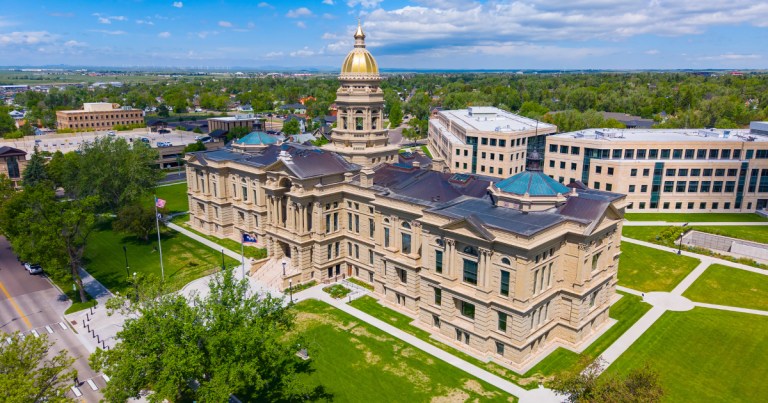
Founded in 1867, Cheyenne was named after the regional Native American tribe and became the capital of Wyoming in 1868. The town was built around the Union Pacific Railroad that passed through on its way to the West Coast. In fact, the town grew so quickly after the establishment of the railroad that it became known as the "Magic City of the Plains." Today, it's the state's most populous city, home to nearly 66,000 people.
Because the city's history is so deeply rooted in the railroad, it's best to stop by the Cheyenne Depot Museum for a lesson in Wyoming railroad history. Housed in the Historic UPRR Depot, the last remaining train station on the intercontinental route and a National Historic Landmark built in 1886, you can peruse the exhibits and see a narrow-gauge UC&N Model Railroad. Discover more on this historic city on the Visit Cheyenne website.
2. Laramie, Wyoming

Laramie was founded along the Union Pacific Railroad line in the mid-1860s as a tent city, with the railroad crossing over the Laramie River. Named after a French trapper who disappeared in the Laramie Mountains, the town was incorporated in 1874 and was home to the first woman to serve on a jury and the first woman to vote in a general election.
Today, Laramie is a desirable place to live in Wyoming, home to 32,500 people and the University of Wyoming. With a vibrant college-town feel, Old West history, and a location in a valley by the Snowy Range, Laramie offers plenty of attractions and outdoor recreation for residents, students, and visitors alike. Discover more on the Visit Laramie website.
3. Buffalo, Wyoming

Founded in 1879 and incorporated as a town in 1884, Buffalo is nestled in the foothills of the beautiful Big Horn Mountains. The town's historical ties to Butch Cassidy and the Sundance Kid, Buffalo Bill Cody, Tom Horn, Calamity Jane, Owen Wister, and Teddy Roosevelt make it one of the most fascinating historic Wyoming towns.
One of the best spots to learn local history in town is the Jim Gatchell Memorial Museum, housed in the Carnegie Library Building. Featuring a 1916 log cabin from the historic Marshall D. Jenkins homestead, a carriage house, an in-depth exhibit on the creation of the Wyoming state flag, and so much more, you may be fascinated by the Wyoming history you learn here.
4. Douglas, Wyoming

Douglas, known as the "Tent City", was founded when the Wyoming Central Railway established a railway station in 1886. It also served as a supply point for nearby cattle ranches and was home to a World War II Internment Camp, known as Camp Douglas. Before all that, however, it was where pioneers braved the harsh, rugged landscapes of the West while traveling the Oregon Trail. As one of the most historic Wyoming pioneer towns, you can learn all about Douglas' past at the Wyoming Pioneer Museum, located on the Wyoming State Fairgrounds.
5. Evanston, Wyoming

The town of Evanston was established in 1868 during the development of the First Transcontinental Railroad. Between 1912 and 1918, a massive roundhouse to service locomotives was built, and you can see it in all its glory today. In fact, the restored Evanston Roundhouse & Railyards has a visitor center and displays to learn more about its history.
In addition to the roundhouse, Evanston is home to the 324-acre Bear River State Park, which is worth visiting. It's a place of quiet beauty, centered on the Bear River, and offering opportunities for fishing, hiking, camping, swimming, paddling, and more.
6. Rock Springs, Wyoming

For a bit of Wyoming mining history, spend time in Rock Springs, a town that's known as the "Home of 56 Nationalities" because of the influx of immigrants from all over the world who came to work in the coal mines. These coal mines supplied fuel for the Union Pacific Railroad steam engines, solidifying its role in Wyoming railroad history.
Aside from its mining and railroad history, Rock Springs, which was incorporated as a town in 1888, is a base camp for outdoor recreation in the area. One of the most exciting things to do is sandboarding at Killpecker Sand Dunes, about 32 miles north. Here, you'll find a campground and vast sand dunes for off-road adventuring.
7. Casper, Wyoming

Casper is nestled at the foot of Casper Mountain and is the second largest city in Wyoming. History ties the town to Fort Caspar, which started out as a trading post and later became a military post for the U.S. Army. The town, incorporated in 1889, was established as a stopping point during the construction of the Wyoming Central Railway. For a dose of Casper history, visit the National Historic Trails Interpretive Center, a free museum featuring exhibits on the westward expansion of America.
8. Lander, Wyoming

Incorporated in 1890, the town of Lander was named for the transcontinental explorer, Frederick W. Lander. Once the terminus of the Cowboy Line of the Chicago and Northwestern Railway, this Old West town in Wyoming is nestled at the base of the Wind River Mountains, providing a scenic backdrop for outdoor adventures. Known as a place "where the rails end, and the trails begin," Lander offers history lessons through exhibits at the Fremont County Pioneer Museum and epic hiking trails, including the Popo Agie Suspension Bridge (pictured above) at Sinks Canyon State Park.
9. Green River, Wyoming

A charming river town through and through, Green River, Wyoming, was incorporated twice — the first time in 1868 and then again in 1891. As the starting point for the famous expeditions led by John Wesley Powell, the town was also a division point of the Union Pacific Railroad. Today, it serves as a hub for lovers of the great outdoors who want nothing more than to play outside, whether hiking, viewing wildlife, fishing, kayaking, or river rafting, or even taking in the scenery from the comfort of a car along the Flaming Gorge Scenic Byway.
10. Gillette, Wyoming

Incorporated as a town in 1892, Gillette became known as the "Energy Capital of the World," due to its role as a huge producer of coal, oil, and cabled methane. Nestled between the Big Horn Mountains and the Black Hills, the town was named after a railroad surveyor named Edward Gillette, who worked for the Chicago, Burlington and Quincy Railroad. When visiting Gillette, there are a number of attractions and things to do, including the Rockpile Museum and taking a stroll down the historic Main Street. The town also serves as a gateway to Devils Tower National Monument, home to one of the most unique natural landmarks in Wyoming.
11. Lusk, Wyoming

Lusk was founded in 1886 by renowned Wyoming rancher Frank S. Lusk and incorporated as a town in 1898. It was a stop along the Wyoming Central Railway, attracting settlers; today, it's a wonderful place to live with a strong sense of community in a rural setting. It's a peaceful, quiet town with locally owned businesses and community events that bring the townsfolk together throughout the year. For those curious about the town's history, stop by the Stagecoach Museum housed in the former Wyoming National Guard Armory on Main Street.
12. Kemmerer, Wyoming

Kemmerer was founded in 1897 by the vice president of Kemmerer Coal Company and was named after his financial backer. Two years later, Kemmerer was incorporated as a town. Located in Lincoln County, the town is home to the Lincoln County Courthouse
Did you know the very first JCPenney department store was opened in Kemmerer? You can even visit the JCPenney House & Museum, the former home of the founder James Cash Penney when in town. The area is also rich in fossils due to its location within the Green River Formation, which was once covered by an ancient freshwater lake formed during the Eocene Epoch. Because of this, many of Kemmerer's attractions are centered around fossils, including Fossil Lake Safari, where you can dig for fossils; Fossil Butte National Monument; and Fossil Gallery.
The small towns of Wyoming hold the keys to much of the state's past. Rooted in pioneer, mining, and railway history, these towns have developed over time while preserving much of the past. You'll get a wonderful glimpse into each town's history by visiting a museum, talking to locals, and exploring. Discover more of the state's history by visiting the tiniest towns in Wyoming.
Subscribe to our newsletter
Get the latest updates and news
Thank you for subscribing!