Most People Don’t Know How These 13 Towns In South Carolina Got Their Start
History is such a fun subject, right? Many of the towns in South Carolina got their start when the state was booming with railway development. Others were established around a mill as the people who moved there needed a place to live. And other towns were settled because of other industries, like lumber.
The stories of how the following 13 towns got their start may surprise you.
1. Andrews, SC - there's strength in numbers.
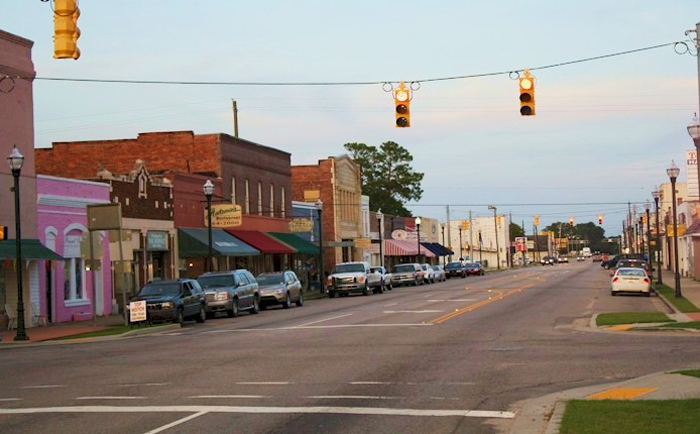
This small lumber town got its start as the two separate towns of Rosemary and Harpers Crossroads in the late 1800s. In 1909 the towns were combined and renamed after a man who would later become mayor. His name was Walter Andrews.
2. Bishopville, SC - a hostile takeover?


The 1798 death of the area's original owner, William Singleton, prompted the sale of the land that is now known as Bishopville. The man who bought it from Singleton's widow was named Jacques Bishop. Back then, it wasn't much of a win because the area was mostly wilderness with only a few scattered houses. So a "hostile takeover?" We think not.
3. Blackville, SC - the Town of the Phoenix.

Like so many towns in South Carolina, Blackville got its start as a stop along a new rail line. It was named for John Black and chartered as a town in 1837. At one point, Blackville was known as the "Cucumber Capital of the World," according to the Blackville Area Historical Society.
4. Bowman, SC - established for Aliens?


We're oh so sorry to disappoint, but Bowman wasn't started as an official UFO welcoming center. The settlement startup was fueled by an interest in the lumber in the area. It was also located on a popular colonial era road between Charleston and Orangeburg.
5. Chesnee, SC - the town lovingly named after someone's Grandmother.

In the 1800s a Land Company bought the area now known as Chesnee. One of the leaders in the company named the company - and later the town - after his Scottish-born Grandmother, Margaret Chesnee.
6. Cope - the town built around a rail depot.


This small SC town was built entirely around the busting Cope Depot station built in 1894. According to their National Register of Historic Places information, within a couple of years the town had lots of homes, a couple of churches, stores, a grist mill, a cotton gin, and a mill of some sort. At its height, Cope had a whopping 280 residents living in the town's small city limits. Today that number is around 75.
7. Johnston, SC - founded on a handshake and a promise.

When local land baron and plantation owner Edward Mims wanted a rail stop in the middle of his 1200 acres he promised to name the town that would surely spring up around the new depot after the man that made it happen, William Johnston.
8. Pawleys Island, SC - a vacationer's dream.


This seaside town was named after the colonial-era owner, Thomas Pawley, who eventually figured out he could parcel it out and sell off lots to wealthy plantation owners who wanted to escape the dreaded mosquito season amidst the breezes afforded by the island.
9. Pendleton - a legal start.


The town of Pendleton was created because the area needed a courthouse for new judicial areas. In the 1800s wealthy families from around the region built their summer homes here.
10. Olanta, SC - the town whose founder lost historical credit due to a TYPO.

The founder of Olanta worked hard to make this towns existence official. But when the papers were filed with the state, his name was recorded wrongly as "Cunningham" instead of "Cottingham!"
11. Varnville, SC - a race to build the best town first.

At the time the Varn brothers were laying out a town on the south side of the new railway that passed next to their lumber business, there was another man building a town on the north side of the tracks. But the Varn brothers prevailed and Varnville was "born."
12. Ridegland - formerly referred to as "Gopher Hill."


Ridgeland got its start when a railroad put a stop there. At some point the settlement known as "Gopher Hill" decided that wasn't an appropriate name for a huge railway stop located at the highest point between Charleston and Savannah. Hence, the name "Ridgeland" was offered as a more descriptive alternative.
13. Ware Shoals, SC - one man's loss was another man's gain.

Around the year 1900 a man from Laurens decided to dam the river so he could start a cotton plant, but he ran out of money before completion. So another man bought the project and the land. He started the Ware Shoals Manufacturing plant and the town that developed around it.
Do you know of any interesting ways a town in South Carolina got its start? We'd love to hear about it in the comments!
Subscribe to our newsletter
Get the latest updates and news
Thank you for subscribing!