13 Real American Towns That Now Sit Beneath the Water
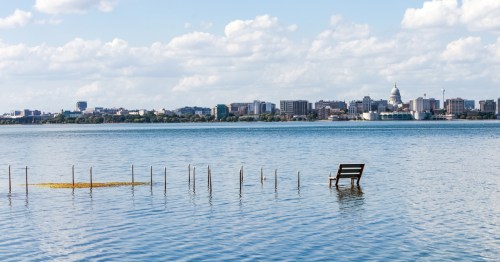
Flooded for dams, submerged by reservoirs, and forgotten under decades of water: these are the underwater towns in America that exist only beneath the surface now.
Before reservoirs and flood-control dams became the infrastructure of the 20th century, towns existed where lakes now sit. The federal government bought the land, the residents left or were relocated, and the buildings were razed, flooded, or simply left to the rising water. What remains, in most cases, is a body of water that millions of people fish and swim in every summer with no idea a town is underneath them.
These 13 entries represent a handful of submerged American towns across OIYS coverage, each with a specific name, a specific lake, and a specific history worth knowing.
1. Ferguson: Lake Marion, South Carolina
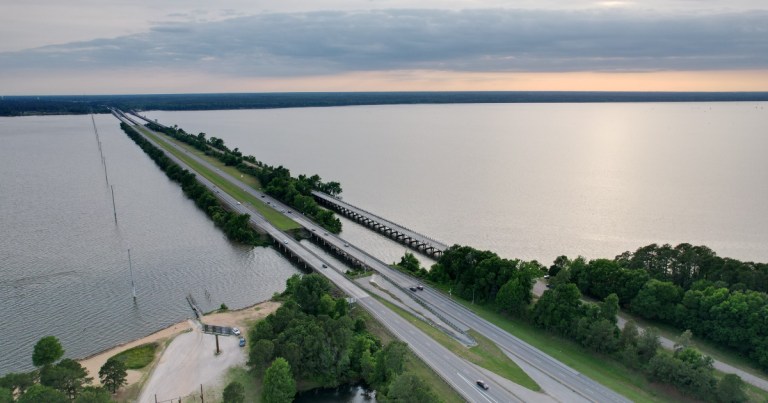
Ferguson, South Carolina, is one of the few submerged towns in America where you can actually see evidence above the waterline. In Lake Marion, South Carolina's largest lake, the kiln from the old Ferguson lumber mill still juts out of the water on the edge of what was once an island of the town. A church, a hotel, and a school all went under when the Santee Cooper hydroelectric project flooded the Santee River valley in the early 1940s.
During severe droughts, the waterline drops enough that the ruins become walkable. In 2002, a drought exposed enough of the old town that a local columnist could walk from the boat landing to the skeletal remains. That happens once in a generation. The rest of the time, the kiln in the water is the only hint that a lumber town once stood here, and most people driving past Lake Marion don't notice it at all.
2. Monroe: Smith Mountain Lake, Virginia

Virginia's Smith Mountain Lake underwater ghost town operates more as legend than established fact, which is part of what makes it compelling. The town of Monroe is believed to lie beneath Smith Mountain Lake, Virginia's second-largest freshwater lake, which began filling in 1963 after the construction of the Appalachian Power dam on the Roanoke River.
Scuba divers have recovered blurry underwater evidence of the old Hales Ford Bridge. A brewery in the nearby town of Hardy named itself Sunken City Brewery in acknowledgment of the local legend. No definitive map of Monroe's footprint has been established, which means the mystery has staying power that fully documented submerged towns don't quite match.
3. Tappan: Tappan Lake, Ohio

Tappan Lake in eastern Ohio was created in 1936 by the Muskingum Watershed Conservancy District as part of a regional flood-control system. The town of Tappan went with it. The abandoned underwater town of Tappan is a crucial part of the state's hidden history. The Tappan Lake underwater city might be a distant memory for many, but it still remains an important part of Ohio's history today.
Tappan Lake is now a 2,350-acre reservoir popular for boating and camping. The remains of the old town are completely submerged, but the lake's clarity in certain conditions has allowed divers to document foundations and road traces on the lakebed. It's one of 16 reservoirs built as part of the same flood-control project, which means Ohio alone holds several submerged communities.
4. Judson: Lake Glenville, North Carolina

The town of Judson in western North Carolina was flooded in 1941 when the Thorpe Dam created what is now Lake Glenville, one of the highest-elevation lakes in the eastern United States. We've previously documented the Judson underwater ghost town as one of the more visually accessible submerged towns in the South.
Lake Glenville sits at an elevation of 3,500 feet in the Blue Ridge Mountains near Cashiers, North Carolina. The clarity of the cold mountain water in the upper reaches of the lake occasionally allows boaters to see the outlines of the old road system and foundations below the surface. The lake is a popular summer destination for the region, and the ghost town underneath it is one of those local knowledge items that most visitors never learn about.
5. Pequannock Watershed: New Jersey

New Jersey's underwater ghost town lies within the Pequannock Watershed, a water-supply area in Passaic County where the construction of reservoirs in the early 20th century submerged several small farming communities. The watershed is now protected land, which means the area has returned to forest and the reservoirs sit in a landscape that carries almost no trace of what was here before.
The New Jersey entry is notable in this catalog because it represents the category of quietly submerged communities that weren't famous or dramatic enough to prompt a rescue effort or news coverage of relocation. They simply went under and were forgotten. The current watershed is closed to public access, which gives the site a layer of inaccessibility that amplifies its mystery.
6. Niobrara (Old Town): Lewis and Clark Lake, Nebraska

Nebraska's underwater ghost town is the original town of Niobrara, which was partially inundated when Gavins Point Dam created Lewis and Clark Lake on the Missouri River in 1955. The town wasn't fully relocated before the reservoir filled, leaving portions of the original townsite submerged. The current town of Niobrara was rebuilt on higher ground.
The Missouri River backwater in this region was historically significant to the Ponca Tribe, and the flooding of the original town is tied to a broader history of displacement. Lewis and Clark Lake is now a recreation area on the Nebraska-South Dakota border, and the old Niobrara townsite sits beneath it. Low water years occasionally expose portions of the foundation grid, drawing photographers and local historians to the shoreline.
7. Nepaug Reservoir Village: Burlington, Connecticut

Connecticut's underwater village was submerged when the Metropolitan District Commission built the Nepaug Reservoir in Burlington to supply water to Hartford in the early 1900s. The farming community that occupied the valley was bought out and relocated, and the valley was flooded. What went under included farmsteads, a schoolhouse, and a small community infrastructure that had existed for generations.
The Nepaug Reservoir is still an active water supply reservoir and is closed to public access, which preserves the site from disturbance but makes it visible only from the road or by drone. Connecticut's dense colonial-era history means the submerged community here is older than most entries on this list, with some farmsteads dating to the 1700s.
8. Oakland Mills: Liberty Reservoir, Maryland

Oakland Mills, Maryland, was flooded in 1954 when the Liberty Reservoir was created to supply water to Baltimore. The Oakland Mills underwater town is noted as being one of the more complete community inundations in the mid-Atlantic. The town included a church, a mill, and a community center, all of which went under when the reservoir filled.
Liberty Reservoir is still an active water supply for Baltimore and is closed to swimming and most public recreation. The 3,100-acre reservoir sits in Howard and Carroll counties, and the ghost town of Oakland Mills remains inaccessible beneath it. The combination of a named town with a documented history and an active water supply status gives this entry a specific quality: you can't see it or reach it, but you can stand on the dam and know it's there.
9. Towash: Lake Whitney, Texas

Towash, Texas, was a Central Texas community whose entire population relocated to the nearby town of Whitney in anticipation of the railroad, leaving the original townsite empty before the Whitney Dam was constructed in 1951. The Towash underwater town is one of Texas' most fascinating mysteries to this day.
What makes Towash unusual in this catalog is that the town had already been largely abandoned by its residents before the flooding, which means the dam didn't displace anyone; it just finalized the erasure of a community that was already in the process of disappearing. The building foundations remain largely intact under Lake Whitney, and scuba divers have documented the grid of old streets and structures in the clearer shallows near the original townsite.
10. Kosmos: Riffe Lake, Washington

The town of Kosmos, Washington, was founded in 1904 and had around 150 residents at its peak, with a tavern, a general store, a recreation hall, and a post office that doubled as a cafe. It went completely underwater when Mossyrock Dam created Riffe Lake in 1968. The Riffe Lake underwater town is one of Washington's stranger hidden histories.
Riffe Lake is a 23.5-mile-long reservoir on the Cowlitz River, and Kosmos sits at the upper end where the water is shallower. When the reservoir level drops in dry years, remnants of the town emerge from the water, drawing locals who know where to look. The surrounding Cascade foothills landscape means most visitors to Riffe Lake come for recreation and never learn that a town lies beneath the water they're fishing in.
11. Rawsonville: Belleville Lake, Michigan

Rawsonville, Michigan, was a Civil War-era village near modern-day Ypsilanti that was completely submerged in 1925 when the Detroit Edison Company built the French Landing hydroelectric dam on the Huron River. The Rawsonville underwater ghost town is easily one of Michigan's most overlooked pieces of hidden history.
Belleville Lake is now a suburban recreation lake in western Wayne County, popular with boaters and anglers from the Detroit metro area. The village of Rawsonville lies beneath it. A historical marker on the shoreline is the only public acknowledgment that the lake has a community under it, and most of the area's residents have no idea it's there. The proximity to Detroit, combined with the ordinary suburban character of Belleville Lake, makes Rawsonville's erasure feel more complete than most entries on this list.
12. Monte Ne: Beaver Lake, Arkansas

Monte Ne in Beaver Lake was a planned resort community near Rogers, Arkansas, founded by former Liberty Party presidential candidate William Hope Harvey at the turn of the 20th century. The project went bankrupt, and when Beaver Lake was created in 1964 by damming the White River, the remaining structures were flooded.
The submerged amphitheater is the most prominent ruin, visible from boats in lower-water years. Harvey had grand ambitions for Monte Ne as a resort destination and cultural center, which means the community left behind more substantial infrastructure than a typical farming village would have. The combination of a named, specific founder, a political backstory, and a photographable ruin makes this one of the more compelling entries for gallery content.
13. Pactola: Pactola Lake, South Dakota

The town of Pactola, South Dakota, existed in the Black Hills as a small mining and commerce community before Pactola Dam was constructed in 1956, creating the reservoir that now bears the town's name. The Pactola underwater ghost town remains one of the Black Hills region's most tightly kept secrets.
Pactola Lake is a popular recreational reservoir near Rapid City, and the old townsite sits in relatively shallow water at the upper end. In low-water years, foundations and road traces become visible. The lake's clarity under certain conditions makes the submerged grid legible from above, drawing divers and photographers. The proximity to Mount Rushmore and Custer State Park means the lake sees substantial tourist traffic, most of which passes through without knowing the town is there.
There are so many underwater towns in America worth exploring, especially if you're a history buff at heart.
Subscribe to our newsletter
Get the latest updates and news
Thank you for subscribing!