You’ve Seen This Eerie Wyoming Landscape in Movies—Now It’s Reopening
Nearly 30 years after Starship Troopers filmed at this otherworldly place in Wyoming, Hell’s Half Acre has reopened to the public.
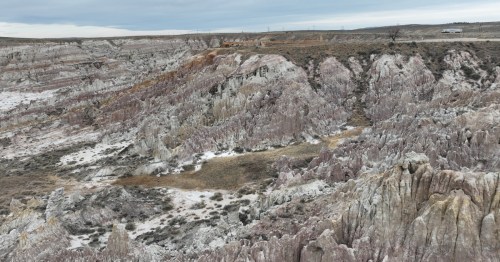
If you've ever watched Starship Troopers and wondered about the genuinely alien-looking landscape, its location may surprise you. It’s not another planet. It's a section of Wyoming badlands affectionately called Hell’s Half Acre, about 40 miles west of Casper.
One of the Cowboy State's strangest landscapes closed in 2005 but is officially open to visitors again. Hell's Half Acre reopened May 8, giving travelers access to a maze of cliffs, caves, ravines, and wind-chiseled rock formations that feel more suited to science fiction than central Wyoming.
The reopening marks the first meaningful public access to the 960-acre badlands landscape two decades. New amenities including an accessible boardwalk, observation deck, interpretive signage, picnic areas, and restrooms make it easier to explore while also protecting the fragile terrain. The upgrades transform what was once a roadside curiosity into a destination in its own right, arguably one of the most unusual hidden gems in Wyoming.
And if early visitor interest is any indication, people have been waiting a long time to get in.
A Landscape That Feels Straight Out of a Movie
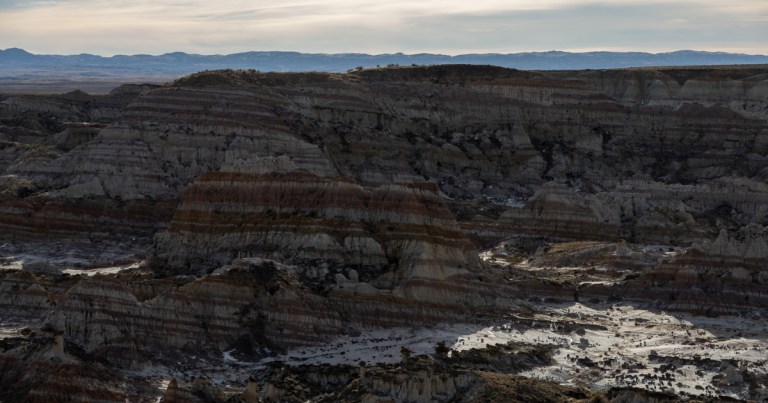
The moment you see Hell's Half Acre, the movie connection makes perfect sense.
Instead of rolling prairie, the ground collapses into a maze of steep gullies, jagged ridges, and colorful rock formations sculpted by millions of years of erosion. Rust red, tan, and charcoal-colored layers catch the light differently throughout the day, while narrow, slot-like passages disappear into shadows. Standing at the rim, you'll notice how difficult it is to judge distance or scale—a quality that makes the landscape feel strangely unearthly.
That's exactly what attracted location scouts for 1997’s cult sci-fi film Starship Troopers. The remote Wyoming badlands became planet Klendathu, requiring essentially no Hollywood enhancement to look convincingly extraterrestrial. Nearly 30 years later, the connection still resonates.
Annette Pitts, CEO of Visit Casper, shared that since the early May reopening, travelers stopping at Casper's visitor center regularly ask about Hell's Half Acre. Many specifically mention Starship Troopers, and during the ribbon-cutting ceremony, Pitts heard visitors discussing the movie and explaining that it was one of the main reasons they’d made the trip. She also noted that international travelers in particular have expressed their curiosity, drawn by the site’s cinematic history and unusual appearance.
What You'll Find at the New Visitor Site

The new visitor facilities are intentionally simple, allowing the landscape to remain the focus. The centerpiece is an observation deck that extends to the edge of the badlands, offering multiple sightlines that each reveal unique perspectives of the terrain. Looking one direction, you see sprawling ravines and steep walls plunging into the basin. Turn another way and unusual Wyoming rock formations rise from the landscape like ancient ruins. The longer you stand here, the more details reveal themselves.
An accessible boardwalk connects visitors to the overlook, while interpretive signs provide context about the area's geology, archaeology, and cultural significance. Picnic areas and restrooms make the site a convenient stop especially for road trippers and families.
The Deep History Beneath the Badlands
While Hollywood helped make Hell's Half Acre famous, the story of this landscape stretches back far beyond the arrival of film crews. Archaeological evidence suggests people have used and traveled through this region for thousands of years. Artifacts such as ceramic shards and projectile points indicate human presence dating back roughly 12,000 years.
Some researchers have theorized that Hell's Half Acre may have also functioned as a buffalo jump, where Indigenous hunters would have used the steep terrain to their advantage during communal hunts. While that theory remains the subject of ongoing debate and limited definitive evidence exists, it nevertheless reflects the long-standing recognition that Indigenous people interacted with this landscape centuries before it became a tourist destination.
Why Wyoming's Badlands Feel So Otherworldly
Part of what makes Hell's Half Acre so striking is that it’s so unexpected. Many people associate Wyoming with craggy peaks, vast prairies, and geothermal wonders. Badlands landscapes, though, receive far less attention, despite being among the state's most visually distinctive geological features.
The physical features themselves are also a product of immense geological timescales. Just like on this Wyoming badlands trail, millions of years of erosion gradually carved away softer layers of sediment, creating today’s gnarled maze of gullies, cliffs, and hoodoos. The process continues with every storm and season, subtly but constantly reshaping the terrain.
What to Know Before You Visit Hell's Half Acre

Hell's Half Acre sits along U.S. Highway 26 about 40 minutes west of Casper, making it a natural stop for travelers heading toward Jackson, Grand Teton National Park, or Yellowstone.
Late spring/early summer and fall offer the most comfortable and stable temperatures, though peak summer provides extra-long daylight hours and excellent visibility across the badlands. If you visit in warmer months, bring more water than you anticipate needing, sun protection, and sturdy footwear. Summer temps can exceed 90℉ and shade is scarce.
Weather changes quickly across scenic desert landscapes in Wyoming, especially the high desert, and strong winds are common throughout the year. Staying on designated pathways and observation areas helps protect both visitors and the fragile landscape.
Why This Reopening Matters Right Now
As travelers increasingly seek places that feel authentic, uncrowded, and genuinely surprising, destinations like Hell's Half Acre—an unexpected stop outside of the state’s uber-famous destinations—are gaining renewed attention.
This reopening isn't about simply restoring a roadside attraction. It's about reconnecting visitors with a landscape that captures something quintessentially Wyoming: vastness, mystery, and a sense that nature has the power to feel completely unfamiliar.
For nearly two decades, visitors could only glimpse Hell's Half Acre from the highway. Now they can stand at its edge and see for themselves why this strange corner of Wyoming has captivated people for generations. "Wyoming is such an inviting, hospitable state, and we hope to see visitors from all over the world who want to experience this wild, wacky place," Pitts says.
Subscribe to our newsletter
Get the latest updates and news
Thank you for subscribing!