We Did the Research, This Is Officially the Strangest Hiking Trail Name in North Dakota
One of the strangest trail names may be the Coal Vein Nature Trail, but it's one you'll want to hike.

What's in a name? If you're anything like me, you may be curious as to how just about any place got its name, especially if the name is a little unusual. One trail name that sticks out to me is the Coal Vein Trail at Theodore Roosevelt National Park in North Dakota. Do you find this to be an unusual name as well? Let's see where the name came from and what you can find on the trail.
If you're fascinated by the geology of the North Dakota landscape, the Coal Vein Trail is one you must take. This trek through the Little Missouri Badlands in the South Unit of the Theodore Roosevelt National Park is an exciting way to learn about the geological forces that shaped the landscape over time.
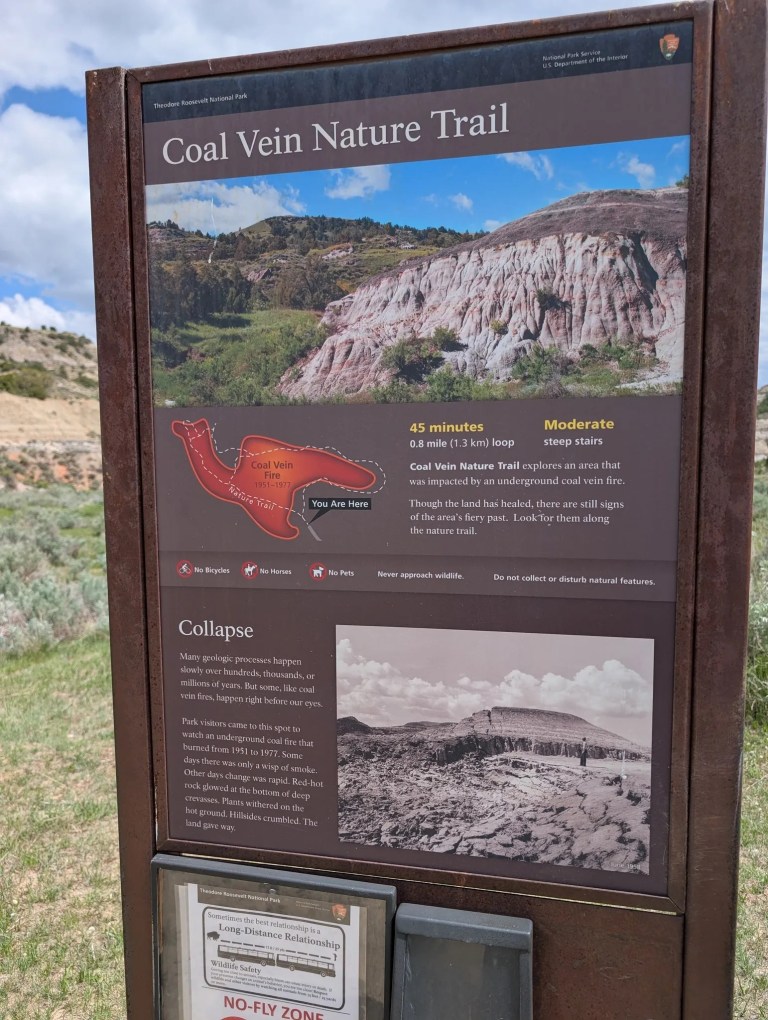
So, where did the name Coal Vein come from? Well, the answer is rather simple. But first, let's discuss what was happening underground. A coal seam (or coal vein) burned beneath the surface for about 26 years. Started by a lightning strike, the fire baked rocks on the surface, transforming them into hard, red rocks called clinker. Walking along the namesake trail, you'll see brick-red colored clinker (also called scoria) dotting the landscape and the spot where lightning struck to start the fire in 1951—how cool is that? This phenomenon is how Coal Vein Trail got its name.

In addition to clinker, there are plenty more rocks and minerals to discover, including bentonite clay on the sides of the trail. Chimneys, vertical pieces of clinker, are also found in sight of the Coal Vein Trail and are remarkable attributes to the landscape. You can learn more about the landscape and geology of the area in the Coal Vein Nature Trail Guide from the National Park Service.

The Coal Vein Trail is a short and sweet 0.8-mile loop considered easy. While it is kid-friendly, it is not dog-friendly, so leave your pup at home. Taking a family hike here allows everyone to see 60 million years of geological history and to learn about clinker, the coal seam, and bentonite.
In addition to hiking this informative trail, which is chock-full of fascinating geological history, it's common to see bison roaming around. If you see bison, please keep a distance of at least 25 yards. You can learn more about the Theodore Roosevelt National Park bison on the NPS website. Additionally, do not remove anything, including plants, flowers, or rocks, from this or any other national park, as it's illegal to do so.

Have you trekked the Coal Vein Trail in the Theodore Roosevelt National Park yet? Did you know the origin of the trail's name? For trail location and information, visit AllTrails. You should also visit the National Park Service website for alerts and fees. Remember, entering this national park requires a fee or a National Parks Pass.
For more beautiful and awe-inspiring hikes, check out our list of the best hikes for sunset views in North Dakota, and plan your next outdoor adventure!
Subscribe to our newsletter
Get the latest updates and news
Thank you for subscribing!