Travelers Beware: The Sargassum in Florida Will Be Extreme This Summer
If you're headed to Florida this summer, beware that sargassum, a brown seaweed, is washing upon the state's shores in massive amounts.
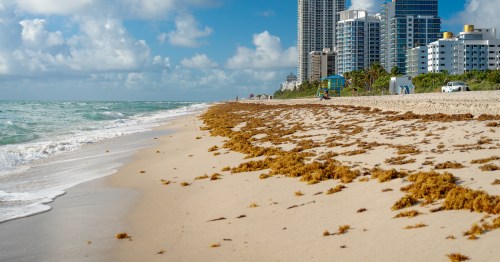
Millions of people flock to Florida during the summer, ready to bask in the sunshine and listen to the waves along its incredible beaches. Summer weather in Florida is often extremely hot and humid with afternoon thunderstorms, but there are other elements visitors should prepare for. One factor that travelers may not be aware of is the amount of sargassum accumulation along the shore, which is affecting many Florida beaches this year. Sargassum is a brown-colored seaweed that forms large mats in the ocean and can wash ashore, impacting beachgoers in the Sunshine State.
What Gets Extreme in Florida During Summer?
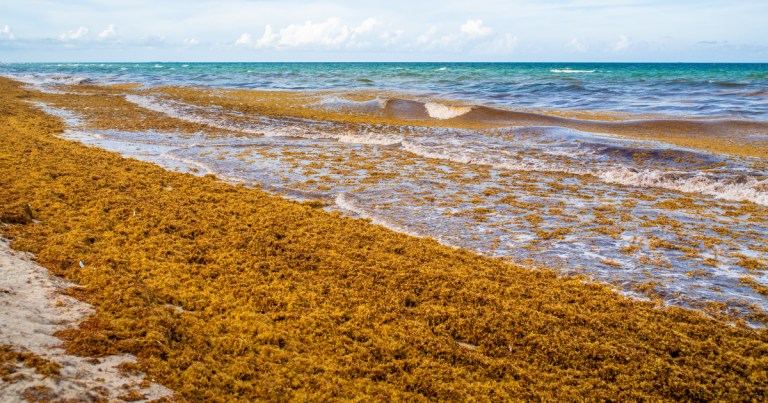
Sargassum is a type of brown seaweed that floats in the ocean. The seaweed clumps together, forming floating masses that can stretch for miles. Many types of marine life can find refuge in sargassum, including fish, sea turtles, crabs, and shrimp. While this seaweed can help certain species, it can also pose problems.
Sargassum "inundation events," as described by the National Ocean Service, happen when large amounts of the seaweed wash ashore. These events can smother plant and animal life in the ocean, including coral reefs. It can also introduce heavy metals and contaminants, which it often carries. When sargassum decomposes on the beach, it produces a gas called hydrogen sulfide, which smells like rotten eggs and can bother the lungs when inhaled.
Why Sargassum Events Happen in Florida
For many years, sargassum primarily lived in the Sargasso Sea, a body of water in the North Atlantic Ocean. However, in 2011, the scope of its habitat expanded, and it now flourishes in the open ocean, forming what is known as the Great Atlantic Sargassum Belt. Scientists suspect that the increased sargassum growth is due to several factors, including climate change and Amazon deforestation. Large sargassum mats now move into the Caribbean Sea, South Atlantic Ocean, and Gulf of Mexico, and affect Florida's beaches each year. The Florida Fish and Wildlife Commission describes peak sargassum season as spring and summer.

What Travelers Should Expect
Visitors to Florida's beaches should expect a heavy sargassum bloom this year, one of the largest ever recorded. In July, West Palm Beach, Fort Lauderdale, and Miami were all affected. The National Oceanic and Atmospheric Administration (NOAA) and the University of South Florida (USF) publish a Daily Sargassum Inundation Risk, rating coastal risk of sargassum washup along Florida's beaches and many other areas. This tool can help travelers determine the risk level of the specific beach they are visiting and prepare accordingly.
How to Prepare for It
It is important to determine the sargassum levels for the specific area you are visiting, as some can be heavily affected while others are much less so. If you determine that the beach you're traveling to will be affected, be sure to check local news and information sources for the most relevant information. The EPA offers protection information in the event of a sargassum inundation event, including avoiding waters with large amounts of sargassum, beaches with decomposing sargassum, and handling it without appropriate protective clothing and equipment. It is also important to recognize that some coastal cities invest significant resources into removing sargassum from their beaches.

Is Florida Still Worth Visiting in the Summer?
While sargassum can complicate a visit to Florida's beaches during the summer, it is absolutely still worth visiting the Sunshine State. Not every beach is affected, and there are many other things to do, from visiting the state's amusement parks to its museums and bucket list restaurants. There are also several fun-filled places in Florida for restless kids, including splash pads and zoos, as well as thousands of lakes in the state, where you can cool off, paddleboard, kayak, fish, and more. No matter what you're in the mood for, there's bound to be something you will enjoy when visiting Florida in summer.
Subscribe to our newsletter
Get the latest updates and news
Thank you for subscribing!