15 Places in the U.S. That Feel Like an Alien Planet
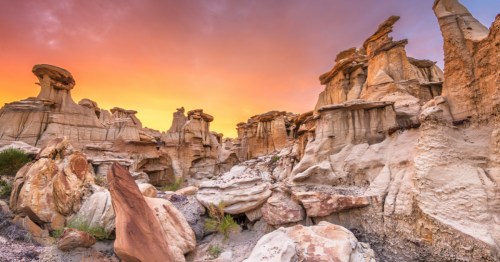
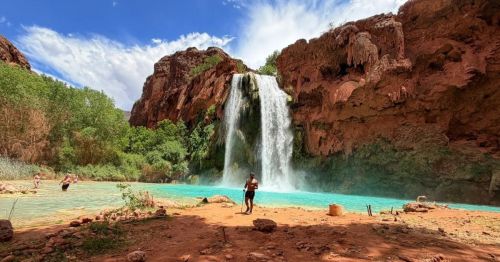
From lava fields to white sand dunes and colorful badlands, these incredible places across the U.S. look like they belong on another planet.
The United States covers 3.8 million square miles, making it the third-largest country by area in the world. From coast to coast, we encounter incredible, awe-inspiring landscapes that often make us do a double-take before whipping out our cameras or phones to take pictures.
And while we may find the "typical" landscapes across the country to be extraordinary, numerous landscape oddities lie in wait. These otherworldly places may have you questioning reality, wondering if you've landed on another planet (maybe even one in a distant galaxy).
1. Mono Lake — California
- Location: Mono Lake Tufa State Natural Reserve in Mono County, Northern California. To get to Mono Lake Tufa State Natural Reserve, take Highway 395. Lee Vining is the closest town to the reserve, and it's only 13 miles from Yosemite National Park.
- Plan ahead: Dress in layers, as the weather can change quickly due to its location in the mountains.
- When to visit: For mild weather, fewer crowds, and the chance to see migratory birds, visit Mono Lake in the spring or fall.
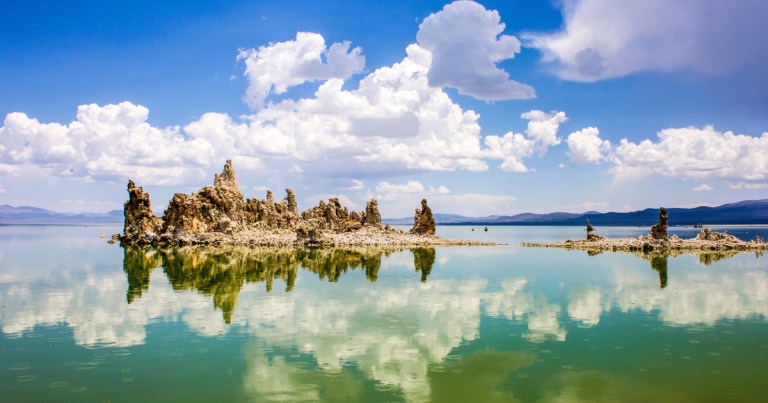
Mono Lake, set in the eastern Sierra Nevada Mountains, is one of the most surreal places in the U.S. Aside from its impressive size of 65 square miles, this is an ancient lake dating back more than 1 million years, among the oldest lakes on the continent.
Another surreal feature is the geological oddities known as tufa towers; in fact, the Mono Lake Tufa State Natural Reserve was originally established to protect them. The freshwater of the springs mixing with the high-alkaline waters of the lake has formed these calcium-carbonate spires of the tufa towers over time, adding to the surreal nature of Mono Lake.
2. White Sands National Park — New Mexico

- Location: Alamogordo, New Mexico
- Plan ahead: This national park charges an entry fee of $15 per pedestrian, $20 for motorcycles, and $25 for vehicles.
- When to visit: To avoid the triple-digit summer temperatures, plan to visit White Sands National Park between October and April when temperatures are mild.
One of the top destinations that don't look real has to be White Sands National Park. With stark-white dunes undulating over 275 miles in the heart of the Tularosa Basin in the northern part of the Chihuahuan Desert, it looks more like extraterrestrial landscapes in the USA than something that should even exist here on Earth.
The white sand is composed of gypsum, a calcium sulfate dihydrate mineral that is soft to the touch and has the appearance of fresh snow.
3. Fly Geyser — Nevada

- Location: On the private property of Fly Ranch in Gerlach, Nevada.
- Plan ahead: Fly Geyser is on private property. Access is only available via guided Fly Ranch Nature Walk tours (Saturdays, April–November); tickets must be booked in advance.
- When to visit: Spring or fall when the desert temperatures are milder.
Among the strange natural wonders in the USA, or better yet "unnatural wonders," the Fly Geyser is perhaps the strangest, as it's both natural and accidentally man-made. This accidental geothermal oddity was first created in 1916, when farm workers decided to drill a well for irrigation. What they hit instead was an underground well with a temperature of 200 degrees.
Fly Geyser is located on the 3,800-acre private sanctuary of Fly Ranch, home to the Burning Man Rural Center for Interactive Art & Community Participation, a place where art and the environment intertwine. In addition to the iconic geothermal wonder, numerous plant and animal species, including wild horses, coyotes, and jackrabbits, thrive here. The only way to visit is to book a spot on a docent-led Fly Ranch Nature Walk, where you'll learn about the ranch, see the Fly Geyser, and visit an area of the ranch where Burning Man art is displayed.
4. Chiricahua National Monument — Arizona

- Location: Willcox in southeastern Arizona
- Plan ahead: Fill up on gas, water, and food before arriving. Camping at Bonita Canyon Campground requires advance reservations.
- When to visit: The spring and fall are the best times to visit due to comfortable high daytime temperatures between 60 and 80 degrees.
Chiricahua National Monument features some of the most extraordinary alien landscapes in the USA, with rocks balancing on top of each other almost like a mind-bending trick and rhyolite pinnacles reaching towards the sky. Formations like these don't seem real when seen in pictures, and sometimes they still don't in person, almost as though the "you have to see it to believe it" idiom doesn't apply.
To explore the monument, there are 17 miles of trails for a grand adventure through landscapes you never dreamed of seeing in person. If you prefer to remain in your vehicle, the 8-mile Bonita Canyon Drive will whisk you away into the dreamy valley with rock formations, forests of oak, pine, and cypress, and eventually to Masai Point, an overlook with panoramic mountain and valley views.
5. Bonneville Salt Flats — Utah

- Location: Off the I-80 approximately 120 miles west of Salt Lake City and close to the Nevada border in Tooele County.
- Plan ahead: Check the BLM.gov or the Utah Salt Flats Racing Association website in advance if you want to view or avoid major racing events like Speed Week.
- When to visit: Anyone can visit the salt flats year-round; however, most prefer visiting between July and October for the driest white salt crust, best for driving and racing.
Located in the northwest corner of Utah near the Nevada border, the Bonneville Salt Flats cover an impressive 12 by 5 miles of the 300,000 acres of Utah desert and are among the most otherworldly wonders in the Southwest. The land, situated at the western edge of the Great Salt Lake Basin, is composed mainly of sodium chloride (table salt), which forms a crust during the dry season and resembles a field of glass when covered in water during the rainy season.
One of the most popular activities at Bonneville Salt Flats is racing. The flat terrain and the hard salt make for a perfect racetrack for amateur racers to break landspeed records. Each summer, Speed Week, a 6-day racing event, is held, drawing nearly 25,000 attendees to watch 400 participants race.
6. Painted Hills — Oregon

- Location: Within the John Day Fossil Beds National Monument in Mitchell, Oregon.
- Plan ahead: There is no entry fee to this national monument. For alerts and closures, visit the National Park Service website.
- When to visit: For mild weather, visit the Painted Hills Unit in the fall or spring when vibrant wildflowers are in bloom. It's also the most crowded on weekends.
The Painted Hills Unit of the John Day Fossil Beds National Monument in east-central Oregon is one of the most otherworldly places in America. It's almost as though Mother Nature took a paintbrush and applied red, orange, tan, and black hues to the hills. When you see them in person, you'll understand why this is the most visited of the three units in the national monument (the others are the Clarno and Sheep Rock Units).
When visiting this unit of the John Day Fossil Beds National Monument, take some time to hike the short-and-sweet trail to the Painted Hills Overlook.
7. Devils Tower — Wyoming

- Location: Northwest Wyoming near both Hulett and Sundance.
- Plan ahead: Entrance fee of $15 per pedestrian, $20 for motorcycles, and $25 for personal vehicles, or you can use an America the Beautiful National Parks Pass.
- When to visit: For fewer crowds and the best weather at Devils Tower National Monument, visit in spring (April or May) or fall (September or October).
Standing 1,267 feet tall over the Belle Fourche River is the Devils Tower, the most prominent feature in the national monument and one of the most unique geological formations in the USA. This imposing rock formation is a geological phenomenon known as "columnar jointing," formed by cooling lava that hardens and contracts, forming fractures along the surface. The Devil's Tower is one of an estimated 200 examples of columnar jointing worldwide. Considered a sacred place by more than 20 Native American tribes, Devil's Tower became the first national monument in the U.S. in 1906.
8. Craters of the Moon National Monument and Preserve — Idaho

- Location: In the Snake River Plain of Central Idaho.
- Plan ahead: Fees range from $10 to $20, and only credit cards are accepted (no cash). The annual National Parks Pass is also accepted.
- When to visit: For fewer crowds and cooler, more comfortable temperatures between 60 and 70 degrees, visit in spring or fall (the shoulder seasons).
One of the most underrated national parks also happens to be one of the most unusual places in America. Craters of the Moon National Monument and Preserve has an almost lunar landscape, with its black lava terrain starkly contrasted with the green sagebrush that grows in its volcanic soil.
Exploring this national monument is like discovering a new planet, and hiking is one of the best ways to see and experience it. One short hike with spectacular views through the otherworldly landscape is the half-mile-long Devil’s Orchard Trail. Best of all, it's paved, so those with strollers and mobility equipment can also enjoy it. You can also take a drive along the scenic 7-mile Loop Road to see even more of the lunar-like landscape of Craters of the Moon.
9. Mauna Kea — Hawaii

- Location: On Hawaii, 35 miles west of Hilo.
- Plan ahead: Due to the high altitude, those who are prone to altitude sickness should take precautions.
- When to visit: April through October provides the optimal time for stargazing, while you may find snow between December and March. Check the Global Summit Guide for month-by-month conditions at Mauna Kea.
Of all the U.S. places that look like Mars, Hawaii's Mauna Kea comes the closest. At 13,796 feet, this dormant volcano holds the record for the highest elevation in the entire Pacific Basin. Although it hasn't erupted in 4,000 years, scientists are convinced it will erupt again someday. Along with its high elevation, it's one of the best spots in Hawaii for stargazing, with over a dozen telescopes from around the globe at or near the summit—it's the largest observatory in the world. It's also considered the most sacred of all Hawaiian volcanoes.
So, how does it resemble Mars? Mauna Kea's summit is composed of cinder cones and reddish-brown volcanic ash, resembling a Martian landscape. Absolutely otherworldly, the only way to visit the summit is to take a guided tour with a tour company like Mauna Kea Summit Adventures.
10. Bisti/De-Na-Zin Wilderness — New Mexico

- Location: Bloomfield, San Juan County in northwestern New Mexico.
- Plan ahead: The park is open year-round, and there is no fee to visit. High-clearance vehicles are recommended.
- When to visit: September and October offer gorgeous weather and comfortable temperatures for exploring this park.
If your idea of an alien landscape involves hoodoos and badlands, visiting Bisti/De-Na-Zin Wilderness is a must. This 45,000-acre wilderness area is a wonderland for those interested in geology and paleontology, with endless colorful spires, cliffs, layers of rock, petrified wood, rock concretions, vertebrate fossils, and eroded badlands formed by sediment from the Late Cretaceous period. Dinosaur bones and marine fossils have also been discovered here.
If you really want to pretend you're on another planet, exploring the park on one of just a few hiking trails is the best way. Check AllTrails for the top trails at Bisti/De-Na-Zin Wilderness.
11. Goblin Valley State Park — Utah

- Location: Green River in Emery County, Utah
- Plan ahead: Day-use hours are 6 a.m. to 10 p.m. daily, and there's a $20 per vehicle and $10 per pedestrian, cyclist, or motorcyclist fee.
- When to visit: Best to visit this Utah state park in either fall or spring when temperatures average between 60 and 80 degrees.
Goblins lie in wait throughout the vast desert landscape of Goblin Valley State Park. Don't worry, though—these are not goblins from fantasy novels or fairytales but distinctive sandstone hoodoos that have been given the nickname "goblins." With such a unique landscape that can be likened to that of another planet, several films have been shot here over the years, including "Galaxy Quest" (1999) and "The Tree of Life" (2011). Although visitors come here for the surreal landscape, they can enjoy a variety of outdoor recreation, such as hiking, camping, off-roading, and even disc golf.
12. Lassen Volcanic National Park — California

- Location: Located an hour east of Redding in northeastern California off State Route 89.
- Plan ahead: There is a $30 entry fee per vehicle, or you can use a National Park Pass.
- When to visit: The summer offers the best weather, though that's when it's most crowded; fall is best for fewer crowds.
There's no other place in the U.S. quite like Lassen Volcanic National Park, with its vast volcanic terrain left in the wake of dramatic eruptions over a hundred years ago. Covering an expanse of over 106,000 acres, with 79,062 acres designated as wilderness, there are numerous ways to explore the unusual landscape of geothermal sites, alpine lakes, mountain peaks, volcanoes, and meadows. When visiting this national park, most people enjoy the 30-mile scenic drive along Highway 89, with pullouts and viewpoints along the way.
Hiking is another wonderful option, where you can really take in the scenery. Among the best trails in the park are the 5-mile Lassen Peak Trail, the 3-mile Bumpass Hell Trail, and the 4-mile Cinder Cone Trail to the 200-foot summit of the Cinder Cone Volcano.
13. The Wave - Arizona

- Location: Located near the Arizona-Utah border in the North Coyote Buttes of the Paria Canyon-Vermilion Cliffs Wilderness.
- Plan ahead: You must obtain a permit ahead of time in one of two ways: enter the Advanced Lottery on Recreation.gov, which comes with a $6 application fee, or apply for the daily lottery two days in advance of your intended visit. If you win a permit, you must pick it up and attend a safety meeting in person.
- When to visit: Due to the desert climate and extreme summer heat, spring and fall are the best times to visit The Wave.
Perhaps the most famous of all the weird places to visit in America is The Wave. In fact, it's one of the most photographed destinations in the Southwest due to its striking shape and striated bands of red sandstone that seem to roll like waves through the North Coyote Buttes. Those fortunate enough to win a permit to experience The Wave must take a 6-mile round-trip hike by following a map or GPS, as there's no designated trail. But once you arrive at one of the most iconic natural wonders in the country, you'll understand why it's a bucket-list destination.
14. Bryce Canyon National Park — Utah

- Location: Located in southern Utah, just 90 minutes from Zion National Park.
- Plan ahead: There's a $ 35-per-vehicle entry fee, or you can use a National Park Pass. Visit the NPS website for alerts, closures, seasonal hours, and campground reservations.
- When to visit: The shoulder seasons (fall and spring) are the best times to visit due to fewer crowds and comfortable temperatures.
Home to the "greatest number of hoodoos on Earth," Bryce Canyon National Park, it's easy to see why more than 2 million visitors come here to enjoy its otherworldly splendor. While hiking is the best way to explore the park and get up close to see the tens of thousands of hoodoos, you can also rent an e-bike and stop at various overlooks to view them from above. Horseback riding is another way to experience the park, allowing you to slow down and take it all in on 4.5 miles of equestrian trails.
Bryce Canyon is one of Utah's "Mighty Five" national parks, which also include Zion, Canyonlands, Capitol Reef, and Arches, with its own out-of-this-world landscapes.
15. Valley of Fire State Park — Nevada

- Location: Moapa Valley, Nevada, 16 miles south of Overton.
- Plan ahead: There is a charge of $10 per vehicle and $15 per non-Nevada-registered vehicle.
- When to visit: To avoid the hottest and coldest months, visit Valley of Fire State Park in October-November and March-May.
Over 40,000 acres of red Aztec sandstone among tan and gray limestone create the Martian-like terrain of Valley of Fire State Park. It's almost uncanny that a landscape like this even exists in the Southwest, but it does. The red sandstone rock formations started as dunes created over 150 million years ago, and they look like fire during golden hour, just before the sun sets.
Beauty abounds across all 50 states, and while some places make us feel at home, others we visit may have us believing we arrived in another world. For more surreal experiences across the country, hike 15 trails that feel like another planet in the USA. If you prefer roadside attractions and oddities, check out these weird places in America.
Subscribe to our newsletter
Get the latest updates and news
Thank you for subscribing!