12 Hidden Swimming Holes Across the U.S. Still Worth Finding
From waterfall pools and canyon scenery to water so blue it doesn’t look real, these are the best swimming holes in the U.S.
There are countless hidden swimming holes across the U.S. As refreshing as a dip in the ocean or pool may be, there’s something special about swimming in crystal-clear water in the middle of the most beautiful forested settings. Of course, stumbling upon these secret swimming spots often requires a bit more effort than parking at the beach or your local pool club.
If you’re up for a scenic hike, though (some short, some long), these natural swimming holes are sure to not disappoint. From waterfall pools and canyon scenery to water so blue it doesn’t look real, ahead, explore the 12 best swimming holes in the U.S.
1. Havasu Falls, Arizona
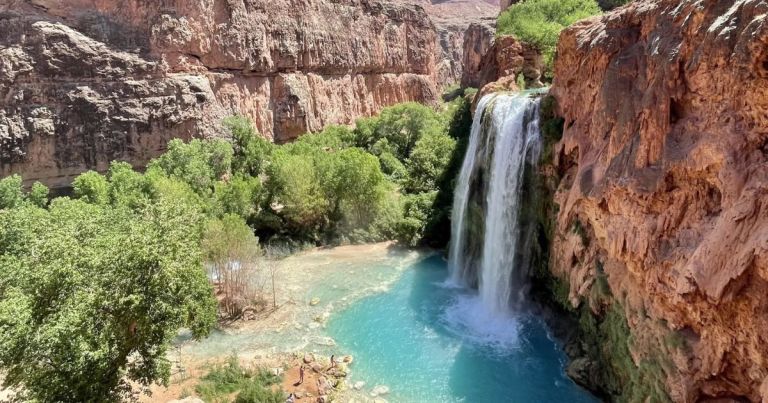
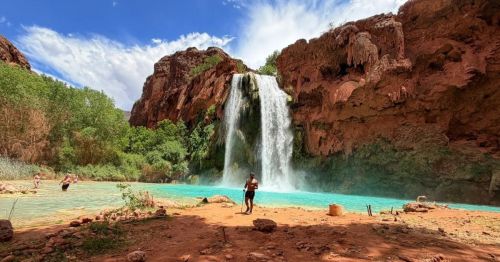
Havasu Falls is a spectacular, spring-fed turquoise waterfall that drops nearly 100 feet over striking red rock cliffs. To say it’s a sight to behold is an understatement.
Located deep within a side canyon of the Grand Canyon, Havasu Falls is accessible only on foot or by helicopter. It’s about a 10-mile moderate hike that’s considered more strenuous due to the distance, rather than the terrain itself. Once you arrive, though, a sparkling waterfall swim awaits.
Please keep in mind, day hiking to Havasu Falls is strictly prohibited by the Havasupai Tribe. Every single visitor is required to have a pre-booked 3-night / 4-day permit (or lodge reservation).
Safety/Respect Tip
Havasu Falls is located on the Havasupai Tribe's reservation and requires a permit to visit. In terms of safety, flash flooding is possible. Keep a close eye on National Park Service closures.
2. Diana's Baths, New Hampshire

Diana’s Baths is a series of layered granite ledges in New Hampshire’s White Mountains, with idyllic falls dropping steadily down them. Between each staggered drop, you’ll find swimming holes begging for a dip.
Unlike Havasu Falls, Diana’s Baths requires but a short jaunt to enjoy. The trail is just over half a mile each way. Just remember: This is a popular summer attraction and the lot fills up fast. It’s best to arrive before 8 a.m. to secure a spot.
Safety/Respect Tip
Whenever adventuring through the great outdoors, it’s essential to leave no trace. Beyond that, beware of slippery rocks. Wearing high-traction water shoes is a good idea.
3. Peekamoose Blue Hole, New York

Just over half a mile into the Sundown Wild Forest within the Catskill Forest Preserve, surrounded by Sugar Maples, Birch, and Conifer trees—and colorful wildflowers in the spring and summer—sits Peekamoose Blue Hole, a stunning swimming hole that feels like a hidden fairy garden gem.
Enjoying a swim in the Peekamoose Blue Hole is a breeze. Shell out $10 for the permit, snag a parking spot, and trek 0.6 miles into the forest. The hole is 20 feet at its deepest. Wear a life vest if needed.
Safety/Respect Tip
Because Peekamoose Blue Hole is mountain stream-fed, the water is very cold and can even cause cold-water shock. Scoop some up in your hands and splash yourself to acclimate your body before plunging in. As always, remember to leave no trace.
4. Devil’s Bathtub, Virginia

Devil’s Bathtub is a small, crystal-clear natural swimming hole located in the Jefferson National Forest. Just 20 feet long and eight feet wide, the scenic swimming hole makes for a picture-perfect plunge.
Devil’s Bathtub is nestled two miles into the forest. The out-and-back 4-mile trail is considered moderate.
Safety/Respect Tip
Given the relative shallowness of the pool, never dive in headfirst. Additionally, since Devil’s Bathtub is a natural creek feature, slippery and sometimes sharp rocks may be present. Wear water shoes for comfort, protection, and ease.
5. Foster Falls, Tennessee

Foster Falls is one of the prettiest waterfall swimming holes in the country. The 60-foot cascade pools into a 150-foot-wide swimming hole that plunges over 10 feet deep in many places. Given its size, it’s one of the best places to swim in nature in the Southeast.
A trip to Foster Falls takes little planning. Snag a parking spot at Fiery Gizzard State Park and walk half a mile down the trail to the forested swimming area.
Safety/Respect Tip
As tempted as you may be to cliff jump at Foster Falls, keep in mind that it’s strictly prohibited.
6. Cummins Falls, Tennessee

Cummins Falls is Tennessee’s claim to fame in the realm of waterfalls. The 75-foot falls cascades down limestone and shale layers before pooling into a wide, rock-walled gorge where people of all ages gather to swim.
Cummins Falls is located along a 2.5-mile moderate out-and-back trail. That said, scrambling is part of the path, so solid footwear and steady footing are a must, especially once you reach the slippery rocks. FYI: Gorge access permits are required for entry.
Safety/Respect Tip
Because Cummins Falls is located in a gorge, it’s susceptible to flash flooding. Always keep an eye on the weather in and around the falls when making a trip.
7. Buttermilk Falls, New York

Buttermilk Falls is another popular shale-and-sandstone waterfall gorge swimming hole. The scenic swimming spot, complete with a staggering 165-foot waterfall, is located in the Finger Lakes region of New York, making it a great detour during a winery weekend getaway.
Pull up to the parking lot directly next to the swimming hole and go for a dip. Swimming is permitted at Buttermilk Falls during the summer season, when lifeguards are present—typically on weekends and occasional weekdays. Swimming hours often run until mid-August. While you can park directly next to the swimming hole, the full Buttermilk Falls Gorge and Rim Trail Loop is worth considering. It’s under 2 miles but is considered a moderate trek.
Safety/Respect Tip
Theft has occurred in the parking area, so it’s best not to leave any valuables behind.
8. Slide Rock, Arizona

Slide Rock is one of the country’s most renowned natural waterslides. Located just north of Sedona, the picturesque slide is slick with algae, making for a surprisingly speedy descent. Keep in mind, though: The slide is the star of the show here—the water only goes up to, at most, waist height, so it’s not the best for actually swimming.
From pictures alone, you might think Slide Rock will take a great adventure, much like Havasu Falls. In reality, you can park at Slide Rock State Park and walk down the path to Oak Creek. Easy as that!
Safety/Respect Tip
Slide Rock is slippery. Wear water shoes with grip to prevent falls.
9. Donut Falls, Utah

Donut Falls is a fun detour destination for folks living in or visiting Salt Lake City. Located in Big Cottonwood Canyon, 35 minutes southeast of the city, the unique swimming hole awaits discovery. Unlike most of the features on our list, Donut Falls isn’t suitable for full plunges or swims—it’s more so a scenic delight that you’ll want to snap a picture of and check off your bucket list. The one-of-a-kind Wasatch Mountains falls has a cenote-like feel because the creek flows down and falls through a hole in the granite and limestone, pooling in the cave below. The water is crisp and crystal clear—but it’s just about ankle deep.
Donut Falls is the perfect destination for folks looking to hike with a cool spot to cool off mid-trek. The 3.4-mile out-and-back trail is considered easy, and there are bathrooms at the trailhead. Once you arrive at the main event, duck into the cave, peruse the river rocks, and consider a sit in the cool, shallow water.
Safety/Respect Tip
There’s a final scramble right around Donut Falls that can get slick. Navigate accordingly.
10. Franklin Falls, Washington

A crisp Pacific Northwest swim in a waterfall pool surrounded by lush, fragrant evergreens? If that sounds like a dream, it’s time to make your way to Franklin Falls in Washington. The main drop of the falls tumbles around 70 feet into a crystal-clear pool deep enough for plunging and wading along the edges, but the full height of descent nears 130 feet.
Enjoy a 2-mile out-and-back trail in which Franklin Falls serves as the perfect mid-point. If you go in the summer, you’ll get to witness the vibrant wildflowers in the area, too.
Safety/Respect Tip
While you can absolutely soak in this gorgeous natural swimming hole, you shouldn’t jump into it, as it’s only around four feet deep.
11. McCloud River Falls, California

California might be best known for its beaches, but McCloud River Falls, in the Shasta-Trinity National Forest, is a natural wonder you won’t want to miss. Comprised of Upper, Middle, and Lower Falls, McCloud River Falls has various clear, sparkling blue-green swimming opportunities. While the exact depth isn’t published, many visitors tout that it’s deep enough to plunge, float, and swim. Between the crisp, clear water and the stunning forest surroundings, it’s a hard swimming hole to beat.
There are parking lots at each of the falls, streamlining access. There’s also the option to hike one of the trails in the area. The McCloud Waterfalls Trail is an easy 3.9-mile out-and-back and passes by all three.
Safety/Respect Tip
There are submerged boulders in the swimming holes. Exercise caution and resist the urge to jump in.
12. Twin Falls, Maui, Hawaii

Twin Falls is a rainforest waterfall swimming hole where you can plunge in the pool or sit back in the cool cave below the falls. It’s a bucket-list Hawaiian destination that you won’t soon forget.
Located near Mile Marker 2 on Hāna Highway, Twin Falls is the perfect first stop for people traversing Maui’s famous Road to Hāna. There’s a parking area nearby, so it won’t take a strenuous hike to access either. A word to the wise: the Road to Hāna is very windy, with many steep drop-offs. It’s often best to book a tour or hire a driver to explore the area.
Safety/Respect Tip
The swimming hole is roughly 10 feet deep, making it great for dips and swims, but ill-advised for high jumps.
Of all the hidden swimming holes across the U.S., these are the most breathtaking. When visiting, be where your feet are and savor every moment.
Subscribe to our newsletter
Get the latest updates and news
Thank you for subscribing!