Bryce Canyon National Park: Hike Through Hundreds of Hoodoos in Utah
Bryce Canyon National Park in Southern Utah offers stunning geology, hiking trails, and top-notch stargazing.
If you didn't know any better, driving through Southern Utah might leave you feeling as if you'd left the planet. The rugged terrain and unique rock formations are, at times, outright otherworldly. Bryce Canyon National Park showcases the stunning geology of this part of the country, and it's a natural wonder well worth exploring.
Is Bryce Canyon National Park worth visiting?
Bryce Canyon is a sea of red rocks, pink cliffs, and endless vistas. It's a hiker's paradise, a fantastic place to camp, and boasts incredible views and top-notch stargazing. It's really no wonder that nearly 2.5 million people visited this national park in Utah in 2024 alone. It's a place with views that will leave you mesmerized. This destination is where visitors can tackle some of the best hiking trails in the U.S. — plus some of the best road trips in the USA!
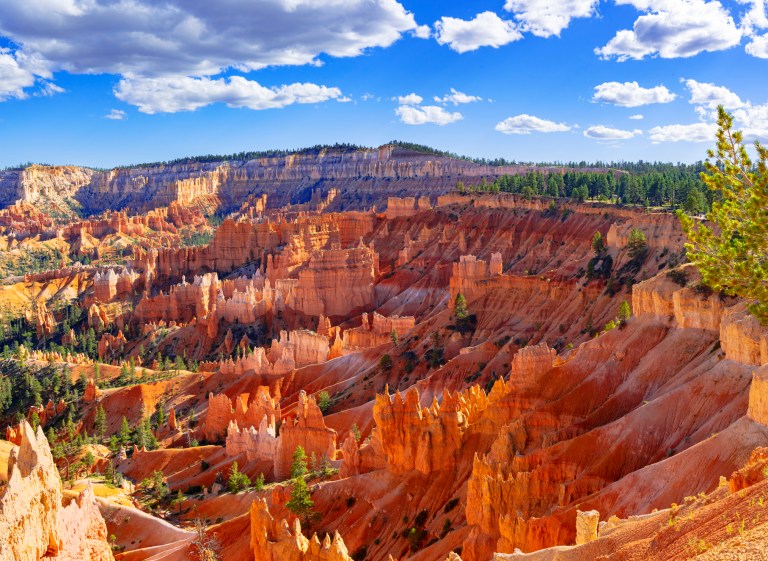
Bryce Canyon National Park is located in Garfield County and Kane County, on the eastern edge of the Paunsaugunt Plateau in southern Utah. It is just a short drive from charming small towns in Utah like Panguitch, Tropic, and Escalante.
While the park itself was founded in 1928, it took millions of years of wind, water, and snow to create this rugged terrain. And believe it or not, Bryce Canyon is not a canyon at all. Rather, it is a series of more than a dozen natural amphitheaters. And although it is close to Zion National Park, at 35,835 acres, it's much smaller.
When is the best time to visit Bryce Canyon National Park?
Bryce Canyon is the perfect showcase for the stunning geology of the area, and it's easy to see why it's one of the most photographed parks in the country.

According to the experts, the ideal time for getting the best photos is sunrise, with sunset being a close second. The morning and evening light casts the park in a soft glow.
Only In Your State Editor Courtnie Erickson grew up just outside of Bryce Canyon National Park and has visited this incredible destination dozens of times. She strongly recommends visiting during the winter months as the snow-covered hoodoos create quite a breathtaking scene, and the crowds are much smaller. This is when you'll typically find her exploring this park.

Getting To/Accessing Bryce Canyon National Park
There are several ways to get around Bryce Canyon National Park. During the park’s peak season, typically between April to mid-October, the park offers a free shuttle service. While the shuttle around the park is free, you must still pay an entrance fee into the park or use an annual National Parks Pass. This shuttle is beneficial as it takes you to many of the main areas in the park and eliminates the hassle of parking as many parking lots can become quite full.
You can also drive your own vehicle throughout the park. If driving on your own, we recommend visiting the most popular areas of the park early in the morning or later in the evening to more easily find parking spots. There are also scenic drives that showcase some of the best parts of this park. The Natural Bridge, for example, is one of seven natural arches found in the park. It's one of the major points of interest on Highway 63.
Agua Canyon, which can also be reached by car, is a viewpoint that overlooks several prominent hoodoos. Guests can also access Highway 12, which cuts across the scenic northeast portion of the park. With proper planning, you can also explore Bryce Canyon on a bike, an ATV, or better yet, a horse.
Best Hikes in Bryce Canyon National Park

Of course, sometimes the best way to see places like this is on foot.
Luckily, Bryce Canyon has dozens of amazing hiking and backpacking trails. The Navajo Loop & Queen's Garden Trail is one of the most popular treks. It spans 3.5 miles and is ranked moderately difficult.
Most of Bryce Canyon’s day hikes are accessed in the amphitheater area, such as the Sunset Point to Sunrise Point Hike, Rim Trail, and Peekaboo Loop. However, there are some backcountry trails such as the Under-the-Rim Trail and the Riggs Spring Loop Trail.
Where to stay in Bryce Canyon National Park
While there are several hotels near Bryce Canyon, the best way to experience it overnight is by camping. The park has two campgrounds, North and Sunset, located close to the visitor center. Sunset Campground is closed during the winter, and the North Campground is open throughout the year.
If you do wish to stay in a hotel, just outside of the main entrance to Bryce Canyon is Ruby's Inn, which is where you'll find guest rooms, RV sites, and glamping options.
Of course, it doesn't matter where you stay at Bryce Canyon, just make sure you step outside and spend a few minutes staring at the night sky. Bryce Canyon National Park is an International Dark Sky Park and is where you'll find some of the darkest skies in the state.
Plus, for the last two decades, Bryce Canyon has hosted the Annual Astronomy Festival in June. It's a must-see for anyone interested in astronomy. Guests will enjoy a variety of astronomy-themed activities and programs offered both day and night, plus hear from a keynote speaker.

Practical tips for visiting Bryce Canyon National Park
General Information:
Accessibility: Parts of the park, such as the visitor center and select campgrounds, are wheelchair accessible. For the complete breakdown of the park's accessibility, see the National Park Service website.
Pet-Friendly: Pets are permitted at campgrounds, in parking lots, on paved roads, and in paved viewpoint areas. They are not permitted on unpaved trails or viewpoints, in public buildings, or on public transportation vehicles. Dogs must be kept on a leash at all times.
Parking: There are vehicle parking lots near the visitor center, the Shuttle Station Parking Lot in Bryce Canyon City, and park campsites.
Seasonal Access: The park is open 24 hours a day throughout the year, though there may be temporary closures due to excessive snow or other weather-related conditions. The visitor center and fee booths are closed on select holidays throughout the year.
Cost: A pass must be purchased before entering the park. Entrance fees are $35 for a private vehicle, $30 for a motorcycle, $20 for a pedestrian, and $70 for an annual pass. Keep in mind that this national park does not accept cash.
Why do we love Bryce Canyon National Park?

Bryce Canyon National Park truly is a national treasure. The unique geology, outdoor recreational opportunities, and natural beauty make this park a bucket-list-worthy destination. If you ever find yourself exploring Utah, don't pass up a chance to see this enchanting place. For more information on planning your visit, check out the NPS-Bryce Canyon website.
Feeling inspired to fill your Bucket List? Check out our previous features of Hoh Rain Forest in Washington, Maroon Bells in Colorado, and Hawai'i Volcanoes National Park in Hawai'i.
Subscribe to our newsletter
Get the latest updates and news
Thank you for subscribing!