10 Best Places To See Bioluminescence In The U.S. (2026 Guide)
Tracking down these incredible natural wonders takes a little bit of patience and a clear, moonless night. But whether you’re paddling through glowing Florida waters or walking under a flashing canopy in the Smokies, standing in the middle of nature's own light show is a reward you'll never forget.
You don't need a plane ticket to watch nature light itself up.
Across the country, a surprising number of spots turn into real-life glow shows once the sun goes down, some in the ocean, some in a swamp, one even in the woods. The catch is that most of these run on nature's schedule, not yours, so seeing one takes a little planning. Here are 10 real places to catch the glow, split between water and the two land-based phenomena that borrow the same basic trick.
The Science of Bioluminescence, In Short
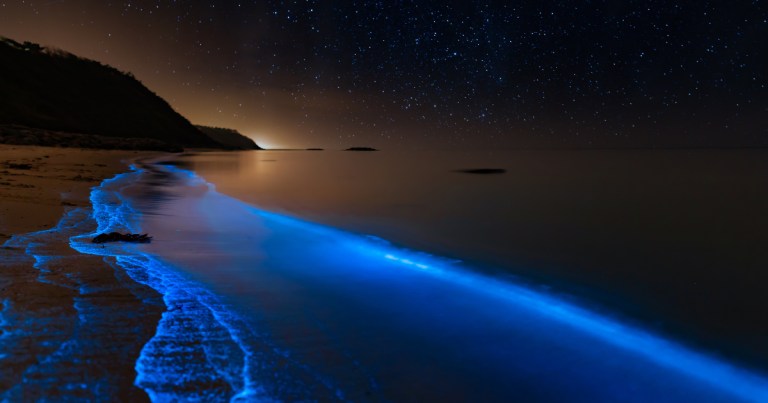
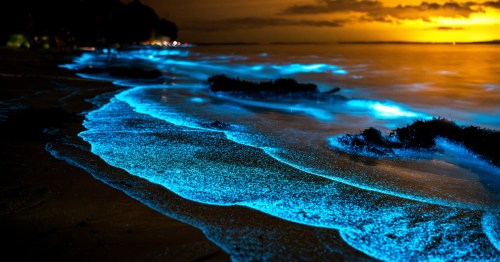
Ocean bioluminescence mostly comes from dinoflagellates, single-celled organisms that flash blue light when the water around them gets disturbed by a wave, a paddle, or a fish darting past. Some bays get help from comb jellies, which glow for the same underlying reason: movement triggers a chemical reaction inside them. Fireflies and glowing fungi use a related chemistry (a compound called luciferin reacting with an enzyme called luciferase) but produce the light through entirely different biology. Water blooms are famously hard to predict. Firefly season and fungi sightings are a bit more consistent, though still weather-dependent.
Bioluminescent Water
1. Indian River Lagoon, Florida

Florida's east coast is one of the more reliable bets in the country, mostly because two different organisms show up on a rotating schedule. Dinoflagellates tend to light up the warmer months, while comb jellies take over as the water cools, so some version of this show runs across a big chunk of the year. The lagoon and nearby Banana River, both within reach of Cocoa Beach and Titusville, are the epicenter. Paddle through the mangrove tunnels at night, and you'll watch mullet leave trails of blue light every time they jump. We've already mapped out a glowing bioluminescence kayak tour near the Indian River Lagoon worth booking if you'd rather not go in blind.
2. Mosquito Bay, Vieques, Puerto Rico

Puerto Rico is a US territory, so this is still passport-free, just a flight away. Mosquito Bay on the island of Vieques holds the Guinness World Record for the brightest bioluminescent bay on the planet, thanks to an unusually dense population of Pyrodinium bahamense packed into a narrow, mangrove-ringed bay. The mangroves do double duty, trapping organisms while providing the nutrients they need to thrive. Concentrations here actually climbed after Hurricane Maria, and gas-powered boats are banned to protect the bay. Time a visit around a new moon and the water gets bright enough that swimming fish leave visible streaks of light behind them.
3. Laguna Grande, Fajardo, Puerto Rico

Less than an hour from San Juan, Laguna Grande is the more accessible sibling to Mosquito Bay, reached through a narrow mangrove canal that opens into a wider lagoon. Most visitors go by glass-bottom kayak, which lets you watch the glow through the hull instead of just around the paddle. It's also the busiest of Puerto Rico's bioluminescent bays, so a weeknight or off-peak visit tends to mean a calmer, darker experience.
4. La Parguera, Lajas, Puerto Rico

On the island's southwestern coast, La Parguera stands out for one reason: it's the only one of Puerto Rico's three bioluminescent bays where swimming and snorkeling are actually allowed. Late-night snorkel trips let you get eye level with the glow instead of watching it from a boat or kayak, which is about as close as most people will ever get to swimming through stars.
5. San Diego's Coastline, California

Southern California's glow comes from a different organism, Lingulodinium polyedrum, and it's a genuinely unpredictable one. It shows up as a reddish "red tide" bloom during daylight hours, then turns blue after dark when waves or footsteps disturb it. La Jolla Shores, Torrey Pines, and Del Mar are the go-to stretches, largely because they sit far enough from city lights to actually see it. If you're headed to Torrey Pines, it's worth reading up on the reserve's hours and parking first, since the park closes at sunset even though beach access sticks around. We've already covered the details on Torrey Pines State Beach. Blooms here can show up anytime from spring through fall, with no fixed calendar, so following local marine research accounts is the best way to catch one in real time.
6. Tomales Bay, California

Often overshadowed by its SoCal cousin, Tomales Bay proves the glow isn't just a Southern California thing. This narrow, 15-mile inlet north of San Francisco has supported oyster farming for generations, and that same nutrient-rich water helps sustain the bioluminescent blooms that show up here, typically in summer. Local ecologists have monitored the phenomenon since around 1900, and while dense blooms can occasionally stress the ecosystem, those typically seen here are mild and short-lived. Kayak outfitters run new-moon paddles specifically timed to the glow. Our full writeup on Tomales Bay's glowing algae covers what to expect if you're planning a trip.
7. San Juan Islands, Washington

The Pacific Northwest isn't the first place most people think of for glowing water, but the Salish Sea surrounding the San Juan Islands carries the same dinoflagellates that light up California's coast. Griffin Bay, just off San Juan Island, is one of the more consistent viewing spots, especially during a new moon when there's little ambient light to compete with. Summer, roughly June through August, is when a bloom is most likely to move through. There's already a bioluminescence and sunset kayak tour near San Juan Island that puts you right in the glow with a guide who knows the water.
Bioluminescent Land

Water isn't the only place this happens. Fireflies and certain fungi produce light using the same luciferin-luciferase chemistry as glowing plankton, just packaged in a completely different organism.
8. Great Smoky Mountains, Tennessee

Every year in late May or early June, the Smokies fill with synchronous fireflies (Photinus carolinus), one of the only species in the world that flashes in perfect unison rather than randomly. The display centers on the Elkmont area, and it's popular enough that the National Park Service runs a lottery to manage the crowds. We've got a full breakdown of the synchronous fireflies in the Smokies, lottery included, if you want to plan around it.
9. Congaree National Park, South Carolina

Congaree is one of only a handful of places in North America with a synchronous firefly display, and its version, Photuris frontalis, has earned the nickname "Snappy Syncs" for its rapid-fire flash pattern. The show runs for about two weeks between mid-May and mid-June along the park's old-growth floodplain, and since 2021, the park has run its own lottery system for vehicle passes during peak nights, modeled on the one at Great Smoky Mountains. We've covered Congaree's synchronous fireflies event if you want the full rundown before applying.
10. Blue Ridge & Appalachian Forests (Foxfire Fungi)

The least predictable entry on this list, and maybe the strangest: certain fungi growing on decaying wood in humid Southeastern forests, including parts of the Appalachians and South Carolina's Lowcountry, glow faintly in the dark. Old-timers called it "foxfire," and it's the same basic phenomenon behind stories of glowing logs in old folk tales. Unlike the fireflies above, there's no official season or lottery. It shows up on damp nights in forests with plenty of rotting wood, which makes it more of a lucky find on a dark hike than a plannable trip.
When To Go, And How To Actually See It

A few things hold true across nearly every water-based spot on this list. New moon nights beat full moon nights every time, since less ambient light makes the glow stand out more. Give it a couple hours after sunset for full darkness to settle in. And if you're chasing an ocean bloom rather than a scheduled event like the Smokies or Congaree fireflies, check in with local marine centers or aquarium social accounts before you drive out, since blooms can appear and vanish within days.
Quick Questions, Answered

Is it safe to swim in bioluminescent water?
Usually, yes, though some California blooms involve organisms that can produce a mild neurotoxin, so it's smart to check local advisories first. La Parguera in Puerto Rico is the one spot on this list where swimming is specifically encouraged. Kayaking or wading is the safer default anywhere you're unsure.
Do you need a guided tour to see it?
Not always. Beach viewing works at spots like Torrey Pines or La Jolla. But a kayak tour gets you into calmer, darker water away from crowds, which usually means a brighter show, and it's close to mandatory for the mangrove-ringed bays in Puerto Rico.
What time of year is most reliable?
Florida's Indian River Lagoon has the longest active season of any spot on this list, thanks to its two-organism rotation. The Smokies and Congaree fireflies run on a tighter, more predictable window in late May and early June. Everywhere else depends on the whims of current ocean currents and local blooms. But that unpredictability is part of the magic. Pick a spot, watch the moon phase (or the calendar, if fireflies are the plan), and give yourself a shot at one of the strangest, most beautiful things nature does after dark.
Subscribe to our newsletter
Get the latest updates and news
Thank you for subscribing!