13 Tropical U.S. Island Destinations You Can Visit Without a Passport
Your passport can stay in the drawer. These 13 tropical U.S. islands are ready when you are.
Most people don't realize just how far American territory stretches across the globe. From a 16th-century walled city in the Caribbean to one of the most remote national parks in the country, the United States claims some genuinely spectacular island destinations, all of which Americans can visit without ever pulling out a passport.
Regardless of whether you're dreaming of bioluminescent bays, Pacific diving caves, or a beach so uncrowded you'll have it nearly to yourself, these U.S. territories have more to offer than most travelers expect. No customs lines, no currency exchanges, just pure paradise. Here are 13 tropical American island destinations worth adding to your bucket list.
1. Old San Juan, Puerto Rico
- Best For: History buffs, architecture lovers, and vibrant nightlife.
- Don't Miss: Walking down Paseo La Princesa at sunset and exploring the ramparts of El Morro.
- Getting There: Fly directly into San Juan (SJU) and take a short taxi or rideshare into the old city.
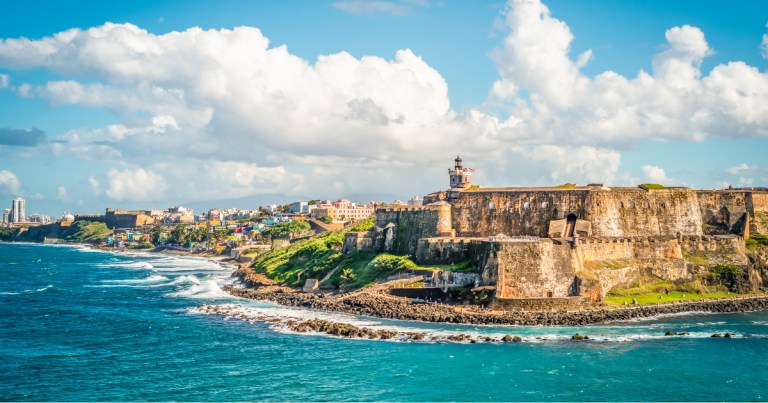
If you're visiting Puerto Rico for the first time, Old San Juan is where to start. The 16th-century walled city packs cobblestone streets, candy-colored Spanish colonial buildings, and a pair of serious fortresses into just seven city blocks of walkable history. Castillo San Felipe del Morro and Castillo San Cristóbal have kept watch over the island's coast for centuries, and the views from the ramparts are genuinely stunning.
Beyond the forts, the neighborhood is full of life: art galleries, rum bars, open-air cafes, and artisan markets along Paseo La Princesa. It's a city that rewards slow walking and curiosity.
2. Tumon Bay, Guam

- Best For: Marine life snorkeling, resort-style amenities, and cultural night markets.
- Don't Miss: The Wednesday evening Chamorro Village market in Hagåtña for incredible local barbecue and crafts.
- Getting There: Fly into Antonio B. Won Pat International Airport (GUM) via transit hubs like Honolulu or Tokyo.
Guam is the most distant of the U.S. territories and, for many Americans, the least explored. That's starting to change, and for good reason. Tumon Bay has been designated a protected marine reserve for years, which means its snorkeling and diving are well-preserved and teeming with life. The beaches are white and warm year-round, and the island has a strong resort infrastructure.
Guam also has a fascinating layered history. The island has been shaped by Chamorro, Spanish, and American influences, and the indigenous Chamorro culture is experiencing a real resurgence. The Chamorro Village market in the capital, Hagåtña, is worth a visit on Wednesday evenings for the barbecue, live music, and local crafts.
3. St. John, U.S. Virgin Islands

- Best For: Untouched nature, pristine national park beaches, and hiking.
- Don't Miss: Swimming the underwater snorkel trail at Trunk Bay and spotting sea turtles at Maho Bay.
- Getting There: Fly into St. Thomas (STT), then take a scenic 20-minute passenger ferry over to Cruz Bay, St. John.
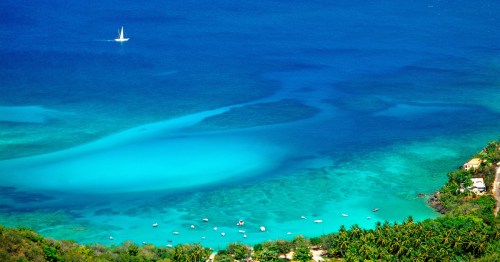
Two-thirds of St. John is protected as a national park, making it the favored island for many travelers who want the Caribbean without the crowds. Trunk Bay is the postcard image: a long crescent of white sand with an underwater snorkel trail running through clear water and vibrant reef. Maho Bay is the spot for sea turtle sightings. And Annaberg Plantation, a ruin tucked into the hillside, tells a complicated and important piece of the island's history.
The hiking, the beaches, and the quiet are all exceptional. Most visitors fly into St. Thomas and take a short ferry over.
4. Rota, Northern Mariana Islands

- Best For: World-class diving, total seclusion, and crowd-free shores.
- Don't Miss: Snorkeling the crystal-clear waters of Teteto Beach.
- Getting There: Take a short-hop flight to Rota International Airport (ROP) from neighboring Saipan or Guam.
Rota is often called the "Peaceful Island," and it lives up to its name with stunning beaches and a laid-back atmosphere. It's consistently ranked among the top dive destinations in the world, thanks to gin-clear water visibility and a thriving reef system that sees far fewer divers than comparable spots in Southeast Asia. Teteto Beach is stunning and, on most days, nearly empty. Rota gives you the sense that you've found somewhere genuinely off the map.
5. Vieques Island, Puerto Rico

- Best For: Wild landscapes, uncrowded wildlife refuges, and pristine Caribbean waters.
- Don't Miss: Watching free-roaming wild horses stroll along the edge of the tree line on the beach.
- Getting There: Take a 30-minute ferry from Ceiba on Puerto Rico's main island, or catch a quick flight from San Juan.
About eight miles off Puerto Rico's eastern coast, Vieques moves at a pace that the main island gave up on a long time ago. For over 60 years, two-thirds of the island served as a U.S. Navy bombing range, a history that, ironically, kept developers out and left the coastline largely intact. Today, those former military lands are a federal wildlife refuge, home to more than 20 free beaches, wild horses that roam between the tree line and the shore, and some of the clearest water in the Caribbean.
6. Tutuila, American Samoa*

- Best For: Rugged adventure, South Pacific culture, and isolated national parks.
- Don't Miss: Hiking the Mount 'Alava Trail for sweeping, dramatic views of the volcanic harbor.
- Getting There: Fly into Pago Pago (PPG) via twice-weekly flights out of Honolulu, Hawaii.
American Samoa is the most remote destination on this list, and it's also one of the most rewarding for travelers who make the journey. The main island of Tutuila is home to the only U.S. national park located south of the equator, a 9,500-acre stretch of volcanic rainforest, dramatic coastline, and pristine coral reef that receives fewer visitors per year than almost any other park in the national system. That remoteness is the point.
Pago Pago Harbor is one of the most dramatic natural harbors in the South Pacific, ringed by jagged green peaks and genuinely unlike anywhere else in the U.S. system. The Mount 'Alava Trail hike rewards you with views that justify every step.
7. St. Thomas, U.S. Virgin Islands

- Best For: High-energy island vibes, duty-free shopping, and panoramic vistas.
- Don't Miss: Exploring the 17th-century ramparts of Fort Christian in Charlotte Amalie.
- Getting There: Fly directly into Cyril E. King Airport (STT) with major domestic carriers.
St. Thomas is the liveliest of the three main Virgin Islands, earning its reputation as a Caribbean hub. Magens Bay, a one-mile curve of white sand surrounded by lush green hillsides, is one of the island's most beautiful beaches, and Mountain Top, the island's highest point, delivers panoramic views that stretch across multiple islands on a clear day. Charlotte Amalie, the capital, still has centuries-old landmarks worth exploring, including Fort Christian, which dates to 1680.
8. Vieques & Fajardo Bioluminescent Bays, Puerto Rico

- Best For: Bucket-list night excursions and natural wonders.
- Don't Miss: A guided nighttime kayak tour specifically planned during a new moon (the darker the night, the brighter the glow).
- Getting There: Accessible via night tours departing from Vieques (Mosquito Bay), Fajardo (Laguna Grande), or Lajas (La Parguera).
Puerto Rico is one of the few places in the world with multiple bioluminescent bays. Mosquito Bay on Vieques glows at night thanks to dinoflagellates that light up when disturbed, with hundreds of thousands living in each gallon of bay water. Kayak tours through the bay on a moonless night are among the most genuinely unforgettable experiences in the Caribbean. St. Croix in the U.S. Virgin Islands also has a bioluminescent bay at Salt River, if you're island-hopping.
9. Saipan, Northern Mariana Islands

- Best For: Advanced cavern diving, WWII history, and dramatic ocean cliffs.
- Don't Miss: Diving or looking down into The Grotto, a breathtaking 70-foot-deep limestone cavern.
- Getting There: Fly into Saipan International Airport (SPN) with connecting flights through Guam, Tokyo, or Seoul.
Saipan is the kind of place that surprises people who expected nothing more than a quiet Pacific island. The beaches are stunning, the water is turquoise and crystal-clear, and the coral reefs are vibrant. But its real draw for serious travelers is The Grotto: an underwater limestone cavern plummeting seventy feet at its deepest point, home to turtles, coral, and reef sharks. It's one of the most celebrated dive sites in the Pacific.
Managaha, a small islet just a short boat ride away, offers pristine shores and excellent water activities for those who want a day trip without committing to a full dive. The island's WWII history is also significant, with Suicide Cliff and Banzai Cliff standing as sobering, well-maintained memorials.
10. St. Croix, U.S. Virgin Islands

- Best For: Protected marine park snorkeling, historic architecture, and a slower pace.
- Don't Miss: Taking a boat excursion to Buck Island to swim its protected underwater trail.
- Getting There: Fly directly into Henry E. Rohlsen Airport (STX) or take a seasonal ferry from St. Thomas.
St. Croix is the largest but least visited of the three main Virgin Islands, with uncrowded beaches and exceptional snorkeling. Buck Island Reef National Monument, just 1.5 miles offshore, is one of the few fully protected marine parks in the entire U.S. national park system. Its underwater snorkel trail winds through elkhorn and brain coral, with grouper, parrotfish, and the occasional sea turtle drifting through. The two main towns, Christiansted and Frederiksted, have Danish colonial architecture and a genuinely laid-back waterfront vibe.
11. Tinian, Northern Mariana Islands

- Best For: Military history enthusiasts and ultra-quiet beach escapes.
- Don't Miss: The preserved atomic bomb loading pits at North Field and tasting the fiery local Chamorro pepper dishes.
- Getting There: Take a quick 10-minute small-plane flight or a boat charter from neighboring Saipan.
Three miles south of Saipan by short-hop flight or boat, Tinian is a quieter island with its own compelling story. Visitors can explore North Field, where the Enola Gay took off for Hiroshima, one of the most historically significant airfields in American military history. The pits where the atomic bombs were loaded are preserved and open to visitors.
Aside from the history, Tinian has the kind of uncrowded beaches and clear water that feel increasingly rare in the Pacific, plus a local food culture worth digging into, especially anything centered on the island's distinct, fiery Chamorro pepper.
12. Ofu Island, American Samoa*

- Best For: True off-the-grid travelers, empty beaches, and untouched coral.
- Don't Miss: Snorkeling directly off the sand at Ofu Beach—one of the most pristine reefs left on earth.
- Getting There: Secure a seat on the twice-weekly local flight from Tutuila to Ofu’s tiny airstrip.
Getting to Ofu takes some commitment: a short twice-weekly flight from Tutuila, followed by a landing on one of the smallest airstrips in the Pacific. But Ofu Beach is sometimes called the most beautiful, untouched beach in the world, and it's not hard to see why. The snorkeling on the reef just offshore is extraordinary, the sand is immaculate, and on most days you'll share it with almost no one.
The Manu'a Islands offer remote beaches, lush mountainous rainforests, dramatic cliffs, and vibrant coral reefs, all still largely untouched by mass tourism. It's the kind of place most people only dream about, and it's technically American soil.
13. Culebra Island, Puerto Rico

- Best For: World-class beach lounging, golf-cart exploring, and rustic island charm.
- Don't Miss: Snapping a photo of the iconic, rust-covered WWII tanks resting on the shores of Flamenco Beach.
- Getting There: Hop on the passenger ferry from Ceiba or book a 30-minute prop plane flight directly from San Juan.
About 20 miles off Puerto Rico's east coast, Culebra is a small island with a very large reputation. Flamenco Beach, a horseshoe of powder-white sand sheltered by a protective reef, consistently ranks among the top beaches in the world, and the water earns every bit of the hype.
Culebra has no luxury resorts, no casinos, and not much nightlife to speak of, which is exactly the point. A short ferry from Ceiba or a 30-minute prop plane from San Juan lands you in a place that moves at a completely different pace. The snorkeling at Carlos Rosario Beach, a short trail from Flamenco, is some of the best in the Caribbean. Rent a golf cart, explore the cays, and plan to stay longer than you think you need to.
*Note on American Samoa: According to the Official Visit American Samoa Entry Requirements
American Samoa enforces its own immigration laws, separate from those of the mainland U.S. Customs and Border Protection. U.S. citizens are technically required to present a valid U.S. Passport to enter American Samoa. However, if they do not have one, they can use a certified birth certificate to demonstrate citizenship, but they must also possess a round-trip ticket or onward passage.
Note on Guam/Saipan: While entry to the territory doesn't require a passport, certain transit flights through foreign nations will absolutely require one.
Keep this coastal exploration going with a look at these dreamy Caribbean vacations just a short flight away.
Subscribe to our newsletter
Get the latest updates and news
Thank you for subscribing!