Late Summer in This Northern California Bay Means Something Most People Have Never Seen
Often thought to be only a SoCal phenomenon, the rarely tranquil Pacific Ocean transforms into a peaceful, mesmerizing canvas of lights every summer in NorCal as well. This year, head to Tomales Bay to discover the magical "Northern Lights of the Sea."
Everyone pictures something a little different when the Golden State comes to mind. California's iconic coastline stretches for more than 800 miles, running from the fog-shrouded Pacific shores of the north all the way down to sun-soaked, celebrity-filled beaches in the south. Everywhere in between is a patchwork of vastly different ecosystems and wonders—rocky cliffs, sandy dunes, tidal pools, and hidden coves—each offering its own unique sights and experiences. With so much ground to cover, it’s nearly impossible to explore every corner, so every new bucket list destination is even more special than the last.
But as it turns out, some discoveries aren't just beautiful; they're exceedingly rare and even a little magical, too. Exploring California's massive coastline reveals countless natural phenomena that are unique to the West Coast, like offshore kelp forests, sea caves, migrating gray whales, and occasionally, the dreamy, otherworldly glow of bioluminescence. If you've yet to experience one of these dreamy seasonal displays in person, Tomales Bay offers one of the best opportunities to witness this underwater light show for yourself.

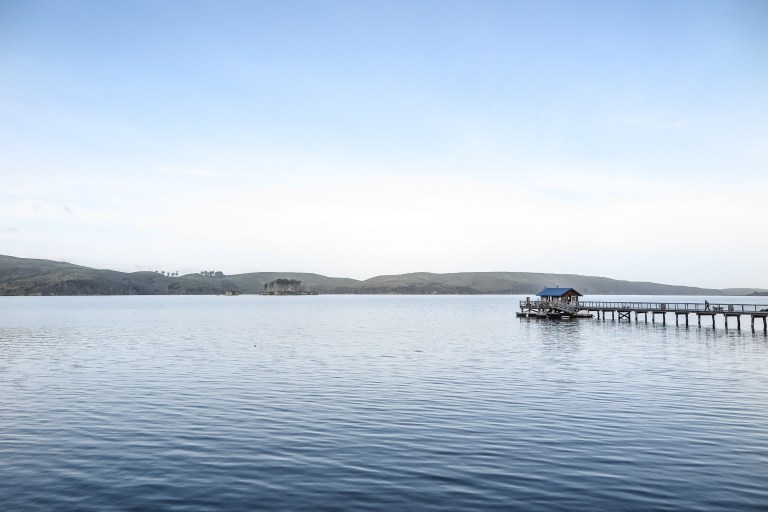
Tomales Bay runs about 15 miles along the Northern California coast, forming the boundary between the Point Reyes Peninsula and the mainland, just north of San Francisco. It’s a long, narrow inlet shaped by the San Andreas Fault, with beautiful, calm water that's naturally protected from the open ocean. To most people, the bay is known for being a scenic place to paddle and eat oysters by the dozen within reach of the city while the wind laps the water onto the sandy shore, but what really pulls people in during late summer is a natural phenomenon that turns parts of Tomales Bay into a neon wonder after dark.

The cause of this stunning display is a species of bioluminescent plankton called Lingulodinium polyedra. These tiny single-celled organisms emit white-blue flashes of light when the water around them moves. The light is a chemical reaction triggered by physical disturbance, thought to be a natural defense mechanism. The effect is brief, but when billions of cells flash together, the water seems to shimmer with glowing color. These rare dinoflagellates are thought to feed on algae, which is likely why bioluminescence often corresponds with algae blooms.
The algae usually show up in Tomales Bay from August through September. Their appearance depends on a combination of warm water temperatures, calm conditions, and minimal moonlight. If the nights are too bright or windy, the glow dims or disappears. The bay’s shape helps trap warm water, encouraging the algae to bloom near the surface in the late summer heat. While bioluminescent events can be found on the East Coast as well, they're pretty rare in NorCal, and this specific type is specifically unique to California and Mexico.

You can discover, photograph, and admire this glow from several spots along the shore, but it’s hit-or-miss if you don't plan ahead. Nick’s Cove boat ramp, Heart’s Desire Beach, and the public dock at Marshall are good spots. If others are milling about the water, there's a gentle breeze lapping the water onto the shore, or the algae are plentiful, you can even admire the glow from a distance or from stunning coastal trails like the Tomales Point Trail. The algae won’t light up unless you disturb the surface tension, though, so you (or something) has to be moving the water a bit to make the water glow. However, it's pretty surreal when the conditions are right, and this coastal bay is one of the most impressive spots to catch the show.
For the best experience, get on the water. If you don't have access to your own kayak, several local companies around Tomales Bay run guided night kayaking tours or offer late-night rentals, like Blue Waters Kayaking and Point Reyes Adventure Co. Either way, you can launch at dusk from Inverness or Marshall and paddle slowly through the darkest parts of the bay. As you move through the water, your paddle strokes trail bright blue streaks behind them, while surface fish flash as they swim past. Speaking from experience, use a clear-bottomed raft or kayak to make the experience even more magical!

Guided tours typically last 1-2 hours and don’t use artificial light, so you'll have to rely on your eyes adjusting to the darkness. You'll want to use your phone camera on dark mode if you want to capture the glow, but most people just set their devices aside and take in the scene firsthand. However, it isn't recommended to get in the water during these displays for safety reasons, so follow all local guidelines and warnings.
Tomales Bay has supported human activity and has been home to a thriving aquatic population for thousands of years. The Coast Miwok people lived along the bay for centuries, harvesting shellfish and fishing. In the late 19th and early 20th centuries, the bay was a route for moving lumber and dairy goods by boat and rail. Today, oyster farming dominates the shoreline, taking advantage of the clean, nutrient-rich water—a unique ecosystem that helps sustain the bioluminescent algae blooms. Ecologists monitor these blooms carefully, and have been doing so since around 1900. While dense blooms can sometimes reduce oxygen in the water and harm marine life, the ones seen in Tomales Bay are usually mild and short-lived. They respond to changing environmental factors like water temperature and nutrient levels, which are themselves affected by seasonal weather patterns and human activity upstream. That also means the blooms can be unpredictable from year to year, but there are still ways to plan ahead.

Ready to glow? If you want to catch Mother Nature's next bioluminescent display in Northern California, plan for late summer in a year with a combination of good rains and warm weather, and keep an eye on business and beach social media pages to know when to head that direction. Calm, warm nights after a long stretch of dry days are often your best bet. Arrive at Tomales Bay just after sunset (ideal timing is before the moon rises) and stay patient. Whether from on shore or up close in a kayak, you’ll be rewarded by water that pulses with blue light whenever you move through it—a rare glimpse into a natural process that’s as scientific as it is stunning.
Subscribe to our newsletter
Get the latest updates and news
Thank you for subscribing!