The Dangerous Puss Caterpillar Has Venomous Spines In Its Fur And It’s Been Spotted Recently In South Carolina
The venomous Puss Caterpillar, resembling a furry cat, has been spotted in South Carolina and can cause severe pain if touched.
Brush up on your caterpillar species and keep your eyes peeled for the venomous Puss Caterpillar that was recently spotted here in South Carolina. Named for its outwardly appearance, which is similar to a pussy cat (thus, Puss Caterpillar), the little creature is piled high with long setae resembling strands of hair. What's worse: it's known to have barbs or spines in those setae that are filled with venomous fluid that gets injected into your skin if you even brush against the puss caterpillar ever so lightly.
Jokingly dubbed the "Toxic Toupee" by National Geographic, this weird little caterpillar was also dubbed by Nat Geo to be the most toxic caterpillar to live in the United States.
Earlier in September, a member of our South Carolina Nature Lovers group on Facebook spotted a gray puss caterpillar in Newberry (pictured). Other sightings and photos posted in that same group also confirmed a sighting in the Beaufort area.
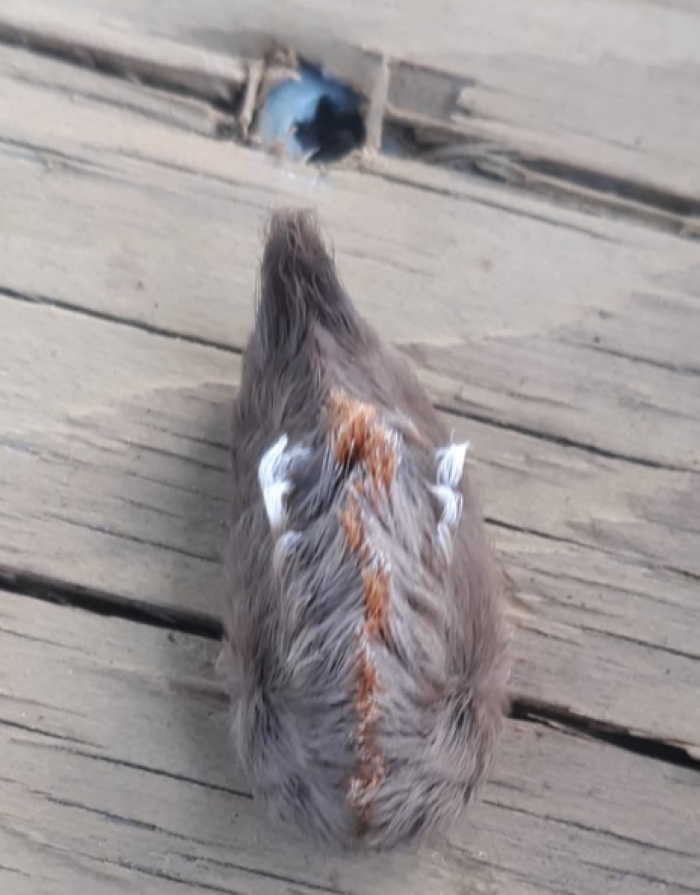
Although not the most common caterpillar in the army of creepy, crawly creatures, the puss caterpillar is easily identified.

Their long fur-like covering gives them away instantly.
They grow to be as long as 1.5 inches and always taper off into a point at the tail.

Their colors can range from light to deep gray and light beige to dark or even rusty brown.
Look closely if you dare, but do not touch.

The sting from one of these has been compared to the pain of a broken bone or even the feeling of blunt-force trauma.
What should you do if you're injected with the venom from the puss caterpillar?

Head to the hospital or ER. And in the meantime, you can use cellophane tape to remove the barbs that get stuck in your skin. Be sure to keep them and bring them along to the ER or doctor's office.

Other symptoms reported by victims include numbness in parts of the body, burning, swelling, headache, pain (even chest pain), blisters, and a rash.
Wondering what the puss caterpillar turns into? It's known as the Southern Flannel Moth.

The good news is, once the puss caterpillar changes into the Southern Flannel Moth, the barbs and the venom are both gone.
In South Carolina, we see the most activity for this caterpillar during the months of September and October.
Ever seen one of these hairy-looking, venomous caterpillars in South Carolina? If so, where? And do you know anyone who's been stung by one? Chime in with a report and feel free to share your images of the Puss Caterpillar in our Facebook thread or in our South Carolina Nature Lovers group on Facebook.
Subscribe to our newsletter
Get the latest updates and news
Thank you for subscribing!