Locals Are Obsessed With This Iconic Roadside Spot in Missouri
Explore Lime Kiln Trail in Rockwoods Reservation, Missouri - a scenic loop with historic ruins, limestone bluffs, and lush forest perfect for hiking and nature lovers.
Once upon a time, St. Louis hosted the 1904 World's Fair, also known as the Louisiana Purchase Exposition. From this incredible event, Missouri's identity was suddenly intertwined not just with figures like Mark Twain, but with X-rays, Dr. Pepper, and waffle cones.
What does not come to mind when most people think about Missouri is lime kilns, but one visit to the Lime Kiln Trail in Glencoe just might change that for you. Its iconic lime kiln, which dates all the way back to the 1850s, is visible from the parking lot if you don't mind peeking through the foliage. If you're up for a longer hike, this is one of the most stunning and underrated landscapes in Missouri.
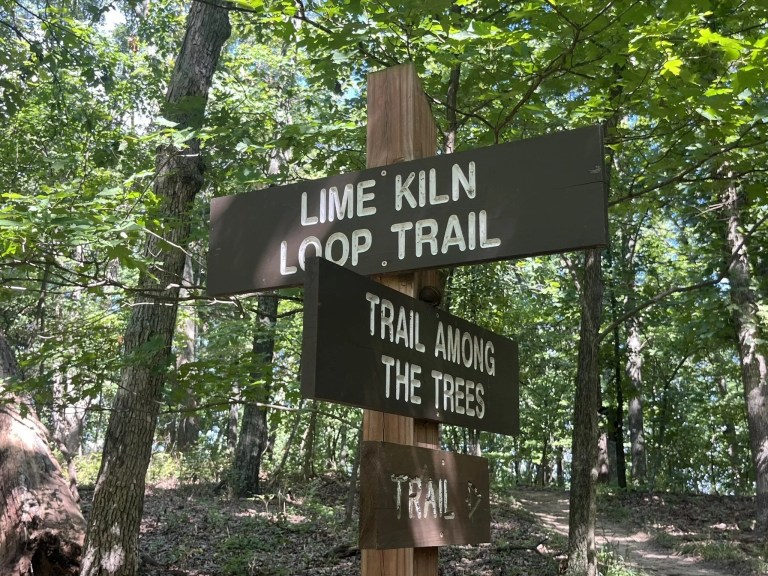
As part of the Rockwoods Reservation Conservation Area, it's almost amazing that Lime Kiln Trail isn't more well-known. Locals love the park's 13 miles of trails, and its caves are often hailed as a perfect adventure destination, but many hikers are more likely to nod to the area's scenic overlooks as its finest feature. Nevertheless, the 3.2-mile Lime Kiln Trail is an absolute treat to explore.
Established in 1938, Rockwoods Reservation is one of the oldest areas under the protection of the Missouri Department of Conservation. The St. Louis County park has a unique topography, boasting a rich diversity of flora and fauna. However, it's not wholly untouched by development. Much of the area was subject to early quarrying for gravel and limestone, and a chunk of the forest was cut to feed local lime kilns. It's now considered a second-growth hardwood forest, but the historic roots of the site are as plain to see as... well, as plain to see as tree roots.
Back in the day, lime kilns weren't uncommon, and they were an important facet of the construction industry. In the 1850s, when the Rockwoods Reservation area was an active lime kiln site, limestone was burned to produce quicklime, something used in mortar and plaster creation. This technique was first perfected by the Romans, and today, quicklime is also used to improve soil in agricultural applications. It's incredible to think that the massive structure in Rockwoods Reservation was once tied with local growth... and it wasn't the only one in the area!

The kiln on Lime Kiln Trail is nestled against a hill, an intentional design that made it easier for elevated railcars to load it from above. Built around 1856 for James E. Yeatman, this kiln operated around the clock to produce around 192 barrels of lime every day. Wood to fuel this operation was harvested from the surrounding landscape, and its firebrick lining was brought in from St. Louis. This 40-foot structure was an absolute powerhouse in the 1850s, easily reaching temperatures of 800°F and naturally expanding and contracting during the process to ensure it was built to last.
The operation must have been successful, because several other kilns were built around the area when larger-scale quarrying activities took place following 1868. Those are long gone, though. They just don't build things like they used to!

While the last remaining kiln is an incredible feature that can be viewed as a quick roadside attraction, the entirety of Rockwoods Reservation is worth exploring, and Lime Kiln Trail is a great place to start. Though the trail is admittedly a bit challenging with elevation gains and uneven terrain, it only takes a little bit over an hour to complete.
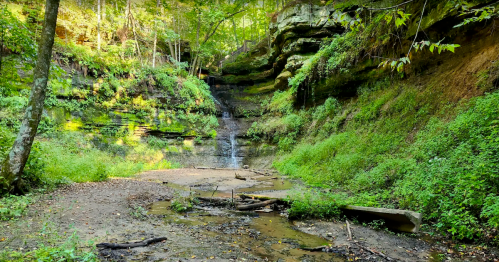
With ravines, lush creeks, and unique rock formations, this pretty place feels worlds away from St. Louis. And the wildlife is a surprising feature with such proximity to a big city, too. Deer, turkeys, foxes, snakes, and birds are frequent sights in the dense forest.

One of the most amazing details to observe in the park is how indigenous species have adapted to the rough landscape. Deer effortlessly creep past massive rocks, and trees take root in outcroppings that seem impenetrable. If you find yourself winded by the elevation change, you might consider finding a flat rock to sit on while you admire the landscape for a while. It's a sight you simply have to experience firsthand.
History and nature intertwine in this unique landscape, making it one of the best hiking spots near St. Louis, and arguably one of the most little-known hiking gems in Missouri. Sure, it's well-traveled by locals, but few out-of-towners know to stop and take in the majesty of this site.

With roots dating back to the 1850s, this incredible site belongs on your Missouri bucket list, especially if you find yourself in the St. Louis area. Download AllTrails+ for the most up-to-date trail maps and to elevate your hiking experience. While you're doing a deep dive through local history, be sure to make a stop at the 1904 World's Fair. It's well-preserved in photographs, and its contributions have shaped American culture to this day. And if you're looking for more ideas on how to spend your time in the area, be sure to check out our itinerary planner.
Subscribe to our newsletter
Get the latest updates and news
Thank you for subscribing!