17 Places in America Where You Can See Wild Animals Roam Free
Explore the best places in the U.S. to see majestic creatures in their natural habitats.

There's something about seeing animals in the wild that's wholly wondrous and inspiring. It's a reminder that we're not the only residents of Planet Earth—our ecosystem is one of beauty and balance that must be respected. In the U.S., many places remain remote and wonderfully wild, offering animal enthusiasts and naturalists opportunities to have their very own "National Geographic" kind of adventure.
From wild horses to alligators, bears to bison, you'll experience total awe and wonder at these places to see wild animals in the U.S. Grab your hiking boots, binoculars, and field maps, and prepare for some top-notch adventuring.
Remember to treat wildlife with proper caution and respect. The safety of these animals, as well as your own, depends on everyone using good judgment, giving animals lots of room, and not disturbing, feeding, or touching them. Keep an eye on trails and, if applicable, the roads on which you travel.
1. Olympic National Park - Washington
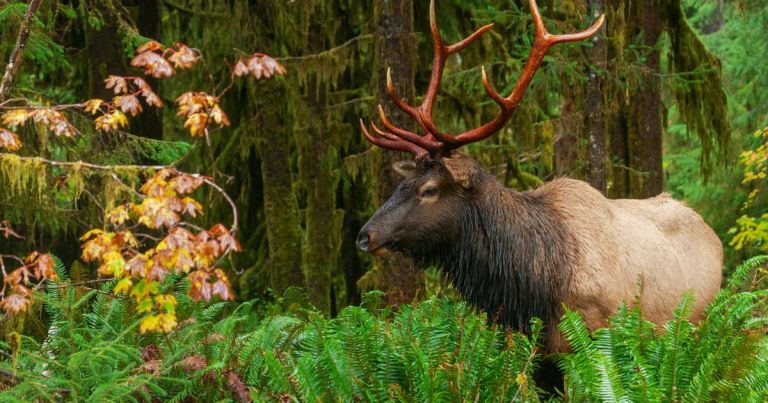
Olympic National Park is one of Washington's most sublime natural wonders; it's 922,651 acres of pure, unadulterated beauty. Within these wondrous wilds, animals thrive—the national park is home to the only Olympic Marmots (small rodents) on the planet. Olympic is best known, however, for its Roosevelt elk. The largest wild herd of Roosevelt elk in the Pacific Northwest lives in this park, so your chances of spotting one are high. These beguiling beasts can be found everywhere, from the park's alpine meadows to low-elevation rainforests, but the Hoh Rain Forest is a prime viewing spot. If you visit in September, you might even hear the "bugling" of bulls during peak mating season.
2. Steens Mountains - Oregon

Tucked into the southeastern corner of the state, Steens Mountain is one of Oregon’s most wondrous hidden gems, and it's also home to one of the PNW's most elusive treasures, too: wild horses. Also known as the South Steens mustangs, these majestic creatures are one of the 17+ different herds (totaling over 6,100 horses) that roam free in the Beaver State. You're most likely to spot them if you take Steens Mountain Back Country Byway, but drive with caution: Horses have been known to amble freely up to cars.
3. Channel Islands National Park - California

The Channel Islands are five small islands off the coast of Southern California, and each one is a little slice of perfection with its own special features. History enthusiasts love Anacapa Island, where an old, 1930s-era lighthouse resides; wildlife watchers, meanwhile, are drawn to Santa Cruz for its rich and varied biology, which includes numerous rare, endangered, and threatened species. This rugged island is home to notable avian species such as bald eagles and bats, aquatic animals like whales and dolphins, and terrestrial creatures like the deer mouse and island fox. Once you've been here, you'll certainly put it on your list of the best places to see wild animals in nature.
4. Point Reyes National Seashore - California

Point Reyes is an area on the Pacific Coast in Marin County, located about 30 miles from San Francisco. Sea lions, elephant seals, orcas, whales, and myriad bird species patrol this region of the California Coast, providing ample opportunities for photography and wildlife watching. Point Reyes Safaris even offers "seaside safari" tours led by acclaimed photographer Daniel Dietrich, and guests can essentially choose their own adventure in terms of wildlife focus: avian, marine, or terrestrial!
5. Yellowstone National Park - Wyoming

Yellowstone National Park is lauded as one of the best National Parks to visit in America, especially in terms of wildlife. Receiving anywhere between 4 and 6 million tourists each year, the park is an incredible place to spot wildlife in its natural habitat. On any given day, you're bound to see bison, wolves, grizzly bears, elk, and even moose, plus thousands of natural hydrothermal springs and geysers. When viewed with care and caution—on over 14 miles of boardwalk—Yellowstone's wildlife is an unforgettable experience.
6. Theodore Roosevelt National Park - North Dakota

Theodore Roosevelt National Park is North Dakota’s only formal National Park, and its most popular attraction. The park includes over 70,000 acres of land that's not only breathtakingly beautiful but also home to some of the country's most captivating wildlife. Bison and wild horses are the two most common sightings, but there's also bighorn sheep, elk, deer, coyotes, and prairie dogs, too. Plus, hundreds of birds and a handful of reptiles! Longhorn steers are the park's most elusive and commanding creatures, and seeing these beasts—up to 2,500 pounds—in the wild is truly a bucket-list experience.
7. Rocky Mountain National Park - Colorado

Rocky Mountain National Park is acclaimed for its scenic vistas, and the park's wildlife is an inextricable part of the package. Most notable is the eponymous Rocky Mountain Bighorn Sheep, Colorado's majestic state mammal with iconic curved horns, along with the snow-white mountain goats, which are larger and absolutely striking. Other iconic Colorado creatures in the park include moose, elk, black bears, coyotes, mountain lions, and snowshoe hares. Animal enthusiasts will love everything about Colorado in general, but Rocky Mountain National Park is certainly the spot to be.
8. Barataria Preserve - Louisiana

An underrated treasure, Barataria Preserve is a wildlife wonderland in lovely Louisiana. During your visit, you’ll traverse the boardwalk and gravel trails that wind through the preserve's 26,000 acres of bayous, swamps, marshes, and forests, with ample opportunities to spot some of the South's most fascinating residents. Snakes, turtles, and alligators are often found along—and literally on—the trails, boardwalks, and bayous, making this a prime destination for herpetologists and those fascinated by these oft-overlooked creatures.
9. Everglades National Park - Florida

Everglades National Park has one of the most biologically diverse ecosystems in the world and belongs on every wildlife enthusiast's bucket list. The park encompasses 1.5 million acres of tropical and subtropical habitats, and is home to 750 varieties of native plants, more than 300 types of birds, and hundreds of animal species—60 of which are endangered. The area became a National Park in 1934 and has been designated as an International Biosphere Reserve, a Wetland of International Importance, and a World Heritage Site. Meaning, it's an important and unparalleled natural landscape. Take an airboat tour through the swamps, and you'll see why!
10. Cumberland Island - Georgia

Between the Okefenokee Swamp, Harris Neck National Wildlife Refuge, and Savannah National Wildlife Refuge, there are myriad places to enjoy Georgia's diverse wildlife. Cumberland Island, however, is the most unexpected. Alongside the usual Southern suspects—birds and marine life—this Georgia isle is home to wild horses that, when seen roaming and running in the wild, make for a marvelous moment you won't ever forget. In fact, should you camp overnight here, you may even find a few near your campsite as you emerge from your tent in the morning.
11. Minneopa State Park - Minnesota

More than 200 species of wildlife have been recognized at Minneopa State Park, a hidden gem in Mankato, Minnesota. A popular place for birders—flycatchers, wrens, vireos, warblers, kinglets, and many species of sparrow and finch can all be spotted here—Minnesota's third-oldest state park is also home to a newly re-established American Bison herd. The bison are free to roam an area of 325 acres (the entire park covers 4,643 acres), so spotting them can be tricky. Keep a watchful eye as you drive through the Bison Drive Road and take advantage of the Seppmann Mill Overlook, a popular place for spotting these elusive beasts.
12. Isle Royale National Park - Michigan

Surrounded by lovely Lake Superior, Isle Royale National Park is a treasure trove of wilderness tucked away in Michigan. In addition to Isle Royale, the largest island in Lake Superior, the park contains approximately 400 smaller islands with some of the most marvelous wildlife in the country. It's here that visitors can see moose, reindeer, and foxes, and more. (The National Park System is even in the process of reintroducing wolves into the area, too!) Whether you're fascinated by the Isle's unique history or unparalleled beauty, you'll find that it's truly a crown jewel of the Midwest. Who says you can't have an alpine escape right here in Michigan, complete with animal sightings? We sure don't.
13. The Outer Banks - North Carolina

Within the string of barrier islands off the North Carolina Coast is a place where wild horses roam free. The Outer Banks is home to the Corolla Wild Horses, descendants of horses brought to the area by Spanish explorers in the 1500s. Today, they are a celebrated part of the OBX, along with other smaller wild ponies along Shackleford Banks near Cape Lookout. To see these protected creatures up close, an adventure tour is probably your best best. Wild Horse Adventure Tours is ranked as a top attraction, offering a once-in-a-lifetime guided day in nature.
14. Great Smoky Mountains National Park - Tennessee

Great Smoky Mountains National Park is widely regarded as one of the best places in the U.S. to see wildlife, including the elusive and enthralling black bear. This National Park is actually one of the largest protected areas in the eastern U.S., where black bears can live in their natural habitat while visitors can observe them in the wild. As a result, proper distance and cautionary procedures must be followed to ensure the safety of both humans and animals. Trust us, it's better for everyone this way. You might also see white-tailed deer, elk, and chipmunks while exploring, too.
15. Assateague Island National Seashore - Maryland and Virginia

Claimed by both states of Maryland and Virginia, Assateague Island National Seashore is a barrier island known for its immense natural splendor, including some of the animal kingdom's most captivating creatures. To immerse yourself in the island's wildlife, visit the stunning Chincoteague National Wildlife Refuge—a 14,000-acre wildlife preserve on the southern section of the island. This space was the Indigenous homeland of the Pocomoke and Occohannock people, and is made up of marshes, beaches, dunes, and maritime forests. But most of all, horses.
In the Virginia district of the park, the horses are known as Chincoteague Ponies and are fenced off in larger management areas. The Maryland horses, however, are the ones that roam. Just be sure, no matter what side you're on, you respect that local environment and admire wildlife from afar, so generations to come can enjoy the space.
16. Katmai National Park - Alaska

One of Alaska’s most famous wildlife species is the grizzly bear, so it follows that the largest bear sanctuary in the world would be found in the Last Frontier. The McNeil River State Game Sanctuary is located right outside of Katmai National Park and Preserve and is home to the world’s largest concentration of brown bears. The reason for all of the bears? McNeil River’s salmon runs. All five species of Pacific salmon can be found within the sanctuary, to the delight of all nearby bears. At just 200 square miles in size, this wildlife sanctuary is teeming with bears, and you'll often see these massive mammals in the river, fishing for salmon. They're a sight to behold.
17. Mauna Kea - Hawaii

Hawaii might be best known for its green sea turtles, spinner dolphins, and tropical fish, but there's a fascinating area of the island where wild cows roam free. Hawaii Island's Mauna Kea is home to scores of cattle, including the largest contiguous ranch in the U.S., Parker Ranch. But it's also home to thousands of wild cows that were introduced at the end of the 18th century and roam the forested areas of the island. The massive herds destroyed crops, and while hunting was eventually allowed, many feral cattle remain to this day.
The best places to spot them are while driving across the middle of the island on Saddle Road, as well as the Mauna Kea Access Road. It's one of the most beautiful places for wildlife watching in the U.S., and one of the most beautiful places in the U.S., period.
The next time you're seeking an experience in nature, we highly recommend visiting one of these places and experiencing the most wild and wonderful residents in America firsthand. Please remember: these animals are wild, and these lands are precious. You can help keep yourself, other visitors, and wildlife safe by setting a good example and following general "leave no trace" principles, as well as proper hiking etiquette.
Ready to get out and explore? Make a trip to one of these beautiful destinations using Only In Your State's itinerary planner—it'll suggest the best lodging, dining, and sightseeing to enjoy along the way.
Subscribe to our newsletter
Get the latest updates and news
Thank you for subscribing!