Everglades National Park: A Remarkable Ecosystem Unlike Any Other Place On Earth
Everglades National Park offers a unique and diverse ecosystem with numerous outdoor activities and wildlife experiences.
Everglades National Park is an entire world unto itself.
The park encompasses 1.5 million acres of tropical and subtropical habitats with one of the world’s most diverse ecosystems. Within the Everglades, there are five unique habitats, 750 different varieties of native plants, over 300 types of birds, and hundreds of animal species -- 60 of which are endangered.
In order to protect and preserve this idyllic region, Congress established the Everglades as a National Park in 1934. The park has since been designated as an International Biosphere Reserve, a Wetland of International Importance, and a World Heritage Site.
Everglades National Park is a real-life Garden of Eden -- a pristine paradise that offers an authentic, up-close experience with nature that's simply unparalleled.
Accessing the Everglades: Visitor Centers + Entrances
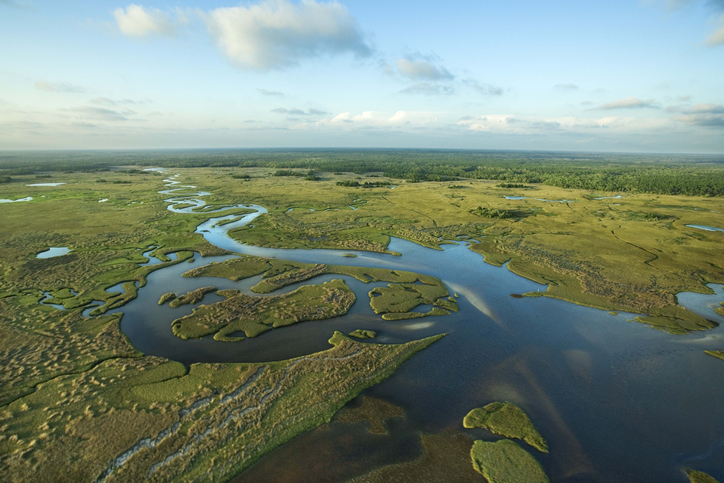
More than one million people from all over the globe visit the Everglades each year, but due to its vastness, the park feels about as remote and uncrowded as it gets.
There are multiple entrances into the Everglades. The entrances include the Gulf Coast Visitor Center, the Shark Valley area, and the park's main headquarters at the Ernest F. Coe Visitor Center. The Ernest F. Coe entrance is, in my opinion, an amazing place to start. From Miami, this entrance is about 50 miles west, though you'll want to budget 90 minutes or so for traffic.
Watching the landscape shift from Miami skyscrapers and shoreline to fields of palm trees and sawgrass marshes was wild. As you get closer to the entrance, NPS signage helps point the way.

At the entrance, we used our America The Beautiful pass from REI; I highly recommend this pass because it pays for itself in three NPS visits.
Best Trails in the Everglades
The Everglades is home to a multitude of trails and access depends on which entrance you choose. When I visited the Everglades, my 10 year old and I drove to Ernest F. Coe Visitor Center, where got our first look at the Everglades’ flora and fauna. After chatting with a park ranger, we hopped back in the car and jumped over to the Gumbo Limbo and Pinelands Trails.
The Pinelands Trail is a half-mile boardwalk trail that’s ADA-accessible and teeming with wildlife. My kiddo and I saw two baby alligators basking in the sun!

Of course, there are many, many more hiking trails to discover in the Everglades, making it a veritable choose your own adventure for explorers!
Wildlife in the Everglades
With over 1.5 million acres of wetland spread out over multiple counties in southern Florida, Everglades National Park is the third-largest park in the lower 48 states.

The Everglades has one of the most extraordinary ecosystems in the world. There are nine distinct habitats within the park, including pine rocklands, coastal lowlands, mangroves, sawgrass prairies, and freshwater slough.
In fact, the Everglades showcases the largest contiguous cluster of protected mangroves in the entire western hemisphere. Mangroves are vitally important to the ecosystem here: they clean water, provide shelter, and protect against erosion. These towering tree canopies are also absolutely marvelous to behold.

This extraordinary ecosystem is home to amazing animals, including manatees, white-tailed deer, bobcats, and over 60 endangered animals, like the American Crocodile and the Florida Panther.
Everglades National Park is perhaps best known for being home to the American Alligator, who reigns supreme here.

Of the 1.2 million alligators in Florida, 200,000 live in the freshwater habitats of the Everglades.
For what it's worth, American Crocodiles live here, too. You'll find them mainly in the saltwater habitats along the coast. Although it's a rare sight, both of these remarkable reptiles can sometimes be seen living side by side in Everglades National Park. In fact, southern Florida is the only place in the world where both species co-exist!
With regard to the environment, the Comprehensive Everglades Restoration Program is a massive environmental initiative aimed at protecting and restoring this natural wonder's freshwater supply, biodiversity, and flood control. The hope is that someday, there will be a virtually endless supply of clean, fresh, water as a result of Everglades restoration.
Exploring the Everglades: Airboat Tours, Kayaking, and Slough Slogging
You can get up close to the myriad flora and fauna that call the Everglades home on an airboat tour. An airboat is a flat-bottomed boat that that uses a propeller and an engine to navigate shallow waters, marshes, and swamps -- areas that would be largely inaccessible otherwise.

Airboat Tours in the Everglades
There are several airboat tour companies in the area; Everglades Swamp Tours offers a wide selection of tours, all conducted from the safety of their water vehicles.
When I visited the Everglades, I did some research and opted for an airboat tour via the Miami Everglades Connection, a small, family-owned business that offers “semi private” airboat tours. I booked an hour-long tour with my 10 year old the day before and we arrived 15 minutes early.

We were the only ones on the tour, aside from Captain Jack, and this truly *was* our Everglades experience. The airboat ride was smooth and peaceful, taking us on a tour de force of the Everglades’ freshwater sloughs, sawgrass marshes, hardwood hammocks, pinelands, cypress swamps, coastal prairies, mangrove forests, and marine ecosystems. The flora was stunning, and the landscape truly felt endless.
Canoeing and Kayaking in the Everglades
In a park defined by its wetlands, there are endless opportunities for exploring the Everglades by water.
Canoeing and kayaking is another popular option for outdoor recreation in the Everglades, offering adventurous explorers the once-in-a-lifetime chance to experience this spectacular wonder at their own pace. Flamingo Adventures offers a range of adventures for beginners, families, and more experienced outdoor enthusiasts.

If you're an inexperienced paddler, it's recommended to tour the waterways with a guide, to prevent getting lost and to keep both kayakers and wildlife safe. While paddling through the Florida Everglades, you'll be within arm's reach of alligators, anhinga, green herons, turtles, and other wildlife. This is a truly remarkable way to experience nature.
Slough Slogging in the Everglades
Of course, if you are feeling extra adventurous, you can experience a side of the Everglades that most people never see by joining a ranger-led hike called slough slogging. Slogging is essentially hiking... in a swamp. At the Everglades, slough slogs are led by experienced park rangers, making this a very safe -- and absolutely memorable -- way to enjoy this magical place.
Birding in the Everglades
For those who prefer to experience nature from dry land, the bird watching at this park is exceptional.

With over 300 known species of birds, there are endless opportunities for bird watching in the Everglades. The Anhinga Trail is one of the most popular bird-watching trails in the Everglades -- and it's also one of the most accessible.

The popular trail is less than a mile long and fully paved, and winds through a sawgrass marsh teeming with wildlife: alligators, turtles, anhingas, herons, egrets, and myriad other birds.
Camping and Lodging in the Everglades
If you just can't bear the thought of leaving the park, there are several designated campsites where you can pitch your tent and stay for a while.

Popular campsites at the Everglades include the Flamingo Campground and Long Pine Key Campground. You'll simply need to make a reservation in advance.
Because the Everglades is so large, there are lots of Airbnb rentals from which to choose. This farm house in Homestead, Florida, is a beautiful "base camp" to the Everglades that's on its very own dragon fruit farm!

Practical Tips for Visiting the Everglades
General Information:
Accessibility: Everglades National Park is one of the most accessible national parks, offering a variety of accessible facilities, services, and programs including backcountry camping, front country camping, boat tours, and assistive learning devices.
Pet Friendly: Pets are permitted in select areas within the park. Pets must be kept on a leash (maximum of six feet in length) at all times. Read the full pet policy of Everglades National Park if you're planning on traveling with a four-legged friend.
Parking: Everglades National Park's 1,509,000 acres expand across Florida's Miami Dade County, Monroe County, and Collier County. Due to its immense size, the Everglades has three entrances in three different cities. Find directions and more information at the NPS website.
Seasonal Access: The Everglades has two very distinct seasons: dry season and wet season. The dry season lasts from November to March and the wet season lasts from April to November. The dry season is also the busy season because of the warm winters that attract the largest variety of wading birds and their predators. The wet season is buggy, and many ranger programs are not offered during this time.
Cost: The entrance fee to the Everglades National Park is $20-$35/vehicle. All entrance fees and passes can be paid for at the Homestead Entrance, Shark Valley Entrance, or online. I highly recommend an America The Beautiful pass from REI if you plan on visiting more than two national parks in the next 12 months!
Free Entrance Days: Throughout the year, the National Park Service offers fee-free days. These are incredible times to visit your favorite national park, although as you can imagine, the parks tend to be a bit more crowded during these dates. Learn more when you visit the National Park Service website.
Restrooms: Restrooms can be found at Visitor Centers at Everglades National Park.
Why the Everglades is Worth Visiting
Everglades National Park is a mesmerizing place that will leave you in complete awe of Mother Nature.
There are certain places that really remind us of our place in the grand scheme of things, and Everglades National Park one of those places.

The park's ecosystems, wildlife, and plants are immeasurable beyond the scope of comprehension. Getting in touch with this sense of awe and wonder is incredibly important, as we are all stewards of this wild and wonderful world. You could easily spend days, weeks, an entire lifetime exploring this Garden of Eden, but you know what? Even a day in the Everglades is good for the soul.
To learn more about Everglades National Park, visit the National Parks Service website.
Subscribe to our newsletter
Get the latest updates and news
Thank you for subscribing!