Is Portland International a Fair Deal? It’s Almost Dead on Average.
Portland International ranked 46th nationally at $389.93 in 2025—$2.93 above the national average. Seattle-Tacoma, 180 miles north, averaged $404.21 and ranked 61st.
Oregon's only airport in the national top 100 for passenger volume sits almost exactly at the national midpoint for domestic airfares—a position that reflects a competitive but not exceptional fare environment. Only In Your State analyzed recently released Bureau of Transportation Statistics data, and Portland International Airport (PDX) averaged $389.93 per domestic ticket in 2025, ranking 46th in domestic airfare affordability nationally.
That's $2.93 above the national average of $387—essentially a wash. Portland is neither one of the country's bargains nor one of its expensive outliers. It's a solid mid-pack performer.
Portland vs. Seattle
The most natural comparison for Portland travelers is Seattle-Tacoma International Airport (SEA), the dominant hub in the Pacific Northwest, located about 180 miles north. SEA averaged $404.21 in 2025, ranking 61st nationally—$14.28 more per ticket than Portland.
PDX ranked 27th nationally by passenger volume; SEA ranked 8th. Despite Seattle's much higher traffic, Portland actually performs better on fare cost—a function of Portland's strong point-to-point route structure and competitive carrier environment relative to its market size.
For Oregon travelers, the data confirm PDX as the better-value departure point than Seattle, and the drive north generally doesn't yield fare savings.
Why the Fare Gap Matters for Regional Flyers
While driving three hours north to Seattle-Tacoma (SEA) is sometimes considered by Oregonians searching for direct international flights or niche routes, the $14.28 fare premium at SEA—combined with fuel costs, parking fees, and I-5 traffic—makes departing from Seattle financially counterproductive for standard domestic travel. PDX’s strong presence of carrier competition, led by Alaska Airlines along with major national lines, helps suppress extreme price spikes even during peak Pacific Northwest travel windows.
Planning from Portland
Portland's near-average fares mean travelers aren't starting at a significant disadvantage. The airport serves a wide range of domestic destinations with solid frequency, and the Pacific Northwest's growing tech and outdoor recreation economy has attracted meaningful carrier investment in PDX routes.
Maximizing Value at PDX
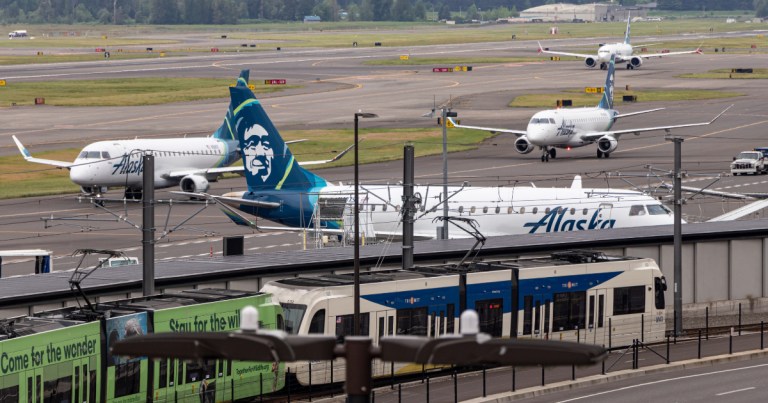
Oregon travelers can further maximize their travel budget by taking advantage of PDX’s seamless local infrastructure. Unlike many major metropolitan hubs where airport transit adds substantial ground costs, Portland’s direct MAX Light Rail connection offers low-cost access straight to the terminal doors. Combining low ground-transportation overhead with mid-tier airfares solidifies PDX as one of the most efficient starting points for West Coast journeys.
This data reflects 2025 averages from the Department of Transportation, released in May 2026. Current fares may be higher due to rising jet fuel costs. For Oregon travelers, smart booking habits—particularly booking well ahead of summer peak season, when Pacific Northwest travel demand surges—can make a meaningful difference. Knowing how to find cheap flights is the most reliable tool for finding value from PDX.
To get the most from your next departure, explore how to find cheap flights and unexpected ways to cut travel costs to help stretch your budget further.
To see how every major airport in the country compares—plus the full methodology behind the data—explore the complete U.S. Airport Cost Rankings for 2026.
Subscribe to our newsletter
Get the latest updates and news
Thank you for subscribing!