12 Shocking Things You Had No Idea Happened In Virginia
Virginia is known for her long and proud history, right? Of course. But first colony, founding fathers, historical homes, Native American traditions and significant contributions to arts, science and technology notwithstanding, there are a few fun facts about Virginia history, laws and traditions that you might not have seen in your history books. From surprising to inspirational, here are just a few things that might surprise you...
1. George Washington wasn't only a founding father and first President of the United States, in 1799, he was the largest producer of whiskey in the newly formed nation.
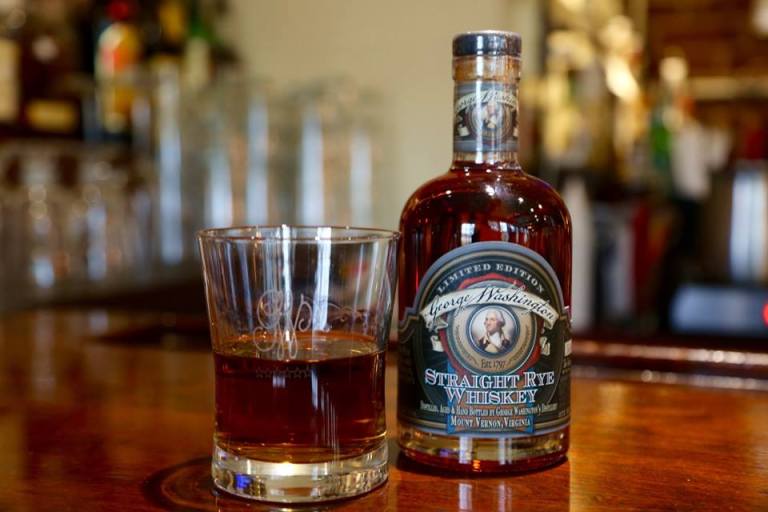
In 1797, Washington opened a distillery 3 miles from his Mount Vernon home. The following year, he produced 11,000 gallons of whiskey, making him America's largest whiskey producer. The distillery sold to local merchants, bars, taverns and farmers until it closed in 1808. Although the original building burned down in 1814, archaeologists later studied the site and in 2010, it was reopened true to its original form and is the only site in North America where you can see 18th-century distilling methods. Today, "Washington's Whiskey" is sold at Mount Vernon shops and "The Gristmill" near the distillery.
2. Washington's Whiskey shouldn't be a surprise given ol' Georgie's history with booze. In 1758, a young George Washington doled out nearly a ½ gallon of booze per voter on election day to win his first House of Burgesses seat in a landslide.

As they say, the way to a voter's heart is through his liver.
3. One of the unsung heroes of the Revolutionary War was a real-life "giant."

At 6'8" and 260 pounds, Peter Francisco might be considered average on today's NBA teams, but in colonial times, he stood head and shoulders above the rest. Francisco grew up an orphan under the tutelage of Patrick Henry’s uncle, Anthony Winston, in Buckingham County. He enlisted in the war at the age of 15 and went on to distinguish himself due to his incredible strength and heroism. He reportedly killed 11 men with a broad sword at the Battle of Guildford, led charges with musket balls in his leg, captured enemy flags by sheer force and once, pulled an 1,100 pound cannon from the mud and dragged it to safety.He was nicknamed, "The Giant of the Revolution" and the "Virginia Giant." When he died in 1831, he was buried with full military honors at Shockoe Hill Cemetery in Richmond.
4. You don't have to go to law school to become a lawyer in Virginia.

Turns out, Virginia is 1 of 5 states that allow people to "read the law" by apprenticing with a practicing judge or attorney before taking the state bar. There are requirements, of course, but if you meet them, you can take the bar, effectively avoiding the expense of law school, gaining valuable work experience before actually practicing law and having the opportunity to focus your studies in the areas of greatest interest to you. Other states that allow legal apprenticeships include Vermont, Washington, California and Wyoming.
5. But with or without law schools, if you take the bar exam In Virginia, be prepared to dress the part.

As cited by the Virginia Board of Bar Examiners, "There is no 'dress down' or 'casual dress' policy at the Virginia Bar Exam. "Applicants...are expected to dress in proper attire. For men, proper attire is coat and tie. For women, proper attire is traditional business attire." Let that be noted.
6. The oldest "continuously held sporting event in the United States" is a jousting tournament held annually since 1821 at Natural Chimneys Park in Mount Solon.

The event is held the third Saturday of August - a tradition that has been going on for nearly 200 years. Considered one of the largest and oldest tournaments of its kind, thousands of visitors come every year to see would-be knights take a run at each other. Mount Solon is also home to the National Jousting Association and the National Jousting Hall of Fame (located in the park).
7. Cursing over the telephone is a criminal offense in the state of Virginia. Which means that some of us should probably stick to writing letters.

According to the official Code of Virginia, any person using "obscene, vulgar, profane, lewd, lascivious, or indecent language" on the phone (and yes, that includes cell phones) is guilty of a Class 1 misdemeanor. I couldn't find anything about texting, but I wouldn't risk it.
8. And just so you know, it's also not allowed on the streets of Virginia Beach.

If you stub your toe on the Virginia Beach boardwalk, you’d better have some family-friendly words handy, because saying the real thing could land you with a ticket. In 2014 alone, 25 people were charged with public profanity – resulting in $6,250 in cursing fines alone. That’s a pretty steep price to pay for a bad word.
9. The University of Virginia has a department that studies ghosts, ESP and previous lives.

Don't worry. Professors and students a the Division of Perceptual Studies (DOPS) at the University of Virginia’s School of Medicine don't walk through walls or levitate. Rather, according to the department website, they seek "scientific empirical investigation of phenomena that suggest that currently accepted scientific assumptions and theories about the nature of mind or consciousness, and its relationship to matter, may be incomplete." That simply means that, hey, paranormal activity may not be as far-fetched as we think.
10. The first archaeological dig in America was conducted by Thomas Jefferson, earning him the titles of "Father of American Archaeology" and "first American archaeologist."

When Jefferson first noticed strange "barrows" near Monticello, his intellectual curiosity got the best of him. In the late 1700s, in an effort to better understand the customs and history of the local Monacan Indians, he excavated the mounds, known locally as "The Indian Grave." Further archaeological studies have determined that the burial mounds date to the late prehistoric and early contact era (ca. AD 900-1700) and hold the bones of as many as a thousand people.
11. Fort Monroe in Hampton is the largest stone fort ever built in America. The fort, which is surrounded by a moat, was a Union stronghold during the Civil War, when it became the site of the first free, self-contained African American Community.


"The Grand Contraband Camp" at Fort Monroe is where thousands of slaves fled seeking asylum during the Civil War. As slaves were considered possessions, the Union Army held them as "contraband" from the south, granting them a freedom of sorts, if only within the confines of the fort itself.
12. The first reading of Abraham's Emancipation Proclamation in the South was held under what is now known as "Emancipation Oak" outside of Fort Monroe on the present day site of Hampton University.

The tree was originally the site where Mary Smith Peake, the first black school teacher hired by the American Missionary Association, taught the children from Fort Monroe's Contraband Camp. After the Civil War ended, a school was founded, which eventually became Hampton University. The tree still stands a symbol of inspiration for students and visitors alike.
Virginia's history is full of proud traditions, to be sure - but it's also nice to know a few of our more colorful back stories. Do you know any surprising, shocking or otherwise interesting facts about Virginia that we might have overlooked? We would love to hear them in the comments below!
Subscribe to our newsletter
Get the latest updates and news
Thank you for subscribing!