There’s A Deadly Plant Growing In New York Yards That Looks Like A Harmless Weed
Poison hemlock is a highly toxic plant found in New York that can be deadly to humans and livestock if ingested.
Though it looks like a variety of other harmless weeds, poison hemlock is anything but. The weed—officially known as Conium maculatum—is so dangerous that digesting even a small amount of the plant can lead to death in humans and livestock. It’s the most deadly plant in New York, and if you want to know how to protect yourself from it, keep reading below.
Poison hemlock is a Class B noxious weed that can be found in open areas with lots of sun, fields, car lots and on the roadside. Stems are hollow and contain red or purple spots. They are not hairy.
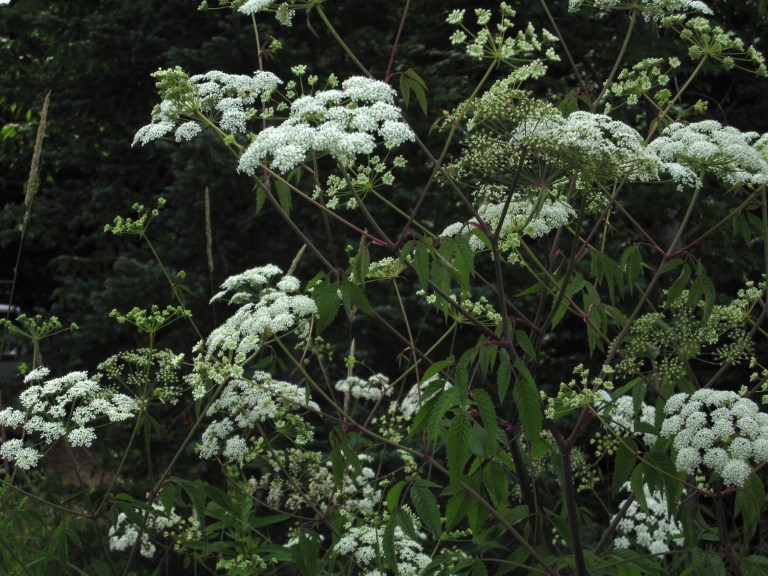
The weed's leaves are bright green and have a fern-esque appearance. They emit a strong odor when they are crushed—some have called this oder musty.

Poison hemlock flowers are very small and white. They are organized in clusters on the ends of stem branches.

The weed germinates year-round. They can be confused with wild carrot—also known as Queen Anne’s Lace. The different is subtle: wild carrot has a single umbrella-esque flower cluster perched on a thin and hairy stem. There is typically one purple flower in the middle of the cluster. If you come across who you think might be Queen Anne’s Lace, play it on the safe side, and stay away.

All sections of the plant are poisonous and, if ingested, symptoms for humans can start to begin 20 minutes to three hours after. Those symptoms can be, but are not limited to: dizziness, trembling, slowing heartbeat, dilation the pupils, and paralysis.

If you happen to ingest this plant, call 911 immediately.

Clearly, poison hemlock is no joke. It’s important to make sure you know how to spot it—you can never been too careful. If you're dealing with it in your yard, make sure you have protective gloves. If you want to know more about invasive plants, it might be worth reading our past coverage about how Giant Hogweed is spreading through New York. And, on a more positive note, if you are interested in plants, you should consider visiting the Planting Fields Arboretum in New York.
Subscribe to our newsletter
Get the latest updates and news
Thank you for subscribing!