The Epic 5-Mile Trail in Yellowstone National Park Worth the Climb
America's First National Park may not be a hidden gem, but there are still plenty of surprises just waiting to be discovered.
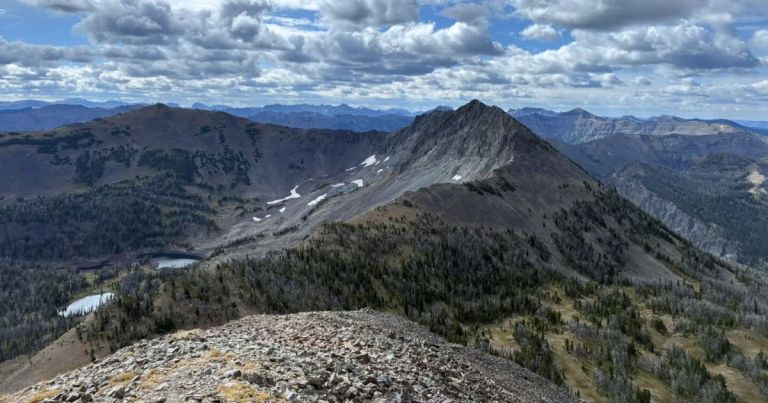
Whether you're a Wyoming native or an avid traveler bucket-listing your way through America's beautiful national parks, Yellowstone is rarely the first place most hikers go to find a challenge. For many, the park’s reputation leans toward bison jams, geysers, boardwalk strolls, and sweeping valleys. In fact, statistically, most visitors never even leave the main loop road. But while Yellowstone National Park is most widely known for its wildlife, geothermal wonders, and roadside beauty, the park is also hiding numerous trails for those willing to look for them. Avalanche Peak, rising to 10,568 feet near the park’s eastern boundary, is one of them, and it's one of the few trails in Yellowstone that offers a challenging climb, open alpine views, and a true summit experience all within a half-day effort.

The Avalanche Peak Trail starts humbly just west of Sylvan Pass along the East Entrance Road, where a small trail sign marks the start of a direct and (admittedly) unrelenting climb up—an unusual feature in Wyoming's typically low-level geothermal park. From the start, the trail moves steadily uphill through a dense lodgepole pine forest, where the ground is rugged with roots, broken branches, and patches of exposed rock. If you're not used to grueling climbs, note that there are no switchbacks in the first stretch. Instead, it's just a steady incline that gains elevation quickly and continues without pause for the first mile. Altogether, it’s a steady, leg-burning grade that gains over 2,000 feet in just over two miles.

As you continue to climb, the forest gradually opens, with gaps in the trees revealing glimpses of the surrounding national park. The air grows thinner, the temperature drops, and the path shifts from dirt to loose gravel. Depending on the season, the trail may be lined with wildflowers or scattered with early snow, and even in late summer, snowfields can persist in the shaded areas above the treeline. Take your pick! Every season is gorgeous.
About halfway through the ascent, the trail emerges from the forest onto a wide slope where the landscape changes dramatically. The terrain becomes open and exposed, with sweeping views to the east toward the Absaroka Range. Towering above the trail, the rocky summit ridge of Avalanche Peak comes into full view, and the challenging final approach looms—another thousand feet of climbing on a stark mix of scree, shale, and intermittent grassy patches.

The upper section of the hike requires caution as the trail becomes less defined and the surface underfoot becomes more unstable. The wind often picks up here, and the temperature can drop rapidly. However, you won't want to stare at your feet too much because the scenery is spectacular. From this vantage point, the massive Yellowstone Lake stretches out to the southwest, far below and partly obscured by rolling hills. To the northeast, the Absarokas create a spine along the horizon, and to the north, on clear days, distant blue peaks beyond the Yellowstone River Valley are visible.

Once on the summit ridge, the trail fades. From here, the peak is spacious (and windy), with plenty of room to walk, sit, and soak up the panoramic views. While Avalanche Peak is only 4.5 miles round-trip, the summit feels worlds away from the traditional Yellowstone experience at the base. The contrast between the alpine world of the peak, the deep forest below, and the rainbow-hued geysers and valleys in the distance is truly one-of-a-kind. It's also blissfully quiet, with the hubbub of the Mammoth Hot Springs-area hotspots far behind, and nothing but the swirling wind to keep you company.
Well, wind and a literal sea of mountains, that is!

This is a spectacularly diverse hike. While you'll definitely want to keep a GPS app and trail map handy, you shouldn't have to worry too much about getting lost. The descent follows the same route as the ascent, but is just as physically demanding. The steep grade and loose rocks are no joke, and trekking poles are especially useful for preserving your knees and ankles on the way down. It's also important to note that because the entire hike is above 8,000 feet, the elevation is something to be aware of. Altitude sickness can set in quickly, especially for those not acclimated.

Avalanche Peak is also located in grizzly bear country, and although the trail is often too steep and open for bears to linger near the upper reaches, you'll definitely want to carry bear spray and remain alert in the lower forested sections. The route is best hiked between July and early October, when the trail is mostly free of snow and afternoon storms are more predictable.
Yellowstone National Park may not be top-of-mind for serious hikers and peakbaggers, but the Avalanche Peak Trail is a gorgeous detour in the otherwise calm, traditional Yellowstone experience—a true summit in a park better known for its golden valleys and multicolored pools. This national park hike is surprisingly underrated, but don't let the lack of publicity deter you. The views are definitely worth the extra effort!
Ready to kick your national park visit up a few notches? Use Only In Your State's AI Trip Planner to plan your entire stay.
Subscribe to our newsletter
Get the latest updates and news
Thank you for subscribing!