12 Best Places to Snorkel in the U.S., From Sunken Volcanoes to Manatee Springs
From a sunken volcano off Maui to a Florida spring where manatees drift past, these are the real standouts, the kind of clear water that actually looks like the photos.
You don't need a passport for genuinely great snorkeling. The U.S. has volcanic craters, protected coral reefs, freshwater springs clear enough to see straight to the bottom, and a few spots most people don't realize exist.
This list skips the generic "crystal-clear blue water" claims. Every entry here comes with real visibility numbers, real water temperatures, and what you'll actually see, because planning a trip around a stock photo makes for a disappointing afternoon.
A few of these need a boat and a couple need a wetsuit. All of them are worth the extra planning.
1. Molokini Crater — Maui, Hawaii
- Claim to Fame: Snorkeling Inside a Sunken Volcano
- Know Before You Go: Morning boat trips get the calmest water and the best light. Bring reef-safe sunscreen, since Molokini is a marine life conservation district.
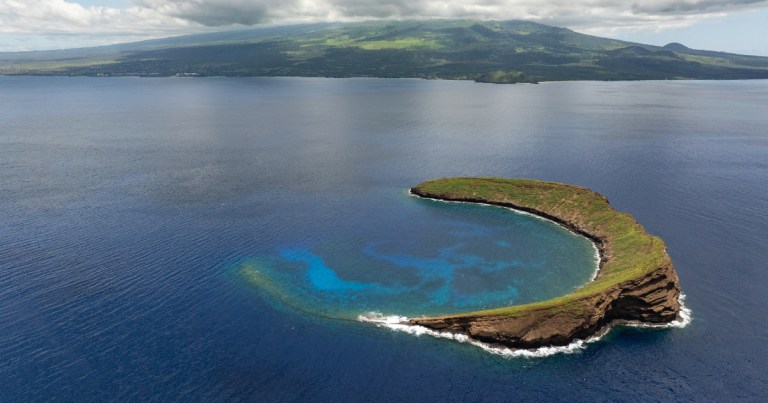
Molokini is a crescent-shaped, partially submerged volcanic crater about three miles off Maui's coast, and it's only reachable by boat. That's part of why the water inside stays so clear, with visibility that regularly hits 150 feet on a calm day.
The protected inner reef is packed with fish, and the outer walls drop into deep blue if your tour goes that far.
2. Hanauma Bay — Oahu, Hawaii

- Claim to Fame: The Bay Hawaii Built a Whole Conservation Plan Around
- Know Before You Go: Everyone watches a short conservation video before entering the water. It's mandatory, not optional.
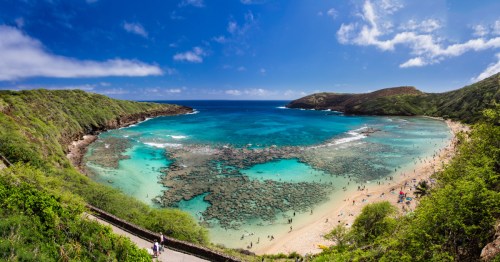
Hanauma Bay sits inside a collapsed volcanic crater on Oahu's southeast shore. The curved shape blocks most ocean swell, so the water stays calm enough for total beginners.
Expect reef fish in bright stripes and the occasional honu (green sea turtle) cruising the shallows. The bay closes on Mondays and Tuesdays to let the reef recover, and reservations open 48 hours in advance at 7 a.m. Hawaii time.
3. Two Step, Kealakekua Bay — Big Island, Hawaii

- Claim to Fame: Snorkel Past a 19th Century Monument You Can Only Reach by Water
- Know Before You Go: The rocky entry at Two Step is exactly what it sounds like. Water shoes help.
Kealakekua Bay is a marine life conservation district on the Big Island's Kona coast. The Captain Cook Monument inside it is only accessible by boat, kayak, or a swim, which keeps the crowds thin.
Green sea turtles hang out in the shallows near Two Step, and spinner dolphins show up often enough that regulars expect them. Nearby Kona is also one of the only places in the world with a reliable nighttime manta ray snorkel, where the rays glide in to feed just a few feet away.
4. John Pennekamp Coral Reef State Park — Key Largo, Florida

- Claim to Fame: The Country's First Underwater Park Has a Bronze Jesus Statue in It
- Know Before You Go: Lionfish are around, and they're venomous. Look, don't touch.
Pennekamp was the first underwater park in the U.S., and boat trips out to its reefs pass a nine-foot bronze statue called Christ of the Abyss, standing among the coral like it's been there forever.
Visibility runs 30 to 60 feet most days, calm enough for first-time snorkelers, with yellowtail snapper and brain coral gardens along the way. Seagrass beds near shore are worth a look too, since manatees turn up in them.
5. Dry Tortugas National Park — Florida

- Claim to Fame: Seventy Miles From Key West, and You Can Only Get There by Boat or Seaplane
- Know Before You Go: The Yankee Freedom ferry is the official way in, and it includes gear and a rundown of the park's history on the ride out.
Dry Tortugas sits so far offshore that the only way in is by ferry or seaplane, and that isolation is a big part of why the reefs here have remained among the cleanest in Florida.
Snorkelers swim right off the beach at Garden Key, past the moat wall of 19th-century Fort Jefferson, and out toward the Windjammer Wreck, a shipwreck now covered in soft coral and fish. Sea turtles and nurse sharks turn up regularly in the shallows.
6. Bahia Honda State Park — Big Pine Key, Florida

- Claim to Fame: Shallow Water, Sea Turtles, and an Old Railway Bridge in the Background
- Know Before You Go: Currents can pick up around Looe Key, so go with a tour if you're snorkeling that far out.
The Atlantic side of Bahia Honda is shallow enough that beginners can wade in without a boat, and hawksbill turtles, octopuses, and queen conch show up in the grass beds close to shore.
For a bigger reef, Looe Key sits a short boat ride away, with coral ridges and a 210-foot shipwreck that has been turned into an artificial reef. Bahia Honda's old railway bridge, a leftover from Henry Flagler's overseas railroad, frames the whole scene from the water.
7. Three Sisters Springs, Crystal River — Florida

- Claim to Fame: One of the Only Places in the U.S. Where You Can Legally Snorkel With Wild Manatees
- Know Before You Go: A wetsuit is required for the guided tours, and it's worth it. The water feels colder than the air most of the year.
Crystal River sits atop the Floridan Aquifer, where spring vents discharge more than 20 million gallons of 72-degree water each day. That steady warmth is why manatees gather here every winter as the Gulf cools.
Guides enforce strict passive observation, so you float and let the manatees decide how close they want to get. Outside manatee season, which runs roughly from November through March, the springs stay glassy-clear year-round with plenty of fish.
8. La Jolla Cove — San Diego, California

- Claim to Fame: Kelp Forests, Barking Sea Lions, and Sharks That Genuinely Don't Care About You
- Know Before You Go: Visibility is best on calm days, and the easy beach access makes this one of the more approachable spots on this list for families.
La Jolla Cove is a protected marine reserve tucked under sandstone cliffs. The kelp forest just offshore hides garibaldi, California's bright orange state fish, along with sea urchins and the occasional harbor seal.
Every summer, leopard sharks gather by the hundreds in the nearby shallow water. They're harmless and mostly ignore snorkelers entirely, but seeing that many sharks at once is still a moment.
9. Channel Islands National Park — California

- Claim to Fame: California’s Kelp Forests Look Like Underwater Cathedrals
- Know Before You Go: Boat access only. Most trips leave from Ventura or Oxnard.
The Channel Islands sit just off Southern California's coast, and the protected waters around them hold some of the most biodiverse habitat on the West Coast, which is why people call the islands North America's Galapagos.
The Pacific here runs cold, usually 55 to 65 degrees, so a wetsuit is non-negotiable. In exchange, visibility can top 100 feet on calm days, with sunlight filtering down through towering kelp and curious sea lions circling close.
10. Trunk Bay — St. John, U.S. Virgin Islands

- Claim to Fame: A Self-Guided Snorkeling Trail With Plaques Telling You What You're Looking At
- Know Before You Go: As of 2026, the National Park Service charges a $ 5-per-person day-use fee for visitors 16 and up.
Trunk Bay's underwater trail runs about 225 yards, roughly the length of two soccer fields, with submerged plaques identifying the coral and fish as you go.
Volcanic headlands wrap around the bay, blocking most of the Atlantic swell, so the water stays calm and the crescent-shaped beach is made of pale, shell-derived sand. Expect brain coral, elkhorn coral, and reef fish along the trail, plus the occasional sea turtle.
11. Ginnie Springs — High Springs, Florida

- Claim to Fame: Water So Clear It Looks Fake in Photos
- Know Before You Go: There's an entrance fee, and the deeper cave systems are for certified divers only. Snorkelers stick to the surface and spring basins.
Ginnie Springs sits along the Santa Fe River in North Florida, and its seven spring vents maintain a constant 72 degrees year-round, keeping the water blue and startlingly clear no matter the season.
Snorkelers can see straight to the sandy, limestone bottom in the main spring basin, with gar, turtles, and schools of smaller fish moving through. It's a freshwater experience, not a tropical one, so don't expect coral, but the clarity alone makes it one of the most photogenic spots on this list.
12. Emerald Bay, Lake Tahoe — California

- Claim to Fame: Alpine Snorkeling With Granite Boulders and a Sunken Forest
- Know Before You Go: Water temperatures peak around 70 degrees in August and September. Bring a wetsuit before then.
Lake Tahoe isn't tropical, and it doesn't try to be. What it offers instead is water so clear that a 50-foot drop can look shallow enough to touch, plus underwater scenery no reef can match, including a stand of pine trees still standing upright after a decades-old landslide pushed them into Emerald Bay.
Sand Harbor and D.L. Bliss State Park are the easier entry points nearby, with granite boulders and schools of trout.
None of these need a dive certification or a lucky Instagram algorithm to feel like a real find. Bring reef-safe sunscreen, follow the wildlife rules at each spot, and check current conditions before you go, since visibility and access can shift with weather and season.
Subscribe to our newsletter
Get the latest updates and news
Thank you for subscribing!