Up to 200 Million Monarch Butterflies Are Headed Straight for Illinois This Spring
Discover a natural phenomenon heading straight for Illinois this spring. See where you can spot millions of monarch butterflies in Illinois.
Are there monarch butterflies in Illinois? If monarch butterflies are your favorite of the species, you'll be pleased to find out that a slew of these black and orange beauties are making their way to the Land of Lincoln as we speak. You don't have to go to an enclosed garden to attract a myriad of these winged insects. They say that if one of these lovely critters lands on you, it's good luck. While it's hard to project the exact number of monarch butterflies in Illinois, you can rest assured they'll put on quite a show. A record low occurred in 2014 with only 34 million migrating north. Let's find out our best chances of encountering this beautiful phenomenon in the wild.
Every spring, millions and millions of monarch butterflies make their way from Mexico to Canada navigating what are known as "flyways." These paths go right across the good ol' state of Illinois, meaning you'll soon be seeing a sea of orange of black everywhere.
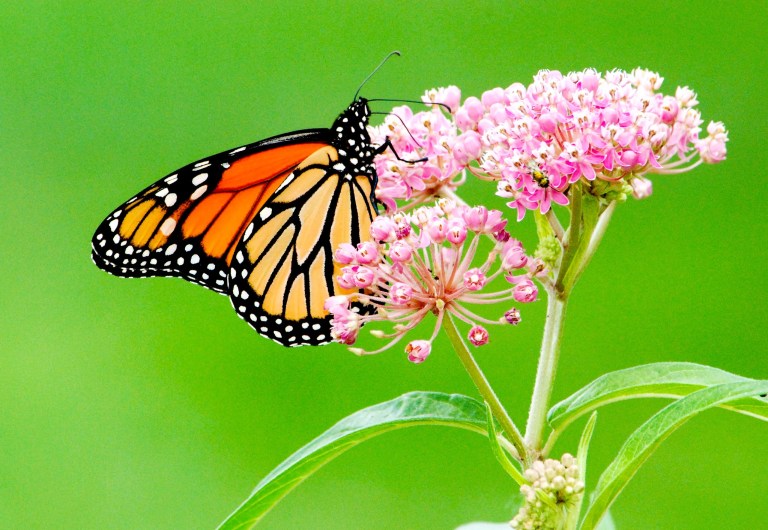
You may be wondering, "When do monarch butterflies migrate through Illinois?" The best time to see monarch butterflies in Illinois is typically in the late spring and early summer.
Monarch butterflies are the only butterflies known to migrate, and they make a two-way trip all the way across North America each spring in order to avoid cold temperatures. It takes multiple generations of butterflies each season to complete this massive migration.

Typically, there is a distinct migration pattern for the monarch. During the first stages of migration, the flying beauties leave Mexico and begin to arrive in the US from March through part of April. The second phase of migration takes place between April and August, when the butterflies make their way across the country. When the weather begins to get cooler from September through November, the monarchs will begin their journey back to Mexico.
The critters travel between 50 and 100 miles each day, and it can take up to two months to complete the journey. Monarchs pollinate along the way, meaning they are not only beautiful but also important to our ecosystem.

Monarch butterfly populations have declined by about 80 percent in the past 20 years, though efforts in recent years have brought about a resurgence. One major reason for this decline is a drop in the butterfly's main food source: milkweed.
Not only a food source, but milkweed is also the only place monarch butterflies will lay their eggs. Many people choose to kill the plant along with other weeds in their yard because it is not aesthetically pleasing. The more you keep around, though, the more monarchs you'll have in your yard.

If you want to witness the great migration of these stunning butterflies, stop spraying and pulling your milkweed, and let the stuff grow. Call it an excuse not to mow the lawn so that the butterflies have something to eat.
Another way to help the monarchs is to tag them once they roll through your area. Tagging adults with a paper sticker helps scientists track changes in their population and migration patterns. Take a look at the Monarch Watch website to learn all about tagging monarch butterflies with Monarch Watch. While you're there, you can also find out more about this natural phenomenon in Illinois.

Do you know of a few spots where you think people will have the best chance to spot monarch butterflies in Illinois? Please make sure to share them with us on our nomination page. You can also embark on one of the best hikes in Illinois for your chance to see these delicate insects. Just be sure to bring your camera along to take pics of them.
If you really love animals, check out these 12 photos of wildlife in Illinois that will make your jaw drop.
Subscribe to our newsletter
Get the latest updates and news
Thank you for subscribing!