This Is the Most Claustrophobic Hike in Idaho—Would You Try It?
This family-friendly hike takes you into a world of lava tubes and volcanic wonder. But, you'll need a dose of courage if you hate dark, tight spaces.
I have a confession to make. Craters of the Moon National Monument and Preserve was never on my bucket list. With all of Idaho's incredible natural beauty and charming small towns, it was never high on my travel wish list. However, after spending a day at Craters of the Moon several years ago, I now tell everyone I can about this incredible wonder in Idaho—there’s no place like it in the state. It’s home to mesmerizing landscapes, a unique campground, and some of the best stargazing in Idaho. And, it’s also home to one of the most claustrophobic hikes in Idaho (and the coolest!).
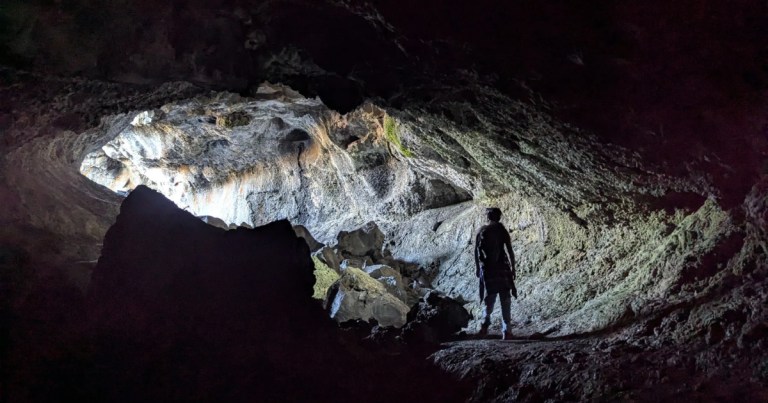
One of the park’s defining characteristics is its caves. There are more than 700 documented caves found within Craters of the Moon, and more are discovered each year. While there are many fissure caves and weathering caves, the majority within this park are lava tubes, and one of the best ways to explore them is on the Caves Trail.
This hike is approximately 1.5 miles and not too challenging. The trail has very little elevation gain, and portions are paved. However, it’s when you reach the caves that you may start to feel your palms sweat and your heart race if you don’t like being underground, in tight spaces, and surrounded by darkness.

But first, before you can access this trail, you must stop by the Craters of the Moon Visitor Center to receive a cave permit. The permit is free, but is required to enter any cave or lava tube. Your pass into the park does not count as the permit. Also, please note that if you have any clothing or equipment (such as a phone, flashlight, or watch) that has been in a cave or underground elsewhere, you cannot bring it into the caves, even if the items have been washed. This is to prevent the spread of diseases to bats that call the caves home.
I recommend that each person bring a flashlight or headlamp to better explore the caves. You will also want sturdy shoes as the lava rock is sharp and can be slippery. Also, you may want some courage if you are claustrophobic or dislike dark spaces. As you explore, you may find yourself climbing, bending down for low ceilings, and being in dark places. Also, always watch out for falling rocks and pay attention to your footing.
There are currently only two caves you may access on the trail: the Dewdrop Cave and the Indian Tunnel. You will pass other cave entrances, but these are closed to the public to protect bats. Always be respectful and only enter authorized areas.

Give yourself plenty of time to explore both the Dewdrop Cave and the Indian Tunnel. Dewdrop Cave is the first cave you will reach and is tight and dark. If you are afraid of tight spaces, this may be a place you choose to sit out—it can certainly make you feel uncomfortable in areas.

Indian Tunnel is quite large, particularly after you’ve explored Dewdrop Cave. Indian Tunnel is nearly 800 feet long, 50 feet wide, and more than 30 feet tall. This lava tunnel is much brighter due to its size, as sunlight can easily enter, but you’ll still want to bring light to more easily spot many of the features around the tube, such as lava stalactites and various mosses. Watch your step as you walk and look out for animals who also love to explore this cave, such as various birds and even packrats who make their homes in the crevices of the lava rock.

The Caves Trail in Craters of the Moon may not be large or too difficult, but it’s certainly one of a kind here in Idaho. Just make sure you have your cave permit handy, and remember you’ll need to pay an entrance fee or use your National Parks pass for entrance into the park. And, if the idea of walking through the lava tubes gives you the heebie-jeebies, you aren’t alone. I recommend tackling the short (but very steep!) Inferno Cone Trail or my family’s favorite, the Devil’s Orchard Trail, for some other incredible places to explore at Craters of the Moon.
For additional information about the hikes, campground, bats, stargazing, and more, make sure to visit the National Park Service website. And if you are feeling inspired, plan your own trip to this unique corner of the state with Only In Your State’s AI-powered itinerary planner.
Subscribe to our newsletter
Get the latest updates and news
Thank you for subscribing!