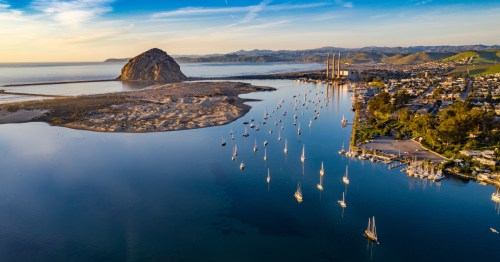
I Dug My Own Dinner on the Northern California Coast—Here’s What Happened
What started as a simple beach day turned into one of the most unforgettable meals I’ve ever had. Here’s what it’s really like to dig your own dinner along the rugged Northern California coast.
Steve gives us one piece of advice before we even step onto the flats: take off your shoes.
“The mud will suck them right off,” he says matter-of-factly.
He isn’t exaggerating.
Within minutes, we understand why experienced clammers — like Steve, outfitted in full-length hip waders — dress for the conditions. The mud is impossibly soft, warm around our toes, and surprisingly comforting at first, like stepping into wet clay. But walking through it is another story entirely.
With every step, feet sink deeper than expected. At times, the mud grabs hold so firmly that it feels like it might swallow a leg whole. More than once, someone sinks nearly to their knee, laughing while trying to pull free.
“The trick,” Steve yells, “is to keep your feet moving and head towards the dry-looking mud.”
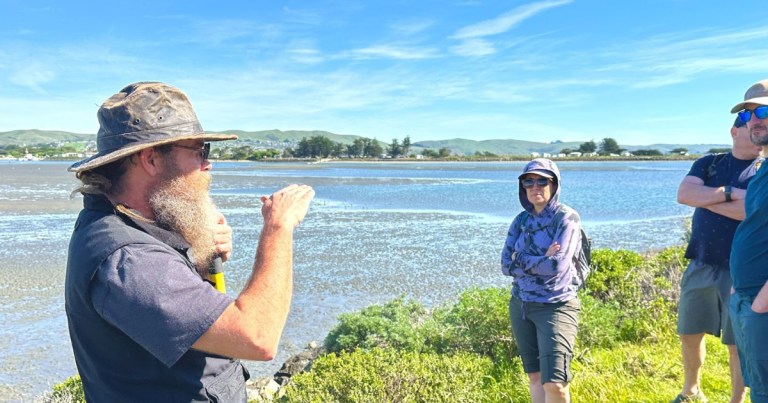
We plod forward. Clumsily attempting to quick-step, and more often wobble walk across the flats. Our heads down, scanning the mud, learning to read not just the clam beds but the terrain itself. Soon, the awkwardness turns into rhythm — a strange dance between balance, patience, and observation.
Barefoot, it feels like we are connected directly to the bay beneath us.
And that’s when Steve tells us we’re ready to head off looking for our dinner.
Learning to Read the Mud
I joined a clam-harvesting and cooking adventure with ForageSF in Bodega Bay, expecting a hands-on seafood experience. What I didn’t expect was how quickly the day would turn into a lesson in observation — learning to see signs hidden almost in plain sight.
“People don’t know what to expect,” Steve says. “You’re not digging randomly. You’re reading the mud.”
He teaches us to look for “tells,” the subtle clues clams leave behind. Small holes are everywhere, but which are the best ones to dig? A faint dimple. A figure-eight shape. Sometimes, a “T” pattern marks a Washington clam or cockle below.

Then comes the most exciting signal of all — a sudden burst of water from the sand.
“The bigger the spurt,” Steve says, pointing toward a fresh spray, “the faster you run.”
Running, however, is relative when the ground beneath tries to suck you back in.
We lurch toward the spot, laughing as the mud grips our ankles, racing against time before the clam burrows deeper.
“Make a circle,” Steve instructs. “It won’t leave that area.”
Shovels and clam guns plunge into the flats. Clods of mud are pulled up. Someone cheers after striking a shell for the first time.
“This is so cool — my first clam!”
The Tides Are in Charge
Clamming is only possible when the tides allow it. We’ve arrived at the beach just before a minus tide, when the water retreats far enough to expose clam beds just offshore.
The flats look calm, but beneath the surface, an entire ecosystem is living. We learn quickly that harvesting comes with responsibility. Each species has limits. Size matters. If a clam slips through the measuring ring, it goes back immediately.
Steve reminds us that a cooler filled with the wrong clams can mean serious fines — but more importantly, it risks the balance that keeps the bay productive.

“This place feeds people,” he says. “But only if we respect it.”
Dig, score, rinse, repeat. Hands grow tired. Mud coats everything. Slowly, buckets begin filling with Washington clams, horse necks, littlenecks, cockles, and Manila clams.
Every successful dig feels like uncovering buried treasure.
Unexpected Life Beneath the Surface
Not everything we uncover is dinner. A wriggling fat innkeeper worm emerges from the mud, prompting equal parts fascination and nervous laughter. Bay ghost shrimps and ribbon worms are often caught as accidental bycatch. Bright strands of edible algae — “red sea spaghetti” will be added to our feast. Each scoop reveals a world hidden just beneath the surface.

The tidal flats aren’t empty at all. They’re busy, breathing, alive — constantly reshaped by water and time.
From the Ocean to the Fire
Back on shore, Steve transitions effortlessly from fisherman to cook. We make quick work of processing the clams; they are cleaned, rinsed, and sorted. Horse-neck clams require peeling their thick outer skin before cooking. Everyone gathers around as the breaded clams hit the hot oil and the clam chowder pot begins to simmer. The smells instantly pull us all in closer to our feast.

Watching the clams cook moments after harvesting them feels almost surreal.
The fried clams sizzle as the chowder, made with fresh clam juice, begins to boil. Stories begin flowing as easily as the food, strangers comparing muddy mishaps and proud first finds. Breaking bread together on the beach seems like the natural ending to the day — a shared reward earned through our own effort and patience.

Why Experiences Like This Matter
By the time we finished digging, the mud had worked its way everywhere — under fingernails, up our calves, drying in pale streaks on sun-warmed skin. Nobody seemed to mind.
Clamming changes how you think about food almost immediately. You stop looking just at the scenery and start paying attention to small things: the tide channels, the swish under your feet, the way one patch of sand dries faster. Out here, dinner isn’t guaranteed. You read the signs in the mud, judge the hole and what clam might lie beneath, and then dig.

A few people in our group had taken Steve’s mushroom and crabbing classes before. They moved a bit more confidently across the flats, already familiar with the rhythm of searching.
“I never thought I’d be someone who could find my own food,” one woman says, rinsing a couple of cockles in the water.
There’s pride in that moment, quiet but real.
Standing there in the mud barefoot, it’s easy to imagine how people once lived entirely by these rhythms — watching tides instead of clocks, learning what to gather from the land each season. Foraging isn’t nostalgic; it’s a practical skill. You receive what the land offers, when it offers it, and leave enough behind for the next tide and fellow forager.
A Different Way to Experience the Coast
From the shore, we watch as the tide turns, water slowly crept back across the flats, filling our footprints and softening the holes we’d dug. Within minutes, the clam beds disappeared beneath a smooth sheet of water.
The landscape resets itself.
The seagulls reclaim the mud flats, the day folding back into ordinary quiet. From a distance, nothing looked disturbed — just another beautiful, calm afternoon in Bodega Bay.
But the bay felt different now.

Earlier, I had arrived looking out at the picturesque scene. Now I found myself scanning the sand with a newfound awareness, noticing textures and better understanding what lived just beneath the surface.
Driving away, the delicious taste of chowder and garlic bread was still fresh on my lips. My legs ached slightly from fighting the mud, and grains of sand lingered between my toes despite a rinse.
I kept thinking about how little separates a meal from the landscape it comes from — just knowledge, timing, and a willingness to get a little uncomfortable and dirty. Low tide will return tomorrow. The clams would settle again beneath the sand. And somewhere out there, another spurt would appear for someone patient and trained enough to notice it.
Feeling inspired? Try planning your own trip using Only In Your State’s itinerary planner.
Subscribe to our newsletter
Get the latest updates and news
Thank you for subscribing!