This Hidden California Beach Has Semi-Precious Gems You Can Take Home
At Sue-meg State Park near Trinidad, Agate Beach hides below forested bluffs — a wild stretch of Northern California shoreline where colorful, ocean-polished agates wash up at low tide.
Some beaches ask you to walk slowly. Agate Beach practically demands it.
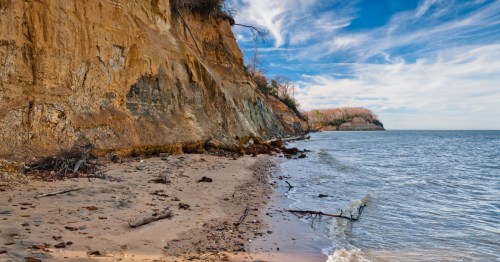
Tucked below the forested bluffs of Sue-meg State Park near Trinidad, this wild stretch of hidden California shoreline lies in Humboldt County. The Pacific rolls in with its usual Redwood Coast authority, the wind leans through Sitka spruce and coastal shrubs above the beach, and underfoot, the cobbles shift and clatter with every step.
But look closer.
Mixed among the smooth gray stones are tiny flashes of amber, red, orange, honey, and green — polished agates, shaped by geologic time and ocean patience. Unlike many California beaches where collecting natural materials is prohibited, Agate Beach is known as one of the rare places where casual rockhounds can search the shoreline and take home a small, legal handful of treasure.
That fact alone would be enough to make the beach special. But the experience of finding them is what makes it memorable.
The Search Begins At Low Tide
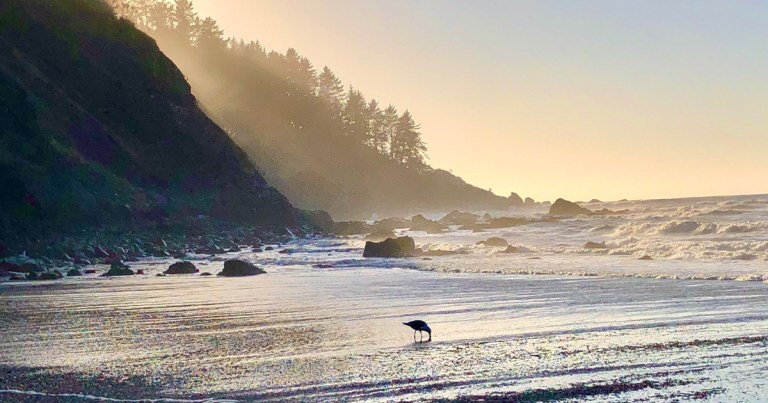
I arrived at low tide on one of those rare North Coast mornings when the fog had softened rather than swallowed the light. The trail down to the beach was steep but short, dropping from the bluff through coastal greenery toward the sound of surf.
Every few turns, the Pacific appeared through the trees, silver and restless. Walking down the trail, I encountered several rockhounds with happy faces, each carrying a plastic bag full of their treasures. They showed me their long-handled beach scoops to turn the stones without crouching every few seconds.
"It saves the back," one announced.
Down on the beach, I could hear the ocean purr as the rocks lightly clattered with every retreating wave. The water pulls the rocks back with a hollow rushing sound on the sandy shore. Around me, I could see a handful of beachcombers were already working the surf zone on the beach with quiet concentration. Most carried small, bulging bags.
With heads down, everyone seemed to be scanning the sand in their own quiet walking meditations. Agate hunting has its own rhythm: scan, pause, sort, rinse, hold a stone to the light, decide.
At first, every wet pebble looks promising. The beach is full of rounded stones polished by waves into little enticing trinkets. Then your eye becomes more attuned. Agates have a different glow. Agates appear somewhat waxy or dull when dry, but when wet or polished, they become distinctively translucent. If you hold the rock up to the sun, light should pass through the edges, revealing the inner structure.
Near the edge of the surf, I finally spotted my first agate. It was about the size of a robin’s egg, smooth and milky white, with little clear patches of quartz running through it. I stood there turning it over in my hand for a minute, and then I got it. This is how people lose an entire morning out here — one stone, then another, then just one more look before you head back.
These Ocean-Polished Stones Have Traveled Through Deep Time

Agates form when silica-rich minerals fill cavities in volcanic rock, often creating layered or translucent patterns over immense spans of time. Eventually, erosion, rivers, and surf release, tumble, and scatter them across beaches like this one. By the time you find one in your palm, it has already had a longer journey than most of us can imagine. They are highly durable, which is why they survive the relentless pounding of the Humboldt County coastline.
As the tide started to turn, I had a handful of keepers. A couple of deep-red carnelian-type agates, a cloudy amber piece, and one perfect translucent white agate.
The real magic here is that you are noticing the gifts that the ocean has chosen to reveal.
Sue-meg State Park Is Worth Exploring Beyond The Beach

Sue-meg State Park, located about 30 miles north of Eureka on California's far north coast, protects a densely forested promontory above the Pacific. Agate Beach, sheer coastal cliffs, tide pools, campgrounds, and sweeping viewpoints are all packed into a relatively small area. It is the kind of park where you can hunt for agates in the morning, hike through wind-bent coastal forest in the afternoon, and fall asleep in a campground to the sound of waves and birdsong.
Formerly known as Patrick's Point State Park, the park also carries a deeper cultural story. After the Yurok place name was restored to the land, it was renamed Sue-meg State Park in 2021. Visitors can walk through Sumêg Village, a reconstructed Yurok plank-house village built with the help of Yurok people and park staff. This is not just a pretty beach. It is part of a living cultural landscape.
Every Wave Reveals A New Possibility

Once I found the first agate, I started seeing them everywhere — or at least I thought I did.
Some were tiny. Some were probably just pretty little imposters I wanted to believe in. But a few were the real thing: smooth, translucent, and glowing when I held them up to the light. I dropped them into a small pouch and kept wandering, stopping every few feet as the waves pulled back and rearranged the stones all over again.
That's part of what makes Agate Beach so endlessly alluring.
You stare at one patch of cobbles and think there’s nothing there. Then a wave slides in, pulls back, shifts the stones just enough, and suddenly there’s a little flash of amber or green that you swear wasn’t there a second ago. Low tide gives you just enough room to search, but the ocean is clearly running the show.
Plan Your Visit Carefully And Collect Lightly

Agate Beach is beautiful, but it’s not a beach to wander down to without checking the tide first. Go at low tide, wear shoes that can handle wet rocks and sand, and keep an eye on the water. Sneaker waves are real on this part of the coast, and no stone — no matter how pretty — is worth turning your back on the surf.
I'd also check current park conditions before heading down, especially after storms, since trails and beach access can change quickly out here.
Bring a small pouch or bag if you want to collect, but go lightly. The pleasure of Agate Beach isn't filling a bucket — it's slowing down enough to notice what the ocean has left behind.
By the time I climbed back up from Agate Beach, my pockets were gritty with sand, and my little pouch held a few pieces of the morning: red, amber, green, translucent, imperfect, and wonderful. I had gone looking for semi-precious stones, but what I really found was a reason to slow down.
On the Redwood Coast, beauty often announces itself in cliffs, sea stacks, and ancient trees. At Agate Beach, it waits quietly underfoot.
Subscribe to our newsletter
Get the latest updates and news
Thank you for subscribing!