This Is the Quietest Part of This State Park in Northern California
Salt Point State Park is home to some seriously breathtaking sights, but this quiet state preserve in the park shows off a different side of NorCal's coastal scenery.
Northern California’s coastal scenery is nothing short of legendary, and the stretch between Bodega Bay and Mendocino is especially full of beautiful, photogenic sights: tide-carved cliffs and sunlit meadows, wind-stunted pines and lush fern canyons, and everything in between. The area is also known for its Seattle-like fog, which creates a vibrant ecosystem of its own where wildflowers pop up in impossible places and where the sunlight filters through the trees in the most dreamy ways. It's just far enough from the bustling streets of San Francisco to feel remote, and yet, unbeknownst to many, it's also home to some of California’s least-developed and most scenic coastline.
If you're like me, challenging hikes tend to take an extra dose of planning before hitting the trail, and quite frankly, I'm not always in the mood to hoof it when the weather isn't playing nice or when last-minute spontaneity is involved. On those days, a cool, scenic drive or a leisurely stroll through a botanical garden are excellent alternatives. Or, why not both?
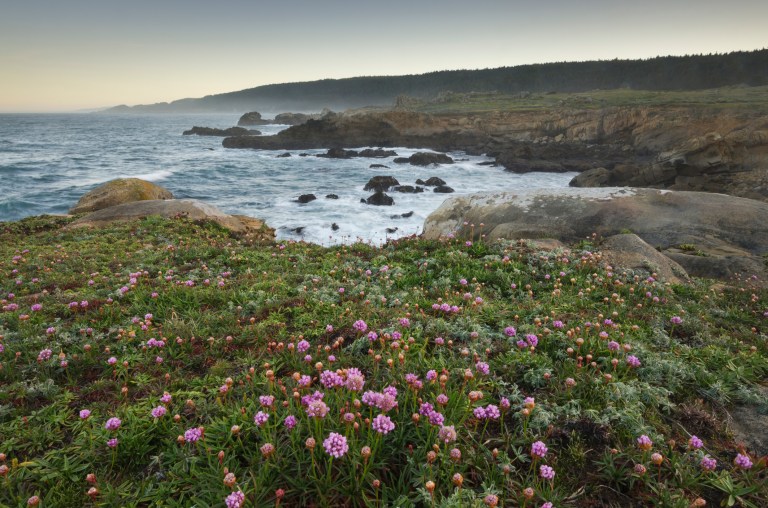
Highway 1 in Northern California is famous for good reason, twisting along the coastal bluffs and showing off the expansive, vibrant blue ocean beauty that the state treasures. Sonoma County has much more than gorgeous ocean vistas, though, and there's plenty more to discover beyond the windshield views. Inland, thick forests of Douglas fir and redwood give way to steep ravines, mossy creek beds, and sweeping grassland. At the intersection of both, Salt Point State Park is an overlooked state park just 20 miles from Jenner and just off the highway known locally for its accessible coastal hiking. But just a mile inland from its rocky shoreline, a different kind of trail experience awaits.
At Kruse Rhododendron State Natural Reserve within the state park, the drama of crashing surf is traded for a beautiful, serene garden experience that's perfect for anyone who enjoys the quieter things in life: soft light, damp soil, and a sudden flush of pastel spring color peeking through a misty forest. This secluded corner of the park, which sits at around 1,200 feet in elevation and is literally just a few minutes from the Pacific, hides one of Northern California’s most underappreciated conservation areas.
Kruse Rhododendron Reserve protects a 317-acre forest ecosystem where coastal redwoods, tanoaks, and Douglas fir form a dense canopy over wild rhododendrons, ferns, and wild huckleberry. Every year from mid-May to mid-June, the Western azalea (Rhododendron occidentale) bursts into bloom, filling the understory of the Reserve with clusters of pale pink, white, and rose-colored flowers. The blossoms, shaped like starbursts and tinged with yellow throats, give off a light, irresistible scent that drifts through the woods in warm, delicious-smelling patches. I grew up with one of these beauties in my front yard, and they definitely hold a special, nostalgic place in my heart.

The Reserve's loop trail system is compact but well-designed, featuring pretty bridges and plenty of shade and diversity. The Rhododendron Trail, an easy, gently climbing dirt path through the trees, is one of the best starting points. From the main parking area, it climbs northeast through dense forest, crossing beds of sword ferns and salal. The blooming azaleas appear sporadically at first but multiply as you gain elevation. Some grow as tall as small trees, creating beautiful, blooming tunnels, while others cluster low, lining the trail like wildflowers.

Chinese Gulch Trail, named for the seasonal creek it runs beside, descends into a more secluded area with mature redwoods and refreshing pockets of shade. This trail is quieter and is ideal for spotting songbirds, humble banana slugs, and spring wildflower pockets.

Altogether, the Reserve’s trails only cover around two miles, but with multiple connections that allow you to tailor your route, it feels much bigger than it is. Fortunately, trail junctions are marked and well-maintained, and the unpaved terrain is walkable for most hikers in average condition. You'll find a trail map at the entrance to help you navigate the area.

The small slice of land that is now Kruse Rhododendron State Natural Reserve is rooted in California's lengthy timber history. In the late 19th and early 20th centuries, the area around Timber Cove and its nearby communities were heavily logged, primarily for redwood and tanoak. The Kruse family, a local German immigrant family, operated a successful logging and ranching business in the area, and in 1933, they donated 317 acres of their property to the State of California. Today’s Reserve trails pass through this towering, mature forest and native rhododendron habitat that has largely recovered from logging operations nearly a century ago. While the blooming Western azalea is the Reserve’s signature plant (hence the name), the garden also protects seasonal creeks, native ferns, fungi, and understory species found in only a few other coastal ecosystems.

Because of its ecological importance, dogs and drones are not permitted in Kruse Rhododendron Reserve, and visitors are encouraged to stay on designated trails. The area is a hidden gem even during peak season, and mornings are especially peaceful. Also, note that there are no facilities available. Bring water, good walking shoes, and a light jacket, as temperatures hover in the 50s and 60s year-round. Mornings often begin in thick, chilly fog, which lifts slowly through the afternoon.
While Kruse is a self-contained loop worth a detour, the surrounding park offers plenty to fill a full day or weekend. Uniquely, the Reserve sits within the official boundaries of Salt Point State Park, the 6,000-acre park established over two decades after the Reserve itself, although the two are managed separately. However, the larger state park is a photographer's dream with countless places to explore either before or after your visit to the Reserve. Salt Point State Park’s Bluff Trail delivers epic windswept ocean views, sea caves, and harbor seal sightings, while Gerstle Cove is popular with adventurous divers and tidepoolers, especially at low tide, just to name a few. Nearby, Stillwater Cove Regional Park offers another quiet redwood grove and a small, but stunning, beach.
Northern California's smaller botanical gardens can sometimes get lost in the shuffle of the state's stunning, big-name national parks, Kruse Rhododendron State Natural Reserve is a quietly overlooked slice of history and beauty that's definitely worth the trip. Plan your visit for late spring or early summer, or add it onto your larger NorCal bucket list for next year!
Subscribe to our newsletter
Get the latest updates and news
Thank you for subscribing!