We Love Our National Parks, but This Alaska Wildlife Refuge Is Just as Spectacular
This Alaska national wildlife refuge boasts many of the same iconic sights as its national parks—and a little extra breathing room.
Compared to those found in the Lower 48, Alaska has eight national parks and almost no one in them. While Yellowstone sees around 3.3 million annual visitors, Wrangell-St. Elias National Park near Chitina, Alaska, the largest national park in the U.S., sees only around 65,000, while Gates of the Arctic hovers around 10,000. But Alaska's national parks are far from empty; they're packed with massive, cinematic terrain: glacier fields, active volcanoes, coastal fjords, and iconic mountain ranges stacked like shark teeth.
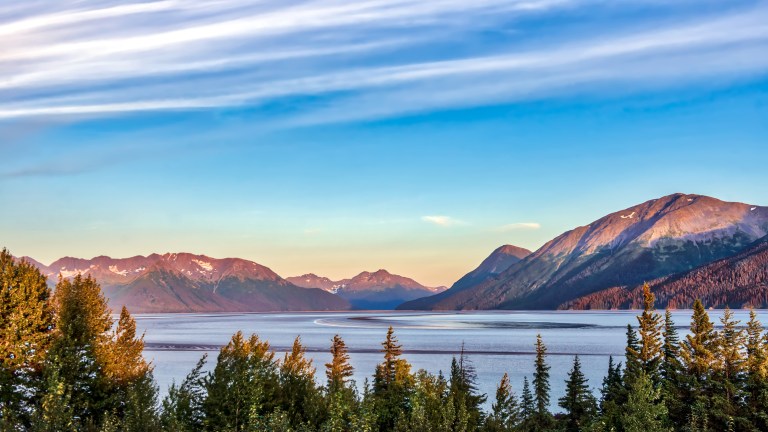
From Denali’s towering 20,310-foot peak and Katmai’s bear-crowded salmon streams to Glacier Bay’s glittering tidewater ice, Alaska's scenery is vast, awe-inspiring, and relentless. For anyone looking for a scenic Last Frontier experience without the plane ride, national park permit scramble, or two-week window of good weather, the Kenai National Wildlife Refuge offers an accessible, crowd-free experience that packs in some serious jaw-dropping beauty. The best part: you can even drive there.
Wrangell-St.Elias National Park is a bucket list destination if there ever was one. Some of Alaska's most incredible sights and natural wonders can be found here, like the park's namesake: the glacier-covered, volcanic Mount Wrangell, along with the massive Malaspina Glacier and the man-made Kennecott Mines and Mine Town. But if you want to enjoy the revered mountain drama of Wrangell and Alaska's other national parks without having to know the ins and outs of island travel, the surprisingly underrated Kenai National Wildlife Refuge is an equally phenomenal place to start.

Spanning nearly 2 million acres of glacier-carved valleys, boreal forest, and wetlands packed with wildlife, the Kenai Refuge is stunningly wild yet surprisingly accessible. Most travelers breeze through on their way to Homer or Seward, barely noticing the green sprawl just off the Sterling Highway. But those who stop will find a quieter, less curated version of all the natural beauty that makes Alaska's many national parks so jaw-dropping.
The refuge's history is still pretty young. It was created in 1941 as the Kenai National Moose Range, which was designed to be a safe haven for moose after overhunting and habitat loss started taking a toll. In 1980, it was rebranded and expanded into today’s Kenai National Wildlife Refuge under the Alaska National Interest Lands Conservation Act. Since then, it has quietly guarded its diverse ecosystems, including tundra, taiga, alpine lakes, active glaciers, and some of North America's most productive salmon streams.

If you're used to swooning over the iconic sights of Denali, at first glance, this refuge may not seem like much. From a distance, it looks like a calm patchwork of spruce forest, muskeg, and lakes. But drive east or hike uphill, and the terrain starts to open up until you’re looking at the edge of the Kenai Mountains, shaped by ice and volcanic activity. Here, the land pitches upward, and you get long views of jagged ridgelines, braided rivers, and peaks dusted with snow even in July. The patchwork closely resembles the Nabesna River Valley of Wrangell.

For fans of ancient geology, the refuge is a living textbook. Layers of sediment, volcanic ash, and glacial deposits reveal an active past, geologically speaking. The Kenai River, now famous for heavy salmon runs and fly-fishing photos, carved through ice and debris left over from the last major glaciation. Today, you can still see kettles, eskers, and moraines in the landscape. It's an incredibly diverse area, and the science is everywhere if you know how to read it, sharing much of the same DNA as the Wrangell Volcanic Field as part of the larger Pacific Ring of Fire.

Skilak Lake Road is the best way to access some of the most photogenic parts of the refuge. It’s mostly unpaved, but definitely worth the extra effort. The Skilak Lookout Trail is a short and steep hike that ends with an overlook of Skilak Lake that’s hard to beat, no filter needed—a near dupe for the more popular Wonder Lake in Denali or Tanada Lake in Wrangell-St.Elias. Or, for something a little more challenging, check out the Fuller Lakes Trail. It climbs nearly 1,500 feet in under four miles to a pair of alpine lakes that feel completely untouched, almost like they were dropped into the wilderness by accident. Pro tip: bring bear spray and a windbreaker if you attempt this trail (or any trail). You’ll probably use both.
In true Alaska form, travelers won't find many paved loops in the refuge, but hiking options are everywhere you turn. In addition to Skilak Lake, you'll find trails like the Hidden Creek Trail, the Kenai River Trail, and a network of other backcountry hikes that aren't fully marked unless you count moose tracks. Often, these trails tend to vanish under snow or mud. The refuge's relative lack of clearly marked trails is yet another aspect of the refuge that keeps casual crowds at bay, so be sure to have a GPS app or emergency beacon handy as well, just in case.

But this is a wildlife refuge after all, and Kenai easily rivals Alaska's most iconic animal sighting hotspots, like Brooks Camp in Katmai National Park. Both black and brown bears stroll majestically through the area, especially around salmon streams in late summer. Moose are common year-round, often with calves in tow (which is a sign to stay far, far away). Lynx, wolves, beavers, and hundreds of bird species also live here, especially in the refuge’s rich wetland zones.

Underrated though Kenai NWR may be, the Skilak Lake Overlook, Engineer Lake, and the Moose River Flats are some of the most photographed spots in the refuge. They’re beautiful while also being easy to reach. But don't feel like you have to check them out just to feel like you've "seen" the refuge to the fullest. The best views often come from just pulling off the road and hiking a mile or two! To further build your confidence, we also highly recommend taking a guided ground or aerial tour if you want to get to the heart of the refuge or try your hand at some deep wilderness hiking or secluded fishing.
There's no denying that Alaska's parks are epic. While the larger Kenai Peninsula is far from being a secret, figuring out Alaskan travel can be intimidating for many first-time visitors, and navigating the grandiose national park scene can faze even the most seasoned traveler. Kenai National Wildlife Refuge offers a more accessible version of Alaska's most iconic sights: glaciers, mountains, wildlife, solitude—many of the things that make life here in the Last Frontier so special, all with a quick drive from Anchorage. And, yes, you'll be taking a lot of photos on your visit, so plan ahead!
Subscribe to our newsletter
Get the latest updates and news
Thank you for subscribing!