Five Different Planets Will Align In The North Carolina Night Sky During An Incredibly Rare Display
North Carolina offers 15 incredible natural wonders, including mountains, gorges, caves, and waterfalls, each with unique features and breathtaking views.
It's been quite some time since the five planets in our solar system that can be seen with the naked eye (they're called the "naked-eye plants") were all strewn across the sky and visible at once in order of their lineup. But, get ready to be treated to the show as all five planets align in the North Carolina night sky. Additionally, they'll be visible without the use of a telescope. We love the nature available throughout the state, but it's extra special when we can look skyward. So, start making your plans to see this exciting display!
From March 25-30, 2023 celestial enthusiasts can spy Mercury, Jupiter, Venus, Uranus, and Mars as they spill across the sky in an incredible display.
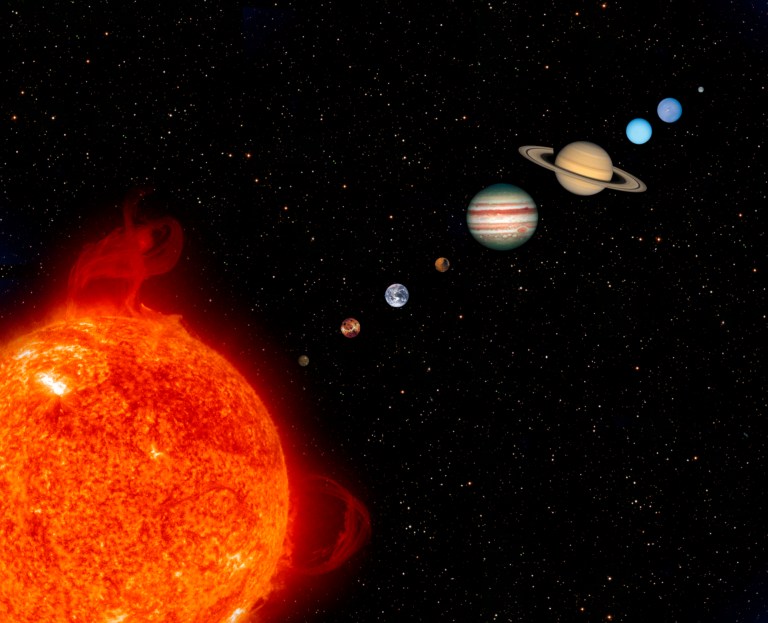
North Carolina is a wonderful place for stargazing, with many places to capture the Milky Way, meteor showers, comets, and more. But this night sky event doles out something very unusual, indeed.

Typically, when any of the five naked-eye planets are in the sky, they're easily observed because they tend to shine much brighter and more steadily than nearby stars. And while it's common to be able to see two or three of the naked-eye planets in the sky at one time, seeing all five of them is rare.

While there are just a few days to see the display, the good news is that most of it happens just after sunset and into the night. No early alarm clocks necessary! First up are Jupiter and Mercury. You'll want to catch these just after the sun goes down since they'll only be visible for about an hour before dipping beneath the horizon. It's also important to note that Jupiter will only be visible until the 28th. After that it won't be visible above the horizon at all.

Next are Venus and Uranus. Venus, one of the brightest planets, should be fairly easy to see. However, Uranus might require binoculars. These, too, will only be in the sky for an hour or two before disappearing beneath the horizon.

Then, Mars comes into view. This planet should also be fairly simple to spot as it's quite bright. Plus, it will be in the night sky for longer than the first four planets. Some lucky people may even be able to see Saturn on March 27th and 28th. This planet will come into view in the early morning hours, just before sunrise.

For the best viewing conditions, be sure to find a dark spot away from cities and large towns. You'll also want to find an unobstructed view of the western horizon where all of this is taking place.
Have you ever seen all five planets align over North Carolina? Do you have plans to see this particular display? If so, we'd love to hear them. It can be hard to find the perfect spot so any recommendations are welcome.
A great place to view the stars is from a dark sky park. Luckily, one of the best dark sky parks in America is right here in North Carolina!
Subscribe to our newsletter
Get the latest updates and news
Thank you for subscribing!