Welcome to Small Business Spotlight, our celebration of the ingenuity and innovation of small business owners across the country. From well-established restaurants to brand-new specialty stores and everything in between, these businesses—and the hardworking proprietors at their helm—are truly an inspiration.
This Tribal-Run Montana Ski Area Keeps Skiing Accessible—and Deeply Rooted in Community
On a Native American reservation in northern Montana, Bear Paw Ski Bowl proves that skiing doesn’t need luxury or high prices—just community, commitment, and a shared love of winter.
Just south of tiny Havre, Montana, a historic railroad town where the plains gradually but dramatically begin to rise toward the Rocky Mountains, Bear Paw Ski Bowl feels like a throwback.
Located on the Rocky Boy’s Reservation and wholly owned by the Chippewa Cree Tribe, the small, no-frills ski area has been in operation since 1960. Today, it remains one of just three public ski areas in the U.S. located on tribal reservation land (the other two are Ski Apache in New Mexico and Arizona’s Sunrise Park Resort), and one of very few places where skiing still feels radically accessible.
Snow Dance Ski Association, a nonprofit that works in close partnership with the tribe, operates Bear Paw. Claire Stoner, the association’s president, has been an integral part of the mountain’s story for nearly four decades. She’s also been a member of the National Ski Patrol for 30 years. Stoner’s accolades reflect the deep community commitment and institutional knowledge that keeps the ski bowl running each winter.
Bear Paw: Tribal Owned and Operated Ski Resort
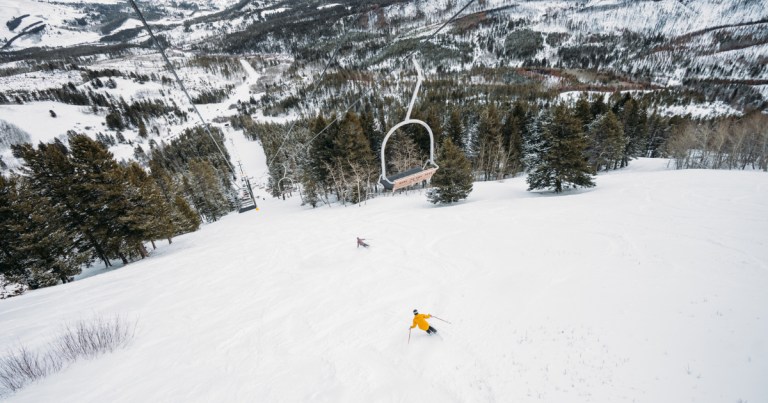
Tribal ownership shapes nearly every aspect of day-to-day operations. “All projects must be approved by the tribal council,” Stoner explains, adding that “Paid employees can only be tribal members.” With only four paid staff members—all working as lift operators—Bear Paw runs almost entirely on volunteer labor. Approximately 25 volunteers help with everything from maintenance to staffing the lodge and selling lift tickets. The volunteer Eagle Creek Ski Patrol provides first aid and maintains trails.
The volunteers, Stoner says, are the reason the ski area still exists. “The volunteer model has been the foundation for the longevity of Bear Paw,” she says. “Many of our volunteers have dedicated 20 years or more, and a committed core group has given countless hours of time, labor, expertise, and heart to keep the hill going.” Over time, that dedication has become something more personal. “This core group became a family, working side by side toward a shared passion and a common goal.”
The result is that Bear Paw feels less like a business and more like a gathering place. “This has created a strong sense of community,” Stoner shares. “Volunteers from all ages and socioeconomic backgrounds come together, collaborating with people from all walks of life. By looking past our differences and recognizing that everyone brings unique abilities, knowledge and talents, we’ve learned just how much can be accomplished when people unite around a common purpose.” That sense of belonging extends beyond skiing, as well. For the Chippewa Cree community, Bear Paw plays a broader role, encouraging an active, healthy lifestyle for tribal members.
Keeping Ski Prices Affordable to Locals

As lift ticket prices at major ski resorts soar and skiing becomes increasingly exclusive, places like Bear Paw are drawing renewed interest. Stoner isn’t surprised. “Skiing has become outrageously expensive; there’s the ski equipment, clothing, food, travel, and lift tickets,” she says. “Bear Paw is affordable. There are no frills, but we accept everyone as they are and we are very welcoming.”
That ethos comes with challenges—especially since community labor practically built the ski area. “The biggest challenge is the commitment of volunteers,” Stoner shares, noting that the “core group” has been there for 20 years or more and it’s difficult to pass that responsibility and sacrifice on to younger generations. Still, Bear Paw endures, open weekends starting right after New Year’s Day. Visitors can ski or ride 24 trails served by a double chair lift and a tow rope, with an impressive 900-foot vertical drop. For equipment rentals and tune-ups, visit Bear Paw Winter Sports downtown. Notably, Havre is also a stop along Amtrak’s Empire Builder route, offering a rare opportunity to reach a Montana ski area directly by train.
Visiting Bear Paw Ski Bowl

For first-time visitors, Stoner hopes they set expectations before arriving. “Bear Paw is not like any other area,” she says, smiling. “Everyone will be welcomed, and you will leave with a new group of friends. Appreciate the rustic beauty in the BP community.”
Bear Paw Ski Bowl is open Saturday and Sunday from 10:30 a.m. to 4 p.m., January 1 through approximately late March (snow conditions permitting). Lift tickets start at $10, with discounts for Chippewa Cree Tribal Members and Montana State University-Northern students. Kids eight and under, and seniors over 80, ski free. Note the ski hill is cash only.
Subscribe to our newsletter
Get the latest updates and news
Thank you for subscribing!