15 Unexpected Road Trip Stops Across America That Feel Like Hidden Gems
The best road trips aren't about the destination. They're about the phone booth that became a police station, the 90-year-old bartender who is also the mayor, and the cave full of cheese you almost drove right past.
Some of the best travel moments don't happen at the places you planned. They happen when you notice something just off the exit, when a local recommends something that isn't in any guidebook, or when a name on a road sign is too strange to drive past. This list is for those moments.
From a 90-year-old woman running a tavern, a post office, and a library by herself in Nebraska, to an underground cheese cave tucked along a Montana interstate, these 15 unexpected road trip stops prove that the road between Point A and Point B is often the whole point.
1. The Apple House: Linden, Virginia
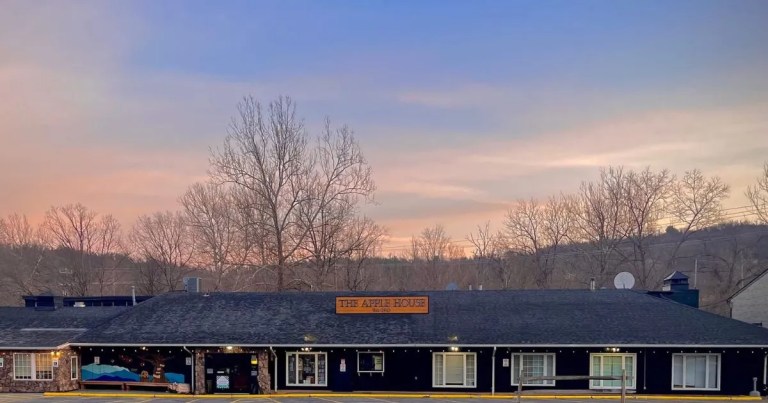
- Location: Linden, Virginia (I-66, Exit 13)
- Best For: Freshly fried apple butter cinnamon donuts & smoked pork barbecue
- Pro-Tip: Fuel up here; it’s less than 15 minutes from the northern entrance to Shenandoah National Park.
Pull off I-66 at Exit 13, and you'll find one of the most beloved roadside stops in the Mid-Atlantic. The Apple House has been a family-run operation since 1963, when orchardists Ben Lacy and Orville VanDeusen opened it as a shipping point and small roadside market. Six decades later, it's still in the family and has grown considerably.
The draw? Apple butter cinnamon donuts, fried fresh in small batches and handed over warm. There's also smoked pork barbecue, Virginia ham sandwiches, and a gift shop stocked with hundreds of hot sauces, local preserves, Virginia wines, and peanuts. A sit-down restaurant and bar called The Bushel opened in recent years alongside the original cafe, but the classics haven't changed.
2. Norwood Pines Supper Club: Minocqua, Wisconsin

- Location: Minocqua, Wisconsin (Just west of town along Patricia Lake)
- Best For: A legendary Friday night fish fry, prime rib, and classic Wisconsin supper club vibes
- Pro-Tip: Ask for a table on the screened porch overlooking the lake, and keep an eye out for whitetail deer.
Supper clubs are their own culture in Wisconsin, and if you only ever stop at one, make it this one. Norwood Pines Supper Club sits on several acres along Patricia Lake just west of Minocqua, tucked into a forest of red pines that frames the building's log construction and stone fireplace, evoking a 1950s postcard.
The property dates to the 1930s and has been a supper club since at least the 1950s. The Teichmiller brothers bought it in 1995 and have kept it going for 30 years on a combination of consistency, loyalty, and a menu that balances classics like prime rib and North Atlantic cod with more contemporary fare. The Friday night fish fry is legendary in this part of Wisconsin. There's also a screened porch overlooking the lake and, if you're lucky, the occasional whitetail deer wandering through the pine tree shadows. Reservations are recommended, especially on weekends.
3. Anna's Canyon Cafe: Williams, Arizona

- Location: Williams, Arizona (W. Railroad Ave, across from the Grand Canyon Railway Depot)
- Best For: The signature Canyon Burrito (green-chile pork served enchilada style)
- Pro Tip: It’s open daily from 6 a.m. to 2 p.m. and makes the perfect breakfast stop an hour south of the Grand Canyon's South Rim.
Williams is the last Route 66 town to be bypassed by the interstate, and it wears that distinction with pride. Anna's Canyon Cafe sits on the ground floor of the historic Red Garter Building on West Railroad Avenue, directly across from the Grand Canyon Railway Depot. The building has a storied past, with rumors of a former bordello in its upper floors still floating around town.
Owner Anna Dick has run the cafe here for years, and her menu is a product of the place's history: American breakfasts, Mexican dishes passed down from her mother, Chinese standards kept from previous owners, and Route 66 sandwich names that make you smile. The Canyon Burrito, scrambled eggs and green-chile pork served enchilada style with house-made salsa, is the signature. Portions are enormous. Prices are fair. The laminated world map on the wall, where guests mark their hometowns, says everything about what kind of place this is.
4. Petersham's Country Store: Petersham, Massachusetts

- Location: Petersham, Massachusetts (Historic Town Common, Worcester County)
- Best For: Fresh homemade muffins, scones, and a gift shop packed with ~70% local New England products
- Pro-Tip: Take a moment to explore the back market for regional meats, cheeses, maple syrup, and honey.
This Greek Revival building on Petersham's historic town common has housed a general store since 1840, making it one of the oldest continuously operating country stores in the United States. The town itself has a population of roughly 1,200 people, and more than 80% of its acreage is protected conservation land, which gives you a sense of the place before you even arrive.
The store closed in 2012 but was saved through a community fundraising campaign that raised $400,000 and a partnership with the East Quabbin Land Trust. Local chef-owner Ari Pugliese, who grew up in Petersham, took over in 2014. The cafe serves breakfast and lunch daily, with ingredients sourced primarily from regional farms, roughly 70% of which are local New England products. Homemade muffins, scones, and cookies come out of the kitchen every morning. The gift shop in the back carries local meats, cheeses, maple syrup, honey, wine, and beer. On a quiet drive through Worcester County, this is the kind of stop that makes you wonder why you don't live somewhere like this.
5. Weir Creek Hot Springs: Nez Perce-Clearwater National Forest, Idaho

- Location: Nez Perce-Clearwater National Forest, Idaho (US Highway 12, Milepost 142.1)
- Best For: A primitive, rock-lined natural hot spring pool set around 100-105°F
- Pro-Tip: The trail is a short but steep half-mile hike. Access is free, but note that overnight use is prohibited between 8 p.m. and 6 a.m.
If you're driving US Highway 12 along the Lochsa River corridor in north central Idaho, you're already on one of the most scenic highways in the country. Weir Creek Hot Springs sits right along this route at milepost 142.1, about 68 miles east of Kooskia and 35 miles from the Idaho-Montana border.
The hike from the trailhead is only about half a mile, though parts of the trail are steep and rocky, so watch your footing on the descent. At the top, you'll find a series of rock-lined pools perched on a ledge above the creek, surrounded by cedar trees and volcanic cliffs. The main pool holds about 10 people and is set at roughly 100-105 degrees Fahrenheit, depending on the season. Access is free and managed by the U.S. Forest Service. The area is primitive, meaning no changing rooms and no garbage service, so pack everything out. Dogs are welcome on the trail but should stay out of the pools.
6. Leslie Gulch: Malheur County, Oregon

- Location: Eastern Oregon (Owyhee Canyonlands via Leslie Gulch Road)
- Best For: Volcanic rock spires, honeycomb cliffs, and spotting California bighorn sheep
- Pro-Tip: A high-clearance vehicle is highly recommended. There is absolutely no cell service here, and there is a flash-flood risk during wet weather.
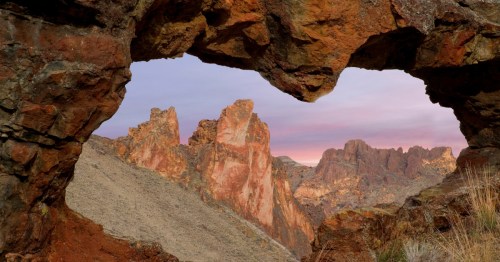
Most people driving through eastern Oregon are headed somewhere else, which is exactly how Leslie Gulch has stayed this uncrowded. Situated within the Owyhee Canyonlands, this 11,000-acre Area of Critical Environmental Concern is a geological wonderland of khaki- and cinnamon-colored rock spires, honeycomb-like cliff formations, and winding canyon corridors shaped by nearly 20 million years of volcanic activity.
The drive in is 14 miles along Leslie Gulch Road, ending at a boat ramp on the Owyhee Reservoir. Along the way, several short trails branch off into the canyon: Juniper Gulch is 1.6 miles round-trip, Timber Gulch is 1.2 miles, and Dago Gulch runs about 2.3 miles. The area supports more than 200 California bighorn sheep, reintroduced in 1965, as well as mule deer, elk, coyotes, bobcats, and a variety of raptors. Two plant species, Packard's blazing star and Etter's groundsel, grow nowhere else on earth except this drainage. High-clearance vehicles are recommended. No cell service. Flash flood risk in wet weather. It's one of those places that rewards people willing to work for it.
7. Hartman Rock Garden: Springfield, Ohio

- Location: Springfield, Ohio (1905 Russell Avenue)
- Best For: A massive, historical Depression-era folk art environment featuring over 50 miniature stone structures
- Pro-Tip: It is entirely free to visit and open daily from dawn to dusk right in the middle of a residential neighborhood.
In 1932, Ben Hartman lost his job at a Springfield foundry at age 48. Rather than sit idle during the Depression, he started making things; a concrete fish pond first, then more. What grew over the next seven years in the backyard of his 1920s home at 1905 Russell Avenue is now recognized as one of the most significant folk art environments in the United States.
The Hartman Rock Garden covers more than 250,000 individual stones. It features over 50 miniature structures, including a 14-foot stone cathedral, a 12-foot castle with a drawbridge, tiny icicles hanging from the roof of a Valley Forge cabin, 14 animals marching two by two onto Noah's Ark, and a sand-filled Death Valley scene pulled from a radio show Ben loved. He worked entirely by hand, using concrete, stone, glass, metal, and whatever he could find. He died in 1944 from lung disease. His wife Mary kept the garden going until her own death in 1997. The Kohler Foundation restored it in 2009, and the Friends of the Hartman Rock Garden now runs it. It's free to visit, open daily from dawn to dusk, and tucked into a residential neighborhood that makes it even more remarkable.
8. The Coastal Town of Havre de Grace, Maryland

- Location: Northern Maryland (Intersection of the Susquehanna River and Chesapeake Bay)
- Best For: Walking the waterfront promenade, fresh seafood, and touring the unique Decoy Museum
- Pro-Tip: Don't miss the Concord Point Lighthouse (built in 1827), and pronounce it like a local: "HAVE-er-dee-grace."
When Marquis de Lafayette passed through this waterfront town in the 1780s, he reportedly said it reminded him of the French port of Le Havre-de-Grace, and the name stuck. The town incorporated under that name in 1785, and the historic downtown nearly became the nation's capital, losing out to what became Washington, D.C., by a single vote in the First Congress.
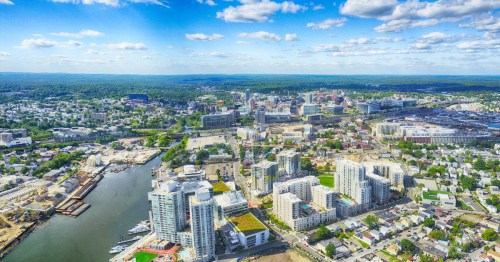
Havre de Grace sits at the confluence of the Susquehanna River and the top of the Chesapeake Bay, about 40 miles north of Baltimore. The three-quarter-mile waterfront promenade passes the Concord Point Lighthouse, built in 1827, the second-oldest in Maryland. The Havre de Grace Decoy Museum is worth an hour for anyone even remotely curious about Chesapeake Bay culture: decoy carving here is considered a distinctly American art form, and the work on display would stop you in your tracks in any gallery. There's also the Maritime Museum, antique shops, and excellent seafood. The town pronounces it HAVE-er-dee-grace, in case you're asking directions.
9. The Semi-Ghost Town of Puerto de Luna, New Mexico

- Location: Santa Rosa, New Mexico (9.5 miles south via State Road 91)
- Best For: Sandstone scenery, historic adobe architecture, and a church holding mass since 1882
- Pro-Tip: Drive out here specifically for the deep quiet and the beautiful, winding desert landscape along the Pecos River.
The name means Gateway of the Moon, and legend has it that Spanish explorer Francisco Vasquez de Coronado, who camped along the Pecos River here in 1541, gave it that name after watching a full moon rise through a gap in the hills to the east. Whether the story is historically confirmed or not, it's a good one, and it fits the place.
Puerto de Luna sits about 9.5 miles south of Santa Rosa along New Mexico State Road 91, and the drive there winds through sandstone arroyos and mesquite flats that feel genuinely remote. Six Hispanic families established the village in 1863, building an irrigation dike across the Pecos. It served as the county seat of Guadalupe County from 1891 until 1903, when the railroad bypassed it for Santa Rosa, and the seat moved north. What remains today is a small, quiet community of adobe structures, the roofless shell of the old courthouse, a historic church that has held mass since 1882, and a landscape that Rudolfo Anaya immortalized in his novel Bless Me, Ultima. Billy the Kid reportedly stopped here too, on his way to trial. Come for the scenery and the silence.
10. An Underground Cheese Cave at Greycliff Mill: Greycliff, Montana

- Location: Greycliff, Montana (Along I-90, just east of Big Timber)
- Best For: Pastries made from grains ground on-site by an 1874 water-powered gristmill
- Pro-Tip: Be sure to check out their unique underground cheese cave, which is strictly maintained at 50°F and 85% humidity to age artisan cheeses.
Driving between Bozeman and Billings on I-90, you're looking at roughly an hour of open rangeland in either direction. Greycliff Mill is the stop that changes that math. Visible from the highway just east of Big Timber and the Greycliff rest stop, a pre-Revolutionary War barn from Cobleskill, New York, stands at the foot of the Greycliff rock formations, hauled more than 2,000 miles west beam by beam by owner Matt Brandstadt.
Inside that 1760 Dutch barn is a water-powered gristmill from South Carolina, dating to 1874, that still grinds wheat grown on the surrounding 1,800-acre farm into flour. That flour goes into every pastry and loaf of bread in the cafe. The espresso is pulled right next to the millstone. There's also an underground cheese cave maintained at 50 degrees with 85% humidity, where Montana-made artisan cheeses are aged; a market selling regional products; horseback rides up to the Greycliff overlook; and overnight log cabins on-site. Bimonthly farm-to-table dinners sell out quickly. It's one of the most unexpected stops on any American interstate.
11. World's Smallest Police Station: Carrabelle, Florida

- Location: Carrabelle, Florida (Gulf Coast, corner of US 98)
- Best For: A historic 1960s phone booth repurposed to protect police officers from long-distance tourist calls and heavy rain
- Pro-Tip: The replica booth stands at the original site for photo-ops, but you can see the actual original booth inside the nearby Carrabelle History Museum.
It's a phone booth. That's it. A phone booth on the corner of US 98 in the small Gulf Coast fishing town of Carrabelle, declared the World's Smallest Police Station, with a better backstory than most actual police stations.
In 1963, the town had two problems: tourists kept using the outdoor police call box to make unauthorized long-distance calls, and officers were getting soaked answering the phone in the rain. Johnnie Mirabella, a local telephone company employee, solved both issues at once by placing the police phone in an old phone booth the company was retiring. On March 10, 1963, the booth was moved to its spot on US 98, the dial was eventually removed to stop tourists from calling out, and Carrabelle had a police station. The original booth is inside the Carrabelle History Museum. A replica stands at the original site, along with a bench and a genuinely good story.
12. The Wacky Taxidermy and Miniatures Museum: Mackinaw City, Michigan

- Location: Mackinaw City, Michigan (Just south of the Mackinac Bridge)
- Best For: Anthropomorphic taxidermy mice and squirrels inside highly detailed 1:12 scale miniature dioramas
- Pro-Tip: Admission is an affordable $5 per person. It is open seasonally, typically running from May through October.
Just before the Mackinac Bridge, in the busy tourist town of Mackinaw City, there's an unexpected hidden gem museum that's harder to explain than it is to enjoy. Artists Brandon and Julie Howey, an Indiana couple who have spent years creating anthropomorphic taxidermy and miniature dioramas, opened this museum in 2020. The concept: taxidermy animals, mostly mice and squirrels, posed inside highly detailed, handcrafted miniature scenes ranging from a Victorian parlor to a post-apocalyptic battlefield to a tiki bar beach day.
Mousiknaw City is the centerpiece, a 15-foot-long mouse metropolis in 1:12 scale with a beauty salon, a tattoo shop, a coffee shop, and a movie theater. There are also displays of jackalopes, fur-bearing trout, a feegee mermaid, a lobster boy, and creatures inspired by folklore from around the world. The Howeys make everything themselves and take real pride in the work. Admission is around $5 per person, which makes this one of the better deals on this list. Open seasonally, typically May through October.
13. Population, One: Monowi, Nebraska

- Location: Monowi, Nebraska (Outback Boyd County)
- Best For: Grabbing a burger at The Monowi Tavern from Elsie Eiler—the town's sole resident, mayor, and bartender
- Pro-Tip: Ask Elsie to sign her guest book (which has signatures from 60+ countries) and check out Rudy’s Library right next door.
Monowi is the only incorporated municipality in the United States with a population of one. That one person is Elsie Eiler, who serves simultaneously as mayor, town clerk, town treasurer, town secretary, librarian, and bartender. She issues herself her own liquor license, votes for herself in annual elections, and files a municipal road plan every year to maintain state funding for the town's four streetlights.
The town peaked at about 150 residents in the 1930s, when it sat along the Fremont, Elkhorn, and Missouri Valley Railroad. The railroad closed. The school closed. The post office closed. By 2004, when Elsie's husband Rudy died, she became the sole resident. She opened Rudy's Library in his memory, a shed holding 5,000 books operating on the honor system. The Monowi Tavern has been open since 1971, serving burgers, hot dogs, and cold drinks six days a week. About 50 visitors a day stop in, some from neighboring farms, others from Japan, Germany, and everywhere else. Elsie's visitor book holds signatures from all 50 states and more than 60 countries. She's in her 90s and still at the bar.
14. Shady Acres Diner and Apocalypse Cafe: Foster, Rhode Island

- Location: Foster, Rhode Island (Danielson Pike near Route 6, close to the CT border)
- Best For: Exceptional, scratch-made comfort food like house-made corned beef hash and steak bombs
- Pro-Tip: It balances classic 1960s diner nostalgia with upscale kitchen talent. Open Wednesday through Sunday only.
The sign out front says Shady Acres in classic 1950s diner script, and underneath, in neon, Apocalypse Cafe. Both are accurate. The neon sign came about during the early days of COVID-19, when owners Desi and Mike Wolf, who bought the diner just months before the pandemic and had previously run a well-regarded Providence bistro called Loie Fuller's, needed a way to keep the takeout window visible.
The diner itself has been operating since the 1960s. The Wolfs took it over and updated it carefully enough not to alienate the regulars, while still bringing in a sensibility rooted in serious cooking. Located on Danielson Pike near Route 6 in rural Foster, close to the Connecticut border, it serves the kind of food that reminds you why a well-executed diner meal beats almost everything else: house-made corned beef hash, hash Benedict, a steak bomb that gets mentioned in nearly every review. The grandfather of the previous owners still comes in two to three times a week. It's open Wednesday through Sunday.
15. Captain Scott's Lobster Dock: New London, Connecticut

- Location: New London, Connecticut (Shaw's Cove off Hamilton Street)
- Best For: Hot and buttery Connecticut-style lobster rolls served right next to the train tracks
- Pro-Tip: It is outdoor-only, seasonal (late March through October), and entirely BYOB. Lines form quickly on weekends, so arrive before noon!
It's not easy to find. Tucked into Shaw's Cove off Hamilton Street, wedged between a marina and the Amtrak mainline, Captain Scott's is the kind of place that rewards people who go looking for it. The restaurant is named for Captain Thomas A. Scott, the ship captain, master diver, and marine engineer whose company built both the Race Rock and Ledge Light lighthouses off the Connecticut coast. It opened in 1996 and has been a seasonal institution in southeastern Connecticut ever since.
Everything is ordered at a window and eaten at picnic tables outside with a view of the water and, if the timing's right, an Acela Express blowing past on the tracks. The lobster roll is Connecticut-style, meaning hot and buttery rather than cold with mayo, served on a toasted split-top bun with a wedge of lemon. The fish and chips are the size of a small meal for two. It's BYOB, open seasonally from late March through October, and almost always has a line by noon on a weekend. Get there early.
Let's keep on driving, shall we? Check out these 17 iconic road trips across America and see how many unexpected road trip stops above fit into your itinerary.
Subscribe to our newsletter
Get the latest updates and news
Thank you for subscribing!