Skip Europe This Summer: This Alpine Town in Pennsylvania Is Just as Charming as Switzerland
Nestled in the Pocono Mountains, Jim Thorpe is known as the Little Switzerland of America.
Pennsylvania has played home to Swiss immigrants since before the United States declared independence; the first wave arrived in the 18th century, drawn by the economic prospects of a new country, and the second significant wave arrived in the next century, attracted by religious tolerance and fertile land that looked much like home.
Jim Thorpe was first established in 1818 as Mauch Chunk, a Native American name translating to “Bear Mountain” or “Bear Place,” but was renamed in 1954 to honor the Native American gold medal Olympian. It prospered as a prominent coal mining town and benefited greatly from railroad expansion—and while today those are a part of its history, the town itself looks much the same way it did in the 19th century.
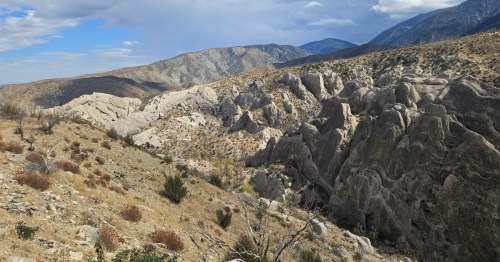
The Victorian buildings exhibit a wide range of styles associated with the architectural movement, including Federalist, Greek Revival, Richardsonian Romanesque, Romanesque Revival, Second Empire, and Queen Anne, among others. Together, they create a European alpine vibe that will have you thinking you’re in Switzerland, especially against the backdrop of the Pocono Mountains that are lush and green in the summer, colorful in the fall, and serene with a dusting of winter snow.
Start on the corner of Broadway and Race Street and take a stroll in the Old Mauch Chunk Historic District to see 28 of these historic buildings. You’ll also scope the Episcopal Parish of St. Mark and St. John, formerly St. Mark's Episcopal Church, completed in 1869. Designed by Richard Upjohn, it was one of the last designs by the champion of Gothic Revival architecture before his death.
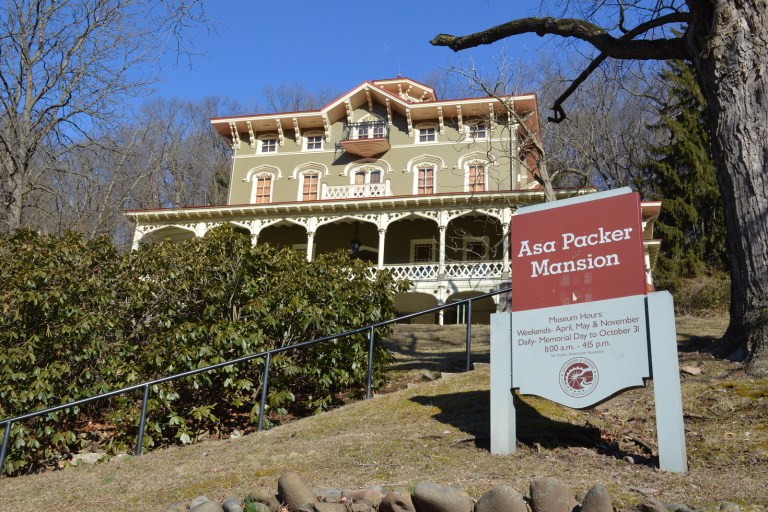
One of the most popular attractions in Jim Thorpe is the Asa Packer Mansion: home of the founder of the Lehigh Valley Railroad and Lehigh University. Visitors are drawn to this model example of Italianate architecture built in 1861, which includes a cast iron frame, red-ribbed tin roof, central cupola, and intricate woodwork. There’s also the Packer’s fascinating 1905 Model D Welte Cottage Orchestrion, which is a mechanical musical instrument designed to sound like an orchestra—think of it as a super-high-end, turn-of-the-century sound system.
I really enjoyed riding the Lehigh Gorge Scenic Railway, as it reminded me of the similarly popular scenic railways in Switzerland. There are a few in Pennsylvania, and this American version takes riders on a 16-mile, narrated round trip on the Reading and Northern mainline. The route passes Glen Onoko—the southern gateway to the Lehigh Gorge State Park—before following the winding Lehigh River through the gorge to Old Penn Haven, and back again. The regular rides are 70 minutes long, and in the fall, they offer special 45-minute Autumn Leaf rides through the spectacular fall foliage. Adults and kids alike get a kick out of the standard coaches, built in 1932 by Bethlehem Steel with functional windows, a restroom, and are heated in colder months.

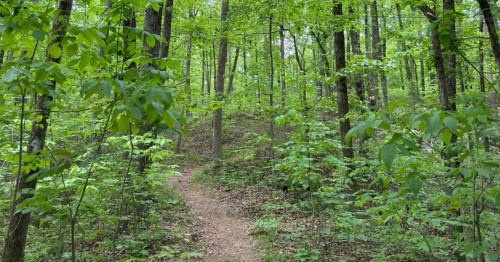
Just as in the Swiss Alps, there are some prime hiking trails in the area, including sections of the Appalachian Trail. The most popular and rewarding hike is the Glen Onoko Falls and Lehigh Gorge Overlook Trail in the aforementioned Lehigh Gorge State Park. It’s a challenging 3.4-mile loop with an elevation gain of nearly 1,000 feet, so it takes at least two hours to complete; the trail to Cave Falls and Jim Thorpe Overlook is just a two-mile loop, but has an elevation gain of almost 900 feet, and so is also considered on the difficult side. For an easier hike, I recommend taking the Lehigh Gorge Trail from Jim Thorpe to Abandoned Tunnel, which is slightly longer at 3.7 miles, but has an elevation gain of just 121 feet, and the wide, softly packed gravel trail meanders through the gorge, offering stunning views of the Lehigh River.

Looking for a European adventure, but have to stay stateside this summer? Share this article with your travel buddies and suggest a visit to America’s Little Switzerland.
Subscribe to our newsletter
Get the latest updates and news
Thank you for subscribing!