15 Most Fascinating Abandoned Places in America (And Where to Find Them)
Not every abandoned place earns a second look. These ones do, for the stories behind them, the visuals they leave behind, and the particular kind of quiet that only comes when people stop showing up.
Most people pass right by them.
They swim in the lake without knowing that a town lies beneath. They drive the country road without noticing the abandoned stretch just beyond the tree line. They visit the island without ever hearing what happened to the resort crumbling on the other side of it. The United States is full of places like this: locations with specific names, specific histories, and specific stories that most visitors never learn.
Some were left behind by the collapse of industries. Some went underwater when the dam went in. Some burned, or went bankrupt, or got swallowed by the woods. These 15 abandoned places across the country are worth knowing about, each for a different reason, and none of them are quite what they look like on the surface.
1. Nome's Dark History: Nome, Alaska
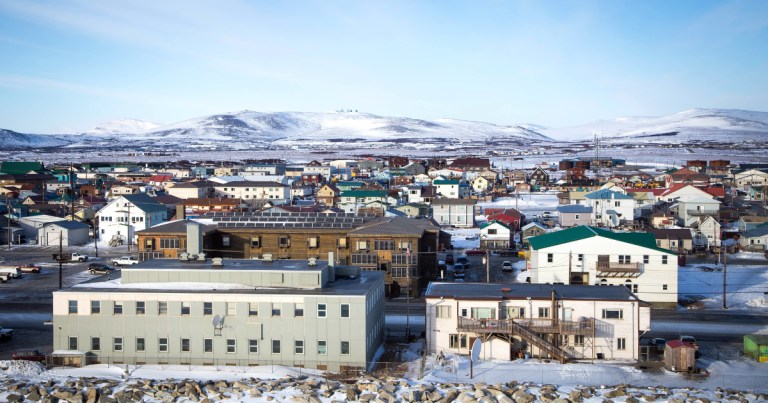
Nome, Alaska, sits on the Bering Sea coast at the edge of the continent, and its history earns the description of dark and unsettling. The city grew from a gold rush boomtown in 1900, when 20,000 people flooded onto the frozen tundra in search of gold. What they built and what they left behind have been slowly reclaimed by the subarctic landscape, leaving Nome with a visual texture of abandonment that's hard to find anywhere else in the country.
The missing-persons cases attached to the region have added a modern layer of unease atop the historical one. The combination of remote location, extreme climate, and layered history produces a place that rewards slow attention. The drive into Nome from the surrounding tundra, with abandoned mining equipment rusting in the permafrost, starts the experience before you reach the city.
2. Kennecott Ghost Town: McCarthy, Alaska

If Nome is the unsettling version of Alaskan abandonment, Kennecott is the spectacular one. This bone-chilling abandoned ghost town sits deep in the Wrangell-St. Elias National Park, accessible only by a 60-mile dirt road that terminates at the edge of the Kennicott Glacier.
The copper mining operation here ran from 1903 to 1938 and left behind a cluster of red-painted industrial buildings clinging to the mountainside above the glacier. The scale and preservation are both extraordinary. The Kennecott Mines National Historic Landmark protects the buildings, which means the decay has been arrested enough to walk through them without restoring them to something that no longer looks abandoned. The approach road through the Wrangell Mountains adds an additional hour of scenery that prepares you for what's coming.
3. The Historic Decline: Gary, Indiana

Gary, Indiana, was once one of America's most powerful cities. Founded in 1906 by U.S. Steel and named after the company's chairman, it boomed through the mid-20th century as a steel industry powerhouse — a city of nearly 180,000 people at its peak, flush with jobs, families, and ambition. Then the steel industry collapsed. By the 1980s, the exodus had begun, and it never really stopped.
Over the years, Gary became infamous for its thousands of abandoned buildings and structures. While massive demolition initiatives have begun clearing the blight, large swaths of the city remain frozen in time, slowly being reclaimed by nature. Pro tip: get a permit to photograph the abandoned classrooms and churches in town.
4. The Abandoned Melrose Resort: South Carolina

On Daufuskie Island, a South Carolina barrier island accessible only by ferry, the Melrose Resort stands as one of the state's most haunting abandoned landmarks. Built in 1987 with two championship golf courses (one designed by Jack Nicklaus), a 50-room inn, a beach club, and hundreds of acres of coastal property, it ran smoothly for roughly 15 years before a 2001 ownership change set its downfall in motion.
The new developer borrowed over $17 million to purchase the property and raised another $10 million from private investors by promising strong returns—returns that never materialized. The FBI and IRS launched an investigation, and the developer ultimately pled guilty to wire and tax fraud in what amounted to a Ponzi scheme. Bankruptcy followed in 2009, Hurricane Matthew battered what remained in 2016, and today the resort sits in dramatic decay: lobby floors are pooled with standing water, a ballroom is stripped of its ceiling, and a golf pro shop is partially swept away by wind and weather.
The property has since been listed for sale and gone under contract, but legal disputes over ferry access to the island's dock have continued to stall any revival — leaving Melrose in limbo, slowly surrendering to the salt air and sea.
5. Sea Breeze: An Abandoned Beach Town in New Jersey

Sea Breeze, a former resort town tucked along the Delaware Bay in Cumberland County, New Jersey, had a run of bad luck that would be hard to invent. The community first gained a following in the late 1880s, when ferry service from Philadelphia brought tourists to its bayfront shores, and a 40-room hotel was built in 1887 to meet the demand. That hotel burned down in 1890. A second hotel replaced it, reportedly served drinks through Prohibition, and burned down in 1940. Hurricane Gloria took out the Sea Breeze Tavern in 1985, a beloved local spot that had operated under the same family's ownership since it opened.
Floods, fires, and EPA demolitions claimed most of what was left, and the remaining residents eventually sold their properties to the state's Department of Environmental Protection. Today the land is partly a wildlife refuge, the beach is still accessible, and a few people make the trip out for the sunsets and the solitude. Just know you're about three miles from the nearest sign of civilization, and the area still floods.
6. Florida's Abandoned Town: Hillside Estates

This entire abandoned Florida neighborhood community seemed to have evaporated almost overnight. The mass exodus from the housing development known as Hillside Estates in Brooksville, Florida, was caused by the greed and corruption of the housing board, leaving behind an entire village of untouched homes and buildings.
Hillside Estates was specifically a public housing project run by the local housing authority, who misused funds, leaving the community unable to keep up with repairs and maintenance. Sadly, residents of the community were forcibly moved out over the course of just 90 days in 2012.
7. Infamous Cult Compound Ruins: Texas

Thirty years after it burned to the ground, the Branch Davidian compound outside Waco, Texas, still draws visitors looking to reckon with one of the most tragic standoffs in American history. The 51-day siege between cult members and federal law enforcement ended on April 19, 1993, when the entire compound went up in flames, killing roughly 80 people, including leader David Koresh and at least 22 children. Four ATF agents also died in the gunfight that kicked everything off.
Today, if the gates are open, you can drive in (a $ 10-per-car donation is suggested) and walk through a site that's equal parts memorial and time capsule. The swimming pool, which was being converted into a bunker when the standoff began, is the only major structure still standing intact. Dual memorials honor both the cult members and the fallen agents, a chapel now serves as a visitor center, and trees have been planted for each of the victims. Caretakers aren't always on site, but if you catch one, they may share historic photos and documents that rarely see the light of day.
8. Freetown State Forest: Freetown, Massachusetts

Freetown State Forest in southeastern Massachusetts sits inside what paranormal researchers call the Bridgewater Triangle, and its reputation as one of the state's most unsettling places is built on more than folklore. The documented history alone is grim: a 15-year-old girl's body was found tied to a tree in 1978, three additional murders occurred in the forest between 1987 and 2001, and investigators looking into a 1980 killing were approached by locals reporting Satanic cult activity in the woods.
Animal carcasses and blood-stained clearings added weight to those claims. The supernatural layer is just as dense, with reported UFO sightings, mysterious orbs, Pukwudgie sightings from Wampanoag tradition, and even an account from President Ronald Reagan of strange lights in the sky overhead. With more than 50 miles of trails, it's genuinely beautiful to hike in daylight. After dark is a different calculation.
9. Underwater Ghost Town: Virginia

Virginia's Smith Mountain Lake hides more than just scenic views. Beneath its surface, legend has it, lies the underwater ghost town of Monroe. Monroe was founded in 1818 by Abner Anthony and vanished from tax records by 1869, and likely went underwater for good when Appalachian Power built a dam and the lake began filling in 1963.
No one can fully prove or disprove Monroe's existence, but scuba divers have spotted a submerged bridge in the murky depths, and the sheer volume of underwater timber points to a past that's still down there somewhere. The local legend lives on at Sunken City Brewing Company in nearby Hardy, named in its honor. Whether Monroe is a bona fide ghost town or a particularly compelling piece of Virginia folklore, the mystery is very much alive.
10. The Ghost Town of Portal: Nebraska

In Sarpy County, Nebraska, a grim piece of local folklore has attached itself to an otherwise unremarkable bridge. The legend centers on a one-room schoolhouse that once stood in the ghost town of Portal, where a teacher in the early 1900s allegedly snapped without warning and murdered every student in the building with a hatchet. Some versions of the story include decapitation; every version agrees she cut out each child's heart and threw them from the nearby bridge to hide what she'd done.
No historical record of any such massacre exists, but that hasn't stopped people from reporting strange sounds and sightings near what locals now call Heartbeat Bridge, named for the rhythmic thumping visitors claim to hear when crossing it at night. The schoolhouse itself has since been relocated to Papillion, where it serves as a field trip destination, though the legend followed the bridge and never left.
11. Most Haunted Street: Timber Lake Road, Minnesota

Near New London in central Minnesota, about an hour west of St. Cloud, a rural stretch of road called Timber Lake Road has built a reputation as the most haunted street in the state. The legend goes that a woman living near the road came home to find her children murdered, and in her grief, took her own life. Her ghost has reportedly wandered the road ever since, searching for whoever was responsible. Locals have reported strange sightings for years: shadows moving through the woods, red eyes blinking from the darkness, and sounds ranging from howling dogs to a woman wailing.
A gated cemetery along the road is said to be where the woman and her children are buried, and visitors have reported seeing ghostly children among the graves. The woman herself has been spotted too, described by some as red, by others as white, drifting along the tree line after dark. No verified history backs the legend, but enough people have reported enough strange things to keep Timber Lake Road on the radar for anyone willing to make the drive.
12. An Abandoned Chalk Mine: Mississippi

In the woods just off the Tennessee River near Iuka, Chalk Mine Hollow is one of Mississippi's best-kept secrets and one of its only mines. The entrance is carved into the side of a hill at the end of a short trail, marked by spray-painted trees, and what looks modest from the outside opens into a sprawling network of three long tunnels and connected passageways roughly the size of a Walmart.
The mine dates to the Civil War era, when chalk was extracted here to produce gunpowder, and it appears to have closed around 1890. Local legend holds that it also served as a makeshift hospital during the war, though records only confirm it was likely used as temporary shelter at some point. History aside, the site is accessible by foot or boat and open to anyone willing to explore it on their own, which means no guides, no lighting, and no safety net. Bring a flashlight.
13. An Abandoned Stretch of Downs Road: Hamden, Connecticut

An abandoned stretch of Downs Road in Hamden, Connecticut has a reputation that doesn't match the town's otherwise quiet, pleasant character. The road once connected Hamden and Bethany, but the discontinued section has long since been swallowed by woods and left to decay, taking on an atmosphere that even casual daytime hikers find unsettling.
Locals have reported an overwhelming sense of being watched, unexplained dread strong enough to send people running, and the lingering presence of the farmers and Native Americans said to still haunt the land. The abandoned structures along the route don't help. Neither does the area's other claim to fame: multiple people over the years have reported spotting a Bigfoot-like creature lurking in the tree line, now known locally as the Downs Road Monster.
It's the kind of place that's hard to dismiss as simple folklore when so many people independently report the same feelings and sightings.
14. Paradise Park (Abandoned Zoo): Manoa Valley, Oahu, Hawaii

Deep in Oahu's Manoa Valley, a former exotic bird zoo called Paradise Park has been slowly losing its battle with the rainforest since closing in 1994. Once a major tourist attraction, the park has sat frozen in time for decades as development deals repeatedly fell through, leaving its structures to be consumed by tropical vegetation. The result is the kind of overgrown, atmospheric ruin that tends to draw urban explorers, and it's drawn a film crew or two as well.
Fans of the TV series "Lost" may recognize parts of the property, which was used as a filming location during the show's run. Strange and a little eerie in equal measure, it's one of the more quietly compelling abandoned places in Hawaii.
15. America's Submerged and Underwater Towns

Before reservoirs and flood-control dams reshaped the American landscape in the 20th century, towns existed where lakes now sit. Across the country, communities were bought out, relocated, or simply left to the rising water as federal infrastructure projects took priority. The result? Real underwater towns in America, rich in history.
The results are scattered and mostly forgotten: a lumber mill kiln jutting out of South Carolina's Lake Marion, the ghostly grid of streets visible to scuba divers in Texas's Lake Whitney, a South Dakota mining town, Sheridan, that gave its name to the very reservoir that erased it. Some of these places, like Virginia's Monroe, exist more as legend than documented history. Others, like Oakland Mills in Maryland and Burlington's Nepaug village in Connecticut, are confirmed but inaccessible, sitting beneath active water supplies that the public can't reach.
Want to keep the list going? Next time you're searching for abandoned places near me, hopefully you'll find this list! Also make sure to check out America's most haunted places in all 50 states.
Subscribe to our newsletter
Get the latest updates and news
Thank you for subscribing!