The Hidden Treasure of Alabama That No One Has Ever Fully Recovered
Did you know there is hidden treasure in Alabama is still waiting to be found? Here are the fascinating stories of sunken treasure, shipwrecks, and a jeweled cross in a well.
Sunken ships, pirate gold, a jeweled cross dropped into a well to hide it from raiders, and colonial fortunes lost to storms: Dauphin Island has accumulated more hidden treasure in Alabama than almost anywhere else in the South, and not a single one of them has ever been fully resolved. People have been searching for centuries. Some still are.
The Story Behind Dauphin Island's Treasure Legends
To understand why Dauphin Island became such a magnet for lost fortune, you have to first understand its history.
A Port That Changed Hands
The French arrived in 1699, found the beach littered with human bones from a long-forgotten catastrophe, and named it Massacre Island. They eventually renamed it Dauphin Island and made it a critical port of entry for the French colony of Louisiana, where large ocean-going ships would offload cargo before smaller boats ferried passengers across Mobile Bay's shallows to the mainland.
At its peak, the island had warehouses, barracks, a church, and a thriving colonial settlement. Then the Spanish came. Then the British. Then the Spanish again. Then the Americans. Every occupying force left something behind, and some of what they left behind has never been found.

The Sunken Treasure of La Bellone
The most documented of the island's lost ships is La Bellone, a French merchant vessel that arrived off Dauphin Island in September 1724 loaded with beaver skins, deer hides, tobacco, indigo, and, most importantly, coins and bullion.
The ship ran aground entering Pelican Bay, managed to anchor safely through the winter, and then attempted to depart for France in April 1725. It never made it. La Bellone sank near the entrance to Mobile Bay, taking its entire cargo, including all that colonial gold and silver, to the bottom. Three passengers drowned. The treasure was never salvaged. Historians who have studied Mobile Bay's shipwrecks consider La Bellone the richest of the many colonial-era wrecks still lying on the seafloor in and around the bay.
The Richest Wreck in the Bay
La Bellone isn't the only wreck either. In 1801, an unidentified Spanish galleon was caught in a storm and wrecked on the island's eastern end, carrying an estimated $1 million in gold and silver. Eleven crew members survived, washing ashore with the story of what had been lost. No salvage was ever reported.
And then there's Jean Lafitte, the legendary Gulf Coast privateer who reportedly made frequent and mysterious visits to nearby Fort Morgan during his years operating in the Gulf. The belief that he buried a portion of his estimated $10 million fortune somewhere in the Mobile Bay area has never been proven, but it hasn't entirely gone away either.

The Cross in the Well
Perhaps the strangest legend involves the island's church. During one of Dauphin Island's many raids (English pirates out of Jamaica targeted the island as early as 1710), someone reportedly dropped the jeweled cross from atop the church into a water well to keep it from being stolen. The raiders left, and the cross was never retrieved. Local islanders have passed the story down for generations, and the well, along with whatever may still be inside it, has never been definitively located.
Why People Are Still Drawn to Dauphin Island Today
The legends alone would be enough to bring curious visitors, but Dauphin Island earns its visitors on its own merits. Sitting about 30 miles south of Mobile and connected to the mainland by a three-mile bridge, it has the quiet energy of a place that hasn't been overdeveloped, with Gulf beaches, a world-class Audubon Bird Sanctuary, and one of the most genuinely interesting historic sites on the Alabama Gulf Coast.

That site is Historic Fort Gaines. Built between 1821 and 1853, it guarded the entrance to Mobile Bay and became a key site in the Civil War's Battle of Mobile Bay. Today it's one of the best-preserved antebellum forts in the South, with original cannons, tunnel systems, a museum, and panoramic bay views. It's also been designated one of the 11 Most Endangered Historic Sites in America due to shoreline erosion, which makes visiting sooner feel like the right call.

What to Know Before You Go
- Fort Gaines is open daily 9 a.m. to 5 p.m. Admission to Fort Gaines on Dauphin Island is $10.00 for adults (ages 13+) and $5.00 for children (ages 5–12); check out the Fort Gaines website for the most current pricing and group tour availability.
- Dauphin Island is roughly a 45-minute drive south of Mobile via I-10 and AL-193 across the Dauphin Island Bridge.
- While you're there, the Audubon Bird Sanctuary and Indian Shell Mound Park (home to oak trees estimated at 800 years old) are both worth a stop. The island also has public beaches, a fishing pier, and a ferry connecting to Fort Morgan across the bay.
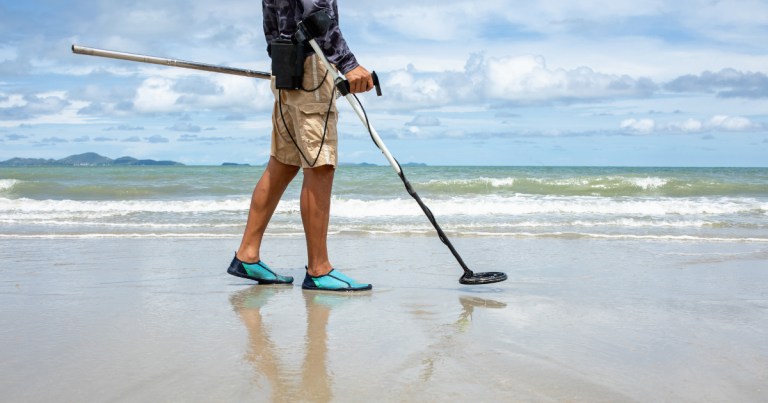
- Metal detecting on public beaches is generally permitted in Alabama, though any artifacts of historical significance are subject to state law. Keep your eyes open, but leave the history in place.
Did you know any of the history behind the hidden treasure in Alabama? Or if you want to keep the legends going, this might just be the most famous urban legend Alabama has ever seen.
Subscribe to our newsletter
Get the latest updates and news
Thank you for subscribing!