No Nebraskan Will Ever Forget the One Winter That Never Seemed To End
From 50-foot snowdrifts to military haylifts, discover the incredible story of the 1948–49 blizzard that remains the most legendary season in Nebraska history.
Nebraska winters are often harsh. Between the biting cold, heavy snow, and relentless winds, residents have seen it all. But no Nebraska winter has ever compared to the one in 1948–49. It was the winter that seemed to go on forever. Temperatures and conditions were treacherous, making it the coldest winter the state had seen at the time. Do you remember the winter in Nebraska that felt never-ending?
It all started on November 18, 1948. Snow blanketed a wide swath of central to northeastern Nebraska, with up to 24 inches falling in some areas. Roads and trains shut down, phone service went out, and many people were stranded away from home. Understandably, many Nebraskans thought this would be the worst they’d see that winter. But it was far from over.
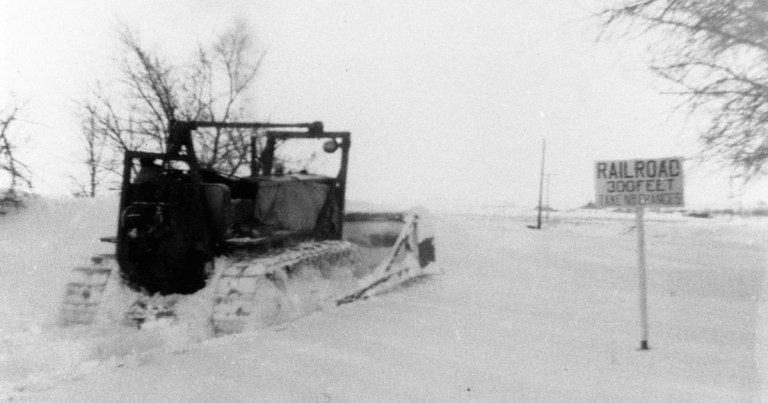
The snow from the first storm hadn’t even melted when the next round of severe weather struck. Snowstorms on December 29 and January 2–5 dumped up to 30 additional inches across the state and brought winds of up to 60 mph. The winds created drifts that, in some places, reached up to 50 feet high (I can’t even imagine!), making travel nearly impossible. According to historical records from Nebraska State Historical Society, these drifts became so compacted that crews encountered layers of ice between layers of snow, forming an impenetrable barrier. In some places, they even resorted to using dynamite to break it up.

All transportation routes were blocked for extended periods. The livelihood of almost every Nebraskan depended on the railroad. With trains stalled, ranchers couldn’t send livestock to market, and supplies struggled to reach communities. To keep animals alive, planes dropped hay where possible. Even the railroads’ powerful snowplows couldn’t clear the massive drifts, so citizens came out with shovels to help remove snow from the tracks. Some farmers managed short trips with machinery to retrieve supplies, but most people were simply stuck where they were.

By late January, the National Guard was called in to help. Heavy machinery cleared roads, transported sick people to hospitals, and delivered supplies to humans and livestock alike. Rural communities that had been trapped for weeks began to see relief, but Nebraska still wasn’t ready to leave winter behind. Further snowstorms in February, March, and April of 1949 added even more snow. Tens of thousands of livestock died, some from exposure, some from hunger, despite the aid efforts.
The massive, dense snowdrifts took until July to fully melt, leaving visible reminders of the brutal winter long after winter was officially over. Nebraska did eventually recover, but the winter of 1948–49 is still remembered as the state’s worst. It was a season that tested the endurance, resilience, and community spirit of Nebraskans like no other.
If you know a must-see place, event, or experience in Nebraska that deserves recognition, submit your suggestion through our nomination form. And if you’re planning a trip across the state—whether to explore historic sites, scenic landscapes, or hidden local gems—be sure to use the Only In Your State itinerary planner to make the most of your trip.
Subscribe to our newsletter
Get the latest updates and news
Thank you for subscribing!