Saltwater Contamination Could Become A Huge Problem For New Orleans Water Supply
Many communities in Louisiana get their drinking water from the Mississippi River, including New Orleans. Over the last few months, saltwater intrusion from the Gulf of Mexico has been slowly creeping up the Mississippi River and is threatening to contaminate the water supply of New Orleans. Here’s what you need to know:
The low water level of the Mississippi River has allowed for the saltwater from the Gulf of Mexico to enter the river and make its way upstream.
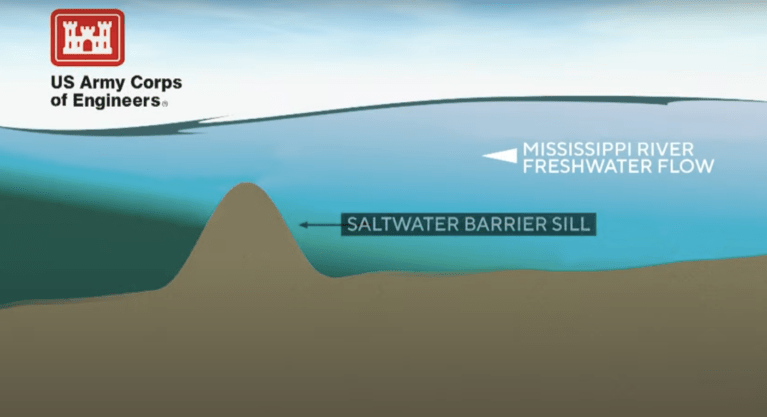
Saltwater is more dense than the Mississippi River’s freshwater, so the saltwater is able to flow underneath the freshwater flow, creating a saltwater wedge.
It’s not necessarily a new problem, either. The Army Corps of Engineers has built temporary underwater dams to block the saltwater wedge four times in the last 25 years: 1999, 2012, 2022, and now. The worst saltwater wedge in recent history happened in 1988.
The majority of the Mississippi River is fed by rainfall and snowfall from our friends up North.

The runoff then flows down the Mighty Mississippi, making its way all the way down to the Gulf. Typically, the Mississippi River’s flow is strong enough to overpower the salty water from the Gulf... but not anymore.
Plaquemines Parish has been dealing with this for months, actually.

High levels of chloride have already affected the drinking water for roughly 4,000 residents in the Parish since June. According to guidelines set by the Environmental Protection Agency, levels of chloride are recommended to stay below 250 parts per million.
The City of New Orleans is testing the water daily, and you can follow the daily chloride level on the New Orleans Sewer and Water Board website.
In mid-June, the chloride levels had risen to 700 parts per million for Plaquemines Parish.

The Army Corps of Engineers built a sill (an underwater barrier) in July to help delay the saltwater, but the saltwater managed to rise above the sill, so now the plan is to make the sill taller to slow the saltwater down.
They also built a notch in the sill so that ships could still pass through.

All of this will only slow the saltwater down, not stop it completely.
According to the Army Corps of Engineers, the saltwater could reach New Orleans as early as October 22, 2023.

Currently, there are three water systems that are under advisories for high levels of sodium and chloride: one in St. Mary Parish and two in Plaquemines Parish.
The plan is for the city of New Orleans to build a pipe to funnel in water from further up the Mississippi River, where the saltwater hasn’t reached yet. Simultaneously, the Army Corps of Engineers will be bringing in fresh water on a barge for smaller areas like the Westbank.
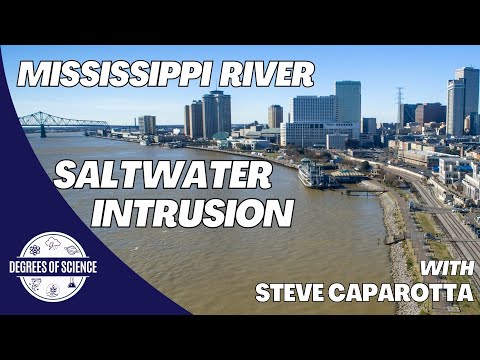
Watch this YouTube video by Degrees of Science for a visual breakdown of the saltwater intrusion:
I don’t think it’s time to panic, but I’d definitely keep a close eye on those trackers if you live in the New Orleans area, or anywhere along the Mississippi River in southeastern Louisiana. I’ll be following this situation closely (I live in New Orleans) so I’ll be updating this article with any new information. I’m not suggesting you drive to the store and clear the shelves of any bottled water just yet, but maybe check your water filters and check the saltwater tracker provided by nola.com daily.
Subscribe to our newsletter
Get the latest updates and news
Thank you for subscribing!