What Kentucky’s Major Cities Looked Like In the 1940s May Shock You. Louisville Especially.
Louisville has transformed significantly from a farmland-rich, community-driven city in the 1940s to a bustling urban area with subdivisions and factories.
Things sure have changed a lot in the past 70 or so years, especially when it comes to our cities. Louisville is our largest and busiest city. The population was booming in the 1940s, but life here was quite different. People worked together and farmland was plentiful around Jefferson County. Now, we have subdivisions where farms once thrived, and factories where people fished along the Ohio River. Things sure have changed since the 1940s in Louisville Kentucky.
Here are 18 photos what life was like circa 1940s in Louisville Kentucky:
18. A canning lunch in south eastern Louisville, 1943.
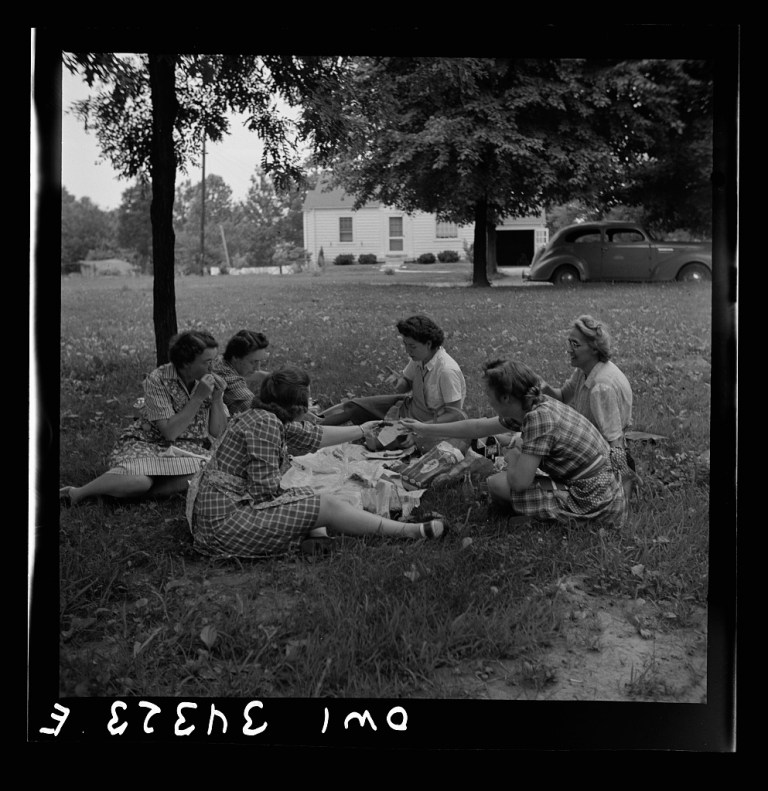
17. Women gathered at the Jefferson County Cannery, paying 3 cents a can and 2 cents for use of the pressure cooker to preserve their food in 1943.

16. Workers at the Reynolds Metal Company in 1941.

15. Women canning together at the cannery.

14. Men working on marine condensers for the Army in a Louisville factory, 1942.

13. Kane Manufacturing made 1300 pairs of military trousers each day to support the war efforts in 1941.

12. A women working at a gas station in 1943.

11. A thriving dairy farm in 1940, now a subdivision.

10. Farmland off Dixie Hwy in Louisville in 1943, now a subdivision.

9. Soldiers gathering in Louisville to return to Fort Knox in 1943.

8. Louisville waterfront.

7. Part of the Ohio in Jefferson County in 1943. There were a lot less factories.

6. Union Station had multiple trains running daily in the 1940s.

5. Waiting room sign at the Greyhound Bus Station in Louisville.

4. The Yacht basin in 1940.

3.Women working at the Wadsworth Watch Company to prepare compacts and watch plates for conversion into bomb parts.

2. A Hep Cat car on Main Street in 1940.

1. The renowned Rialto Theater, which was demolished in 1969.

When you compare the 1940s in Louisville Kentucky to modern times, the difference is shocking. The community was once a simple, yet booming port town, utilized for trade along the river. River trade is no longer as important, but the city is still booming with festivals and tourism. I wasn’t here for that decade, but I’ve heard the stories via family. What do you think the biggest change is since the 1940s, and what would you like to see return?
Subscribe to our newsletter
Get the latest updates and news
Thank you for subscribing!