The Biggest Surprise I Came Across While Hiking This Incredible Trail in Wisconsin
Perrot State Park near Trempealeau, Wisconsin, has several wonderful trails. Along them, you'll have the opportunity to learn much about the region's natural and human history.
Perrot State Park spans more than 1,250 acres along the soaring Mississippi River bluffs northwest of Trempealeau, Wisconsin. The park was established in 1918 after John A. Latsch, a wealthy businessman from Winona, Minnesota, donated more than 1,000 acres to the state. Latsch was an avid outdoorsman who believed that the public should have access to as much of the ruggedly beautiful Driftless Area as possible.
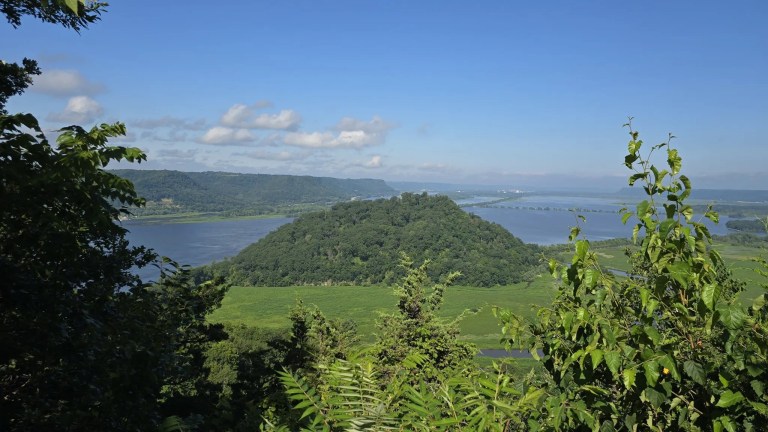
The park sits at the confluence of the Mississippi and Trempealeau Rivers and includes the shoreline around Trempealeau Bay. The park is also home to the unique prominences of Trempealeau Mountain, which rises alone over a narrow peninsula between the two rivers, and Brady's Bluff, towering more than 500 feet above the rivers and the surrounding landscape.

The park's history and gorgeous topography were certainly enough to lure me in. I grew up in the Driftless Area of northeast Iowa, so this landscape has long had a hold me. Plus, at more than a century old, Perrot is one of Wisconsin's most venerable state parks, home to some truly impressive features built by the Civilian Conservation Corps (CCC) during the Great Depression of the 1930s. Many of the park's trails, including hundreds of stone steps, were constructed by the CCC, as was the beautiful CCC-signature log and stone shelter that's perched at the top of Brady's Bluff.

I went to Perrot State Park with the expectation of hiking the moderately challenging, 3.1-mile Brady's Bluff and Riverview Trail Loop to experience these features of the park. I was surprised, however, to learn just how much more significant history is packed into Perrot's relatively small acreage. Along the Riverview Trail section of the hike, for example, you'll find several effigy and conical mounds built by Woodland peoples more than 1,000 years ago. People from this culture also used the park's unique rock formations as shelter from the elements. A sandstone shelter located along the Black Walnut Nature Trail, which you can access from the Riverview Trail near the park's nature center, is one such example. Researchers speculate that this shelter was large enough to house a family during winter.

Later, near the end of the 17th century, Ho Chunk guides led French explorer and fur trader Nicholas Perrot, for whom the park is named, to the area. He established an outpost near the present-day location of the park headquarters and gave Trempealeau Mountain its name. This is widely regarded as one of the earliest European encampments in the Upper Mississippi area. Another popular viewpoint in the park, Perrot Ridge, is named for the explorer, as well.

I always love it when I can enjoy a place like Perrot State Park and learn unexpected things. I was not surprised to learn about the CCC-built features when I arrived at Perrot, but learning about the intersection of cultures at the confluence of the two rivers was fascinating to me and added an extra dimension to my visit that elevated my experience.
Have you visited Perrot State Park? What are some other Wisconsin hikes that offer similar surprises? We'd love to hear about them.
Subscribe to our newsletter
Get the latest updates and news
Thank you for subscribing!