12 Underrated Slot Canyon Hikes In The U.S. Far Better Than The Crowded Tourist Traps
Slot canyons draw crowds for good reason, but the most famous ones are not always the best ones. These 12 hikes across eight states prove the quieter alternatives can be just as breathtaking.
Antelope Canyon gets the postcard fame, but it is far from the only slot canyon worth a trip.
Across eight states, water and wind have carved narrow, towering corridors into sandstone, siltstone, and volcanic tuff, and most of them see a fraction of the foot traffic that piles up at the famous ones. Some require a permit or a guided tour; others are a short walk from an unmarked dirt road, but all twelve deliver the same otherworldly scenery without the wait. Here are the slot canyons across the country that deserve a spot on your bucket-list hikes in the U.S.
Safety & Permitting Note Before You Hike
- Flash Flood Hazards: Slot canyons can flood rapidly—even from storms miles away. Always check the local National Weather Service forecast and park visitor centers for flash flood warnings before entering any narrow canyon. Never enter a slot canyon if rain is in the forecast.
- Permits & Access: Rules vary by location. Some canyons (like Buckskin Gulch or Kasha-Katuwe Tent Rocks) require advance reservations or permits, while others (like Waterholes Canyon) require licensed Navajo guides. Double-check official park/monument websites for current fees and access rules.
- Heat & Hydration: Desert slot canyons can get deceptively hot in open approaches. Carry at least 1–2 liters of water per person, wear sturdy footwear for scrambling, and download offline maps (GPS) as cell service is rarely available inside canyon walls.
1. Buckskin Gulch, Utah
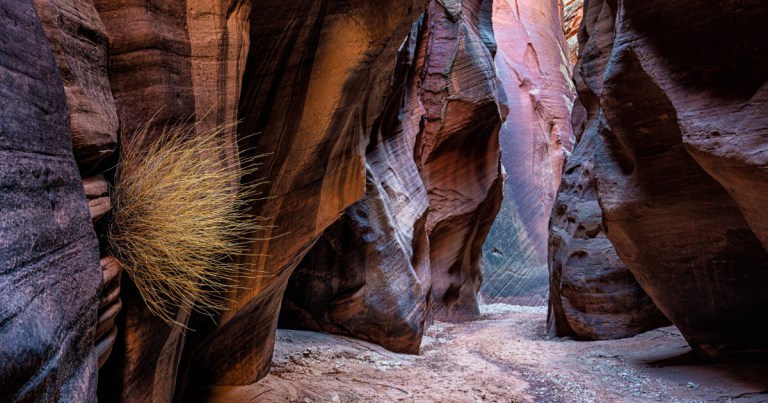
- Distance / Difficulty: ~3.4 miles round-trip (via Wire Pass) up to 15–21+ miles (full canyon thru-hike) | Moderate to Strenuous
- Permits & Access: $6/person day-use permit required via Recreation.gov; advance lottery required for overnight trips.
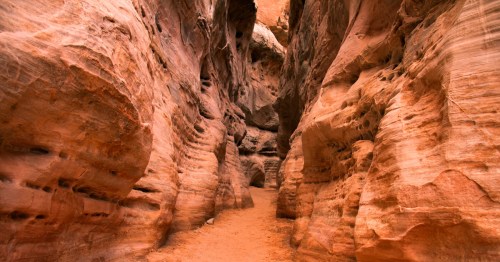
Most people chasing slot canyons in the Southwest end up in line for Antelope Canyon, but Buckskin Gulch quietly outdoes it. Stretching more than 15 miles along the Utah-Arizona border near Kanab, it is widely considered the longest slot canyon in the world, and it rarely feels crowded even on a busy weekend. The walls climb hundreds of feet overhead while narrowing to just a few feet across in spots, so hikers spend hours in cool shade even when it is scorching outside.
A permit is required, and four separate access points let visitors choose anything from a short there-and-back walk to a full overnight trek. OIYS took a look at Utah's slot canyons, and the advice holds up: check the forecast first, since flash floods move fast through a canyon this narrow.
2. Waterholes Canyon, Arizona

- Distance / Difficulty: ~2 miles round-trip | Easy to Moderate (includes metal ladders and narrow squeezes)
- Permits & Access: Licensed Navajo guide required (self-guided hikes strictly prohibited); tour fees (~$80–$100+) booked through local Page, AZ outfitters.
Five miles south of Page, Waterholes Canyon cuts through the same Navajo sandstone that made Antelope Canyon famous, minus the hour-long waits. The canyon was open for self-guided hikes until 2018, when the Navajo Nation switched to guided-only access to protect both visitors and the land. Today, small groups of up to a dozen people move through corridors with the same swirling orange walls and midday light beams that draw crowds a few miles away.
Tours run about two miles round trip through three connected sections, with a couple of ladders and narrow squeezes along the way. Because the groups stay small, there is time to actually set up a shot instead of getting rushed through. Reserve a spot with a Navajo-owned outfitter in Page, and plan for the whole outing to run about ninety minutes.
3. Temple Canyon Trail, Colorado

- Distance / Difficulty: ~3 to 5 miles round-trip (Redemption Trail / Hard Time Loop) | Easy to Moderate
- Permits & Access: Free; no permits, passes, or parking fees required. Open year-round.
Colorado is not the first state that comes to mind for slot canyons, but the Redemption Trail outside Canon City makes a strong case for itself. The three-mile route starts at the Temple Canyon Trailhead and gains less than 500 feet of elevation, making it an easy add-on between tougher mountain hikes. Wildflowers cover the hillsides in spring, and the slot canyon section arrives within the first mile, cutting through rock without any technical scrambling required.
It stays open year-round, and even though it is a well-known destination, hikers rarely have to fight for space on the trail. OIYS walked through the route in its Colorado slot canyon feature, noting there is little shade, so an early start beats the midday sun.
4. Bighorn Canyon Trail, Utah

- Distance / Difficulty: ~6 miles round-trip | Moderate (unmarked trail; GPS navigation strongly recommended)
- Permits & Access: Free self-issue permit required at trailheads/visitor centers in Grand Staircase-Escalante National Monument; no fees.
Grand Staircase-Escalante gets plenty of attention for Peek-a-Boo and Spooky, but the Bighorn Canyon Trail nearby delivers two slot canyons on one six-mile out-and-back without the lines. The path follows Harris Wash across flat, sandy terrain before splitting into east and west forks, both carved from the same Navajo sandstone that defines the region. The shorter west fork narrows into tight, colorful passageways, while the east fork opens into a taller canyon with a scenic overlook along a spur trail.
Elevation change is minimal throughout, and the trail is friendly enough for kids and dogs, though it is not officially marked, so a GPS app helps. OIYS detailed the route in its Bighorn Canyon Trail write-up, calling it one of the more overlooked corners of the monument.
5. Red Hollow Slot Canyon, Utah

- Distance / Difficulty: ~1 mile round-trip | Easy (some light rock scrambling)
- Permits & Access: Free; no permits or entrance fees required. Dogs allowed on leash.
Red Hollow sits on the edge of Orderville, about 18 miles from Zion's east entrance, and it might be the easiest slot canyon in southern Utah to reach. The trail follows a sandy wash for about half a mile before slipping into a narrow, photogenic corridor of red and white rock that lasts roughly a fifth of a mile. A little light scrambling near the entrance keeps things interesting, and most hikers finish the whole loop in under an hour.
Because it sits within a residential area rather than a park boundary, there is no fee or permit required, just an unmarked dirt-road trailhead near a fenced water tank. Dogs are welcome on leash, and the canyon stays shaded and cool even when the wash leading up to it gets hot. Go early to beat the crowds.
6. Pioneer Park Narrows, Utah

- Distance / Difficulty: ~0.5 miles round-trip | Easy (extremely narrow squeeze)
- Permits & Access: Free entry and city park parking; no permits required.
Pioneer Park in St. George packs a surprising amount of adventure into just 52 acres, and its slot canyon, known locally as the Narrows, is the standout. The half-mile trail into the canyon starts wide and unassuming before narrowing dramatically, forcing hikers to turn sideways in the tightest sections. It is short enough for an easy afternoon, but the passage is genuinely tight, tight enough that some adults cannot squeeze through the narrowest point at all.
That makes it a fun personal challenge rather than a guaranteed pass-through, and there is no shame in turning back partway. OIYS covered one writer's honest attempt in its Utah slot-canyon confession, and the surrounding park adds plenty of other trails, caves, and city overlooks worth exploring on the same trip.
7. Jemez East River Slot Canyon, New Mexico

- Distance / Difficulty: ~2.2 miles round-trip | Moderate (requires shallow creek crossings and route-finding)
- Permits & Access: No permits required; Santa Fe National Forest standard day-use/parking fees may apply.
Northwest of Santa Fe in the Santa Fe National Forest, the Jemez East River Slot Canyon Trail packs waterfalls, natural swimming pools, and a compact slot canyon into a 2.2-mile round trip. The path follows a creek with several crossings, so water shoes come in handy, and the route is not always clearly marked, giving it a choose-your-own-adventure feel.
Past the slot canyon itself, hikers reach a string of pools deep enough for a swim on a hot day, plus waterfalls that make good stopping points for lunch. Because it stays close to a highway curve rather than deep backcountry, access is simple, though it does get busy on summer weekends. OIYS covered the trail in its remote New Mexico slot canyon guide, and pairing it with nearby Jemez Falls makes for a full day out.
8. Kasha-Katuwe Tent Rocks, New Mexico

- Distance / Difficulty: ~3 miles round-trip (Canyon Trail & Cave Loop) | Moderate (~630 ft elevation gain)
- Permits & Access: Timed-entry reservation via Recreation.gov ($6/person BLM reservation fee) PLUS a separate Cochiti Pueblo Tribal Access Pass ($20/adult). Closed Tuesdays & Wednesdays.
Kasha-Katuwe Tent Rocks National Monument, a sacred site of the Cochiti Pueblo, gets its name from the cone-shaped hoodoos rising from the desert floor, but the three-mile Slot Canyon and Cave Loop is where the real payoff is. The route threads through a narrow canyon carved from volcanic tuff before climbing 630 feet to a mesa-top overlook with views of the Sangre de Cristo and Jemez ranges.
Visitors need a reservation to enter, and the monument caps daily traffic, which keeps the trail from feeling overrun even in peak season. Along the way, the Cave Loop portion passes a small cavate carved into the rock by earlier residents of the area. OIYS covered the formations in its Tent Rocks slot canyon feature, and the whole hike takes most visitors two to three hours.
9. Palo Duro Canyon, Texas

- Distance / Difficulty: ~1 to 3 miles off-trail (varies by side drainage) | Moderate (unmarked terrain; route-finding required)
- Permits & Access: Texas State Park day pass required ($8/adult); reservations recommended for park entrance during peak seasons.
Most visitors to Palo Duro Canyon State Park, the self-proclaimed Grand Canyon of Texas, stick to the popular Lighthouse Trail and never learn the park hides real slot canyons in its backcountry. Tucked into side drainages off the main canyon floor, these narrow passages cut through Trujillo sandstone and can run just a couple of feet wide with walls 20 feet tall, close enough in places to touch both sides at once.
They are unmarked and require some route-finding to reach, so checking with park rangers before setting out and going with a group familiar with the terrain can make the difference between a memorable hike and a wrong turn. The reward is a slice of Utah-style canyon scenery few Texans know exists. Bring plenty of water, since shade disappears fast on the mesa above.
10. Dago Gulch, Oregon

- Distance / Difficulty: ~2 miles round-trip | Easy to Moderate
- Permits & Access: Free; no permits or fees required. Reached via ~25 miles of unpaved gravel road (check road conditions after rain).
Leslie Gulch, deep in the Owyhee Canyonlands of southeastern Oregon, looks more like southern Utah than anything typically associated with the Pacific Northwest, and its Dago Gulch trail delivers an actual slot canyon to prove it. The roughly 2-mile round trip follows a gated road past towering rhyolite columns and honeycomb cliffs before opening into a narrow squeeze where hikers can scramble between smooth, curved walls.
Bighorn sheep roam the surrounding hills, and the drive in, nearly 25 miles of gravel road, keeps crowds thin even during peak wildflower season. There is no fee and no permit, just a remote location that demands a full tank of gas and a weather check, since the access road turns to impassable mud after rain. The nearby Slocum Creek Campground makes it easy to turn the trip into an overnight stay.
11. White Domes Trail, Nevada

- Distance / Difficulty: ~1.1-mile loop | Easy to Moderate
- Permits & Access: Nevada State Parks vehicle entrance fee ($10–$15); no hiking permit required. Note: Closed annually May 15 – October 1 due to extreme summer heat.
A 45-minute drive from the Las Vegas Strip, the White Domes Trail inside Valley of Fire State Park packs a slot canyon, a former movie set, and some of the park's most dramatic rock formations into a one-mile loop. Hikers cross white sandstone eroded over 150 million years before scrambling down into the canyon section, where narrow, low-light corridors show off layered bands of color. Remnants of the 1966 film The Professionals still sit along the route, giving photographers an easy extra stop.
The trail closes seasonally from mid-May through October due to extreme heat, so spring and fall visits work best. OIYS profiled the hike in its Nevada slot canyon feature, and pairing it with the nearby Fire Wave and Seven Wonders Loop turns a short outing into a half-day adventure.
12. The Slot & Natural Rock Bridge, Anza-Borrego, California

- Distance / Difficulty: ~2 miles round-trip | Easy to Moderate (light scrambling and tight squeezes)
- Permits & Access: California State Parks day-use vehicle parking fee ($10); no special hiking permit required.
Just 90 minutes from San Diego, The Slot at Anza-Borrego Desert State Park proves Southern California has its own answer to the Southwest’s famous slot canyons. The two-mile round-trip trail winds through a narrow sandstone corridor with walls reaching 40 feet overhead, forcing hikers to turn sideways through the tightest squeezes.
Deeper along the route, hikers reach one of the trail's standout highlights: a natural rock bridge wedged dramatically between the canyon walls overhead. After passing beneath the bridge, the canyon opens onto a dirt road that loops back to the trailhead.
Looking for more slot canyon hiking tips? Check out all the gear you need for your next hiking adventure.
Subscribe to our newsletter
Get the latest updates and news
Thank you for subscribing!