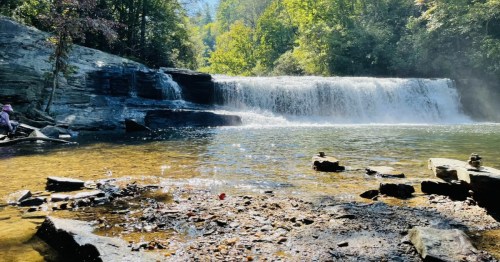
7 National Parks With the Most Stunning Wildflower Hikes
From Alaska to Tennessee, these parks offer the best views of springtime blooms.

Spring has sprung, and you know what that means: 'tis the season of wildflower hikes. During this time of year, National Parks across the U.S. overflow with bountiful blooms of colorful wildflowers in valleys, meadows, and along stunning hiking trails. Between that and the warmer weather, what could keep you away?
Of course, Mother Nature follows her own schedule, and sometimes blooms happen earlier or later than expected—timing is everything when it comes to wildflower viewing. That's why it's always a good idea to check the National Park Service website before visiting the park of your choice to make sure you get your timing right. Grab your cameras and hiking boots: these seven parks are sure to wow.
1. Glacier National Park and Preserve, Montana
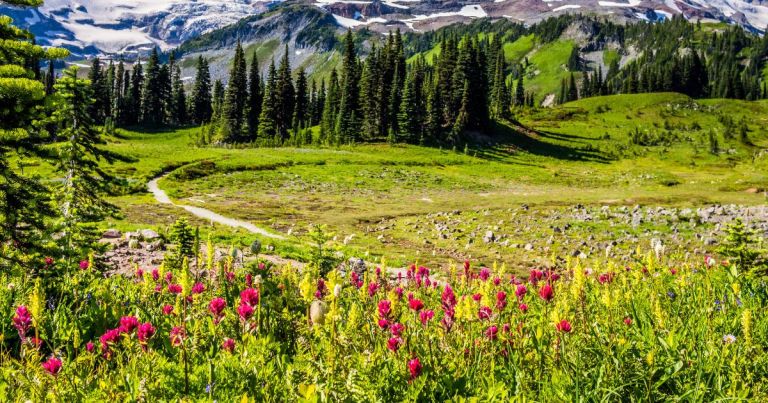
- Wildflowers: Fireweed, Yellow Glacier Lilies, Purple Asters
- Best Trails: Avalanche Lake Trail, Hidden Lake Overlook Trail, Grinnell Glacier Trail, Apikuni Falls Trail
There are nearly a thousand different kinds of flowering plants at Glacier National Park in Montana. Lower elevations will see those beautiful spring blooms first, with higher elevations following a few weeks later. The lower elevations of the park will begin to see those cheerful yellow glacier lilies, which are always a fan favorite. Towards the end of summer, purple asters take over the park’s eastern meadows, and that’s really a sight to see. Of course, the iconic beargrass blooms are worth the wait—keep an eye out for those beauties beginning in late June.
2. Denali National Park, Alaska

- Wildflowers: Fireweed, Forget-me-not, Monkshood, Tall Bluebells
- Best Trails: Horseshoe Lake Trail, Mount Healy Overlook Trail, Savage Alpine Trail, Savage River Loop
The first time I saw fireweed in Alaska, I was mesmerized. I loved it so much I bought some fireweed perfume after my trip! These pretty pink flowers are common all over the Pacific Northwest, but you’ll get an extra dose of beauty all around Alaska, especially around Denali. Checking out the wildflowers is one of the most popular things to do in Alaska in the spring, so carve out some time to see Denali National Park's beautiful blooms in early June through late July. You might even get the chance to spot some local wildlife coming out of hibernation.
3. Joshua Tree National Park, California

- Wildflowers: Arizona Lipine, Desert Gold, Desert Canterbury Bells, Poppies
- Best Trails: Fortynine Palms Oasis Trail, Hidden Valley Trail, Split Rock Loop, Lost Palms Oasis Trail
Even in the desert, wildflowers find a way to bloom. Most desert wildflowers are low-growing, meaning they can conserve water and survive the harsh conditions like heat and dust. From January to mid-April, lower elevations around the alluvial fans and foothills of Joshua Tree see Arizona lupine, desert gold, desert Canterbury bells, and poppies. From March to May, visitors can expect desert dandelion, desert globemallow, brittlebush, Indian paintbrush, and pincushions in upper elevation areas like Indian Cove, Jumbo Rocks, and Twin Tanks areas.
April through June is when the 5,000+ elevation areas on mountain slopes start to see blooms. Desert mariposa, blackbush, beavertail cactus, and desert fiddleneck wildflowers begin blooming around Juniper Flats, Black Rock Canyon, and the Covington Flat areas.
4. Big Bend National Park, Texas

- Wildflowers: Jimsonweed, Ocotillo, Desert Marigold, Hinckley Jacob’s Ladder.
- Best Trails: The Window Trail, Emory Peak Trail, Chihuahuan Desert Nature Trail
Beginning around March and continuing until November, Big Bend National Park in Texas sees hundreds of vibrant wildflowers. The desert marigold is one of the most prevalent, and those cheerful yellow blooms sure are pretty. Visitors can also see angel trumpets, which have a lovely scent. On the flip side, devil’s trumpet (aka jimsonweed) also blooms around the same time. Jimsonweed is a member of the nightshade family and is poisonous to animals and humans, so don’t touch it.
I can’t mention Texas wildflowers and not mention the iconic bluebonnet. These beauties prefer to stay over in Central Texas, but you may see them in Big Bend, too! Check out the Official Texas Bluebonnet Trail to see the blooms up close.
5. Mount Rainier National Park, Washington

- Wildflowers: Pink Penstemon, Purple Lupine, Yellow Cinquefoils, Red Paintbrush, White Avalanche Lilies
- Best Trails: Skyline Loop Trail, Naches Peak Loop, Bench and Snow Lakes Trail, Nisqually Vista Trail
There are hundreds of species of wildflowers in Mount Rainier National Park. Generally speaking, they’re divided into two main categories: forest and subalpine. The National Park Service has a fabulous wildflower guide that breaks down the wildflowers of Mount Rainier by category and color. The meadows around Paradise at Mt. Rainier come alive with color from July to August, but there are several hiking trails to get some epic views. Nisqually Vista Trail is a family-friendly trail (though keep in mind there are occasional avalanche warnings), while something like the Skyline Trail is a more challenging adventure.
6. Great Smoky Mountains National Park, Tennessee/North Carolina

- Wildflowers: Mountain Laurel, Rhododendron, Flame Azaleas
- Best Trails: Rainbow Falls Trail, Kuwohi Observation Tower Trail, Abrams Falls Trail, Deep Creek Waterfall Loop, Whiteoak Sinks Trail
There are more than 1,500 species of wildflowers that pepper the Great Smoky Mountains, with blooms beginning in early spring and lasting through the summer. From violets to black-eyed Susans, you’re practically guaranteed to see some wildflowers during this time of year. Lower elevations see wild geraniums, columbines, violets, and more, while higher elevations see white fringed phacelia, Dutchman’s britches, and many others. Many of the park's trails get a dusting of beautiful wildflowers, but the ones we recommend most are the Rainbow Falls Trail and the Kuwohi Observation Tower Trail for a bird's-eye view.
7. Rocky Mountain National Park, Colorado

- Wildflowers: Old Man of the Mountain
- Best Trails: Emerald Lake Trail, Gem Lake Trail, Dream Lake Trail
Rocky Mountain National Park is one of the highest-elevation parks in the country. As a result, we have three major ecosystems—montane, subalpine, and alpine—each with its own natural floral arrangements. The largest-growing flowers in the region are named "Old Man of the Mountain," and are giant yellow flowers that resemble a cross between a sunflower and a daisy. But it's not just the name that's unique: The heads of "Old Man of the Mountain" flowers always face east (which could come in handy while you're navigating the directions of a trail!). The best time to see them, along with other vibrant blooms native to the Rockies, is early summer, or June through July.
Of course, many other national and state parks across the U.S. boast stunning wildflower blooms each spring. These are just our favorites in terms of overall views, access to hiking trails, and the types of plants you'll see there. Ready to see them all yourself?
Start planning a national park trip today using Only In Your State's itinerary planner—it'll help you find the best lodging, dining, and sightseeing close by. Once you've arrived at the parks, please remember to take only photographs: don't pick wildflowers! Leaving these beauties alone allows others to view them, too.
Subscribe to our newsletter
Get the latest updates and news
Thank you for subscribing!