The Ultimate Guide to Stargazing at Big Bend National Park, According to a Texan
Stargazing at Big Bend National Park is a once-in-a-lifetime experience, but it requires careful planning.
I’ve been a huge space nerd for as long as I can remember, and stargazing is one of my favorite hobbies. Gazing up at the night sky and realizing how small we are is equal parts thrilling and humbling.
Given my deep and enduring interest in the cosmos, you can imagine how thrilled I was to discover that one of the best national parks with stargazing is right here in Texas. Big Bend National Park was awarded International Dark Sky Park status in 2012, and it has darker skies than any other national park in the lower 48 states.
If you’re going to make the trek out to the remote West Texas desert to witness the magic firsthand, you want to get the most “bang for your buck,” so to speak. That means nailing the time of year, weather conditions, gear, and even specific viewing destinations within the park. Luckily, I’ve done the hard work for you and compiled all that information in one place, so all you have to do is get there and enjoy stargazing at Big Bend National Park.
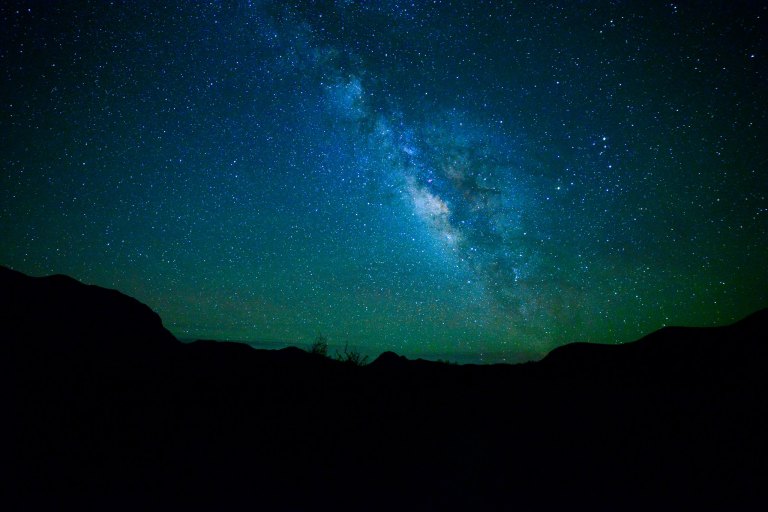
Because of its remote location away from any major cities combined with the Chisos Mountains blocking even the smallest tendrils of light pollution, Big Bend National Park is one of the best Dark Sky Parks in the U.S. On the Bortle scale, which measures the night sky's brightness, nearby Big Bend Ranch State Park scores a 1 (with 1 being the darkest skies and 9 being the brightest). While the national park hasn’t been given an official rating, a similar measurement can be assumed given the proximity of the two parks to one another.

In terms of the best places for stargazing in Big Bend National Park, all you really need to do is find a spot away from large groups of people. Just set up some lawn chairs or open up your tent and watch the Milky Way and constellations dance before your eyes.
Not a tent person? Rent an RV from RV Share for your trip instead! You don't need any special equipment, either, although telescopes are nice for getting a closer look at specific planets and stars.

As far as what time of year to visit, it really depends on what you’re looking to see. Since not all constellations are visible all the time, you’ll have to do some research if there are any specific stars you want to view. Late fall through early spring is seen as the best time because the skies are generally clear and the weather is mild. While the Milky Way is best seen in the summer, the daytime heat and unpredictable thunderstorms can make for a rocky trip. However, the Perseid meteor shower, which is one of the brightest of the year, occurs from mid-July to late August, so it may be worth going in the summer if that's important to you. Conversely, winter nights are often freezing, but crowds are lower and skies are clear.
No matter when you decide to go, try to time it during a new moon. Full moons are gorgeous, but they don’t make for very good stargazing!

Solo stargazing is peaceful, but if you’re looking to connect with fellow space enthusiasts, Big Bend National Park hosts regular stargazing parties, moonlight walks, and other fun events that highlight the importance of dark skies. You can check out a full schedule of programs on the National Park Service website.
Since a road trip is really the only viable way to get to Big Bend National Park, our road trip packing list makes planning such a long drive easy and straightforward. Check out AllTrails to discover the best hiking trails in Big Bend National Park, and sign up for AllTrails+ to gain access to exclusive perks like national park guides and offline map access.
Subscribe to our newsletter
Get the latest updates and news
Thank you for subscribing!