Welcome to Rumor Has It, a series investigating some of the most compelling lore and legend across the U.S. These articles invite readers to dig deeper, ask questions, and be curious.
In 2024, Two Minnesota State Parks Were Removed from the System – What Happened and Will They Be Replaced?
In 2024, the DNR shuttered two Minnesota state parks at the direction of the legislature. Here's what happened.
In the Land of 10,000 Lakes, our state park system is a matter of tremendous pride - and has been for well over a century. The idea of public lands for all to enjoy is a concept that Minnesotans embraced early on. Itasca State Park, for example, is not only the first and oldest in Minnesota, when it was established in 1891, it was one of the first state parks in the entire United States.
I've been enjoying Minnesota's state parks for decades, and I would put ours up against those of any other state (and at least a few national parks). Eventually, I determined that I should visit all of our parks, and to keep myself honest, I joined the Minnesota State Parks and Trails Passport Club in the fall of 2019. This meant I would have to revisit the parks I already loved and ensure that I got to new places I had yet to explore. At that time, there were 75 parks and recreation areas: 66 of the former and nine of the latter.
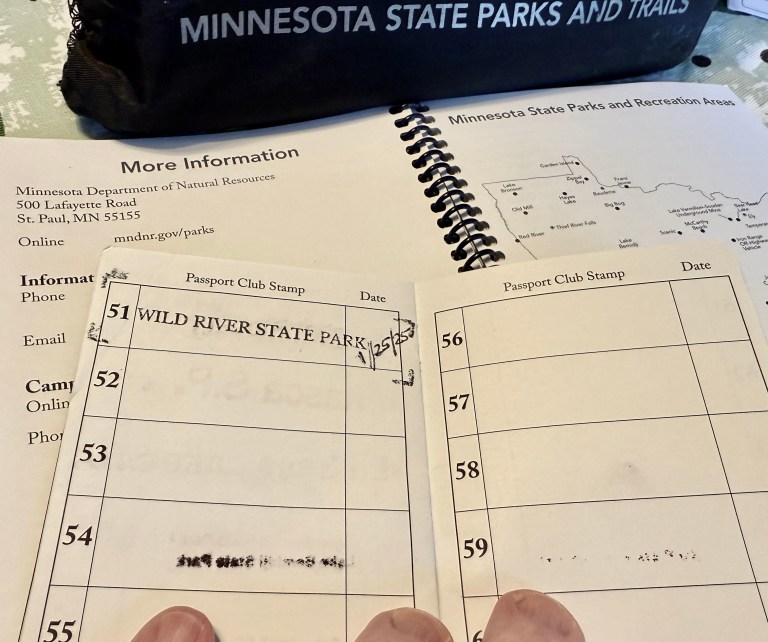
Since 2019, I've managed to visit - and obtain stamps for - 51 state park units. The pandemic slowed my passport quest a bit, as many parks closed their visitor centers and/or removed their stamps for several months, but I think I've done pretty well, so far. Not only have I explored many new places since I've had my passport, but I've become better at paying attention to what's going on with our Minnesota state parks.
That's how I learned in early 2024 that there were going to be fewer state parks for me to visit with my passport than there were when I started with the program.
Curious.
The Return of Upper Sioux Agency
In 2023, after legislation passed directing them to do so, the Minnesota Department of Natural Resources and Historical Society announced that they would return what was then known as Upper Sioux Agency State Park, along with the adjacent Minnesota Historical Society site, to the people of the nearby Upper Sioux Community. I covered the former park, its complicated history, and my visit to it in an earlier article so I won't get too deep into it here.

Briefly, though, the people of the Upper Sioux Community were among the parties to the 1851 Traverse des Sioux Treaty, which reserved strips of land 10 miles wide on either side of the Minnesota River - from Fort Ridgely to Big Stone Lake - for the Dakota people of the region. By 1862, however, the United States was failing to abide by the terms of the treaty, withholding food and annuities from the Dakota people. Protests from the starving Dakota erupted into what's now known as the U.S.–Dakota War of 1862, a conflict that raged for weeks along the Minnesota River Valley.
In the aftermath of the war, the U.S. (and, by extension, the state of Minnesota) abdicated its obligations under the treaty, and much of the land along the river was settled by non-natives. Upper Sioux Agency, a key site during the war and a place where Dakota people had starved and died, ended up in the hands of the state, which established it as a 1,280-acre state park and historical site in 1963. The park was established over the objection of the Upper Sioux Community, which is immediately adjacent to the former agency.

The Dakota people had been advocating for the return of the Upper Sioux Agency land since the 1860s, and it renewed its formal request to the State of Minnesota for return of the land shortly after the park was established - and for several years thereafter. In 2023, the Minnesota Legislature granted the request, and the park closed on February 16, 2024.
At a ceremony marking the return, Minnesota Governor Tim Walz said, "Together as partners — Tribal, state, and federal — we worked to return the land to its original caretakers. This isn’t us doing the right thing, we are simply undoing the wrong thing.”
Upper Sioux Community Tribal Chairman Kevin Jensvold agreed, saying, “None of us were here back then to participate in the wrongs that happened, but we’re here today, governor, and helping to make the rights.”

Closure of the park left a recreation gap in Granite Falls and the Upper Minnesota River Valley. Acknowledging this, DNR Commissioner Sarah Strommen, who also spoke at the ceremony, said, “Minnesota DNR has been honored and humbled to have worked with the Upper Sioux Community on the return this land to the Community. We now look forward to continuing to explore new recreation opportunities in the Minnesota River Valley.”
The return of the land that Upper Sioux Agency State Park occupied was in the works for a long time and was completed through intergovernmental cooperation and legislative action. Visitors knew the closure was coming long before it happened. The same can't be said for the second state park closure of 2024.
The Closure of Hill Annex Mine State Park
In February 2024, a proposal was quietly introduced in the Minnesota Legislature to "abolish" - in the words of the bill - 625-acre Hill Annex Mine State Park and reopen the park for iron ore mining. Governor Walz signed the bill into law on May 21, 2024, and the park abruptly closed in mid-June of the same year. I was not aware of the park's impending closure, and looking back, it appears there was little to no media coverage of the event until the DNR issued its June 13, 2024, press release announcing that the park had closed.

The abruptness of everything - compared to the return and closure of Upper Sioux Agency - surprised me. According to the DNR, however, the closure was "consistent with the historical expectation that mining would return to this site." But that expectation was never made apparent to the public.
Hill Annex Mine ceased operations in 1978, became a National Historic Site in 1986, and opened as a state park in 1988. No active mining had occurred in the park for nearly 50 years. The park's web page, which remains available on the Internet Archive, touted the natural restoration and revegetation of the area and mentioned all the species of animals and birds that had returned to live in the park. I guess they'll have to find new homes, now. It did not mention anything about the site ever reopening as an active mining operation.

I acknowledge Hill Annex Mine wasn't much of a park - certainly not among my favorites - and if the new operations bring new jobs, the village of Calumet may not feel much impact from the closure. It was interesting, however, as a nod to both the industrial history of the Iron Range and the power of nature to restore itself. It was also one of the state's more important fossil sites - something else that will likely be lost when mining resumes.
And Then There Were 64...
With the closures of these two state parks in 2024, there are still 64 parks and nine state recreation areas to enjoy in the Land of 10,000 Lakes. I was also able to visit them both before they closed, so I've got plenty left to explore and not much to complain about, really. What sticks with me, though, when I think about these two former parks is the differences between how the closures were handled and the reasons for the closures.

In the case of Upper Sioux Agency, the return had a long lead time and was directly related to the reason the park and historical site were established in the first place. It righted an historic wrong. Ostensibly, the Upper Sioux Community will maintain the land and honor the site as the people best see fit. Hill Annex Mine, on the other hand, feels like more of a bait-and-switch: "Here's a mine to turn into a park; kidding - it's a mine again!" While mining is what created historical interest in the site, it was nature's reclamation of the land that made it interesting as a park. And that is what will be stripped away with the return to active mining. One closed park will be preserved, the other returned to extractive industry. I'm okay with the former, but the latter leaves a bad taste in my mouth.
As to the gaps left by the parks' closure, there's some hope. The DNR is actively exploring “alternative recreational opportunit[ies]” in the Minnesota River Valley, as directed by the Legislature, to replace those lost by the closure of Upper Sioux Agency. There are other public lands in the area. In fact, Gneiss Outcrops SNA is a beautiful spot just across the river valley from the former park. AllTrails Plus is also a great tool for finding recreational opportunities in the area. With respect to Hill Annex Mine, the DNR notes that several other state parks, like Schoolcraft and McCarthy Beach, are within 45 minutes of the site. The legislation that abolished Hill Annex Mine State Park also provides that, when mining has finished (again), an advisory group will be established to "explore the types of use, management, and development that will be suitable for the site's conditions after mining and that would provide a benefit to the local and regional community." I won't hold my breath for that, though.
As I've previously written, I have some thoughts about what our next new state park could be - and it would fill some gaps left by Hill Annex Mine's closure. In the meantime, I still have to visit another 22 state parks and recreation areas in Minnesota. I just hope they don't close any of them before I get there.
Subscribe to our newsletter
Get the latest updates and news
Thank you for subscribing!