Walking This 1-Mile Preserved Section of the Trail of Tears in Illinois Changes You
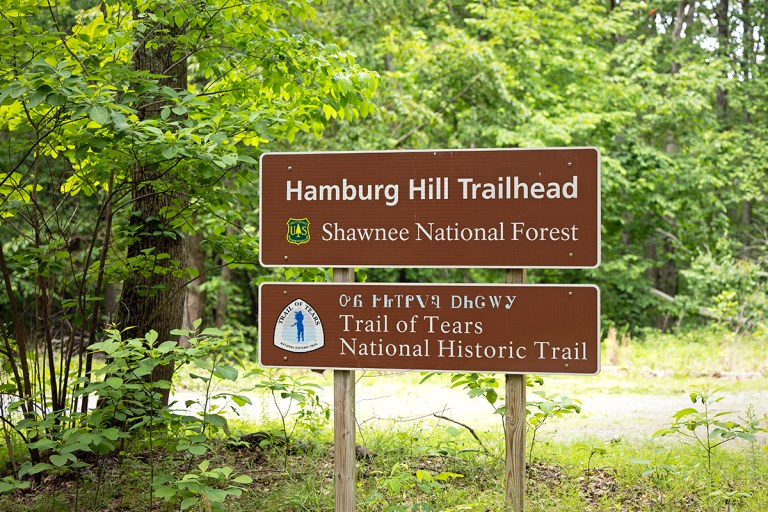
Hamburg Hill is a 1-mile segment of the Trail Of Tears National Historic Trail in Illinois. This preserved segment of the trail allows visitors to walk in the footsteps of history.
The Shawnee National Forest in Southern Illinois is celebrated for its stunning hiking trails including epic rock formations, waterfalls, and even a natural bridge. Yet one of the most surprising hikes in the region is a modest one-mile trail with a powerful history. Hamburg Hill is a preserved segment of the Trail of Tears National Historic Trail that Cherokee detachments walked on during their forced removal west in 1838–1839.
The Trail of Tears
Congress passed the Indian Removal Act in 1830, forcing indigenous tribes in the southeastern United States to give up their lands and move to federal territory in the West. In 1838, the U.S. military forced more than 16,000 Cherokee people to march about 1,000 miles to present-day Oklahoma. More than 4,000 Cherokees died of illness, exhaustion, and exposure during the grueling journey, which is now known as the Trail of Tears. The Trail of Tears National Historic Trail memorializes the removal of the Cherokee and passes through nine states.
Hamburg Hill History
The Trail of Tears' northern route included a 60-mile march across southern Illinois from the Ohio River to the Mississippi River. In 1838, thirteen Cherokee detachments endured a bitter winter that extended what should have been a nine-day march across Illinois to months. At Hamburg Hill, they walked along a hollow to the Mississippi River, where blocks of ice prevented them from crossing. With no supplies, they were forced to camp in freezing temperatures for weeks until they could cross the river and continue the arduous westward trek.

Hiking Hamburg Hill
Today, Hamburg Hill offers a rare experience to walk in the footsteps of history along the Trail of Tears. A 1-mile segment of the roadbed that Cherokee detachments walked during the terrible winter of 1838-1839 is preserved for visitors to hike on an out-and-back trail. A small parking lot is available at the Hamburg Hill trailhead, and interpretive signs detail the trail’s poignant history and the conditions that the Cherokee people endured here.

The trail descends about 20 feet into the forest on an uneven path. The area frequently floods, so you may encounter wet and muddy conditions. The trail is not accessible, but an overlook offers a view above the trail if the vegetation is not too thick.

As I descended into the leafy hollow, I stepped away from the paved road and distant noises into the past. A decline gave way to a rugged dirt path between a steep wall of trees on each side. Little has changed since the Cherokee traveled here nearly two centuries ago. Retracing the ruts in the forest floor, it was moving to think about the wagon wheels and thousands of footsteps that carved them. Sunlight filtered through the tree canopy, and the rustling leaves was the only sound aside from my feet stepping over logs and mud. It was staggering to think that this peaceful trail was the site of incredible hardship for so many people. I was grateful for the opportunity to reflect on their resilience and that this tragic chapter in American history is not forgotten in the Shawnee National Forest.
Subscribe to our newsletter
Get the latest updates and news
Thank you for subscribing!