The Natural Wonders in California That No One Talks About
Few people realize California has volcanoes, but these natural wonders exist across the state.
California is known for many things: warm sandy beaches, vibrant cities, Redwood forests, and incredible national parks, to name a few. We have stunning natural wonders, from waterfalls and bioluminescent waves to spectacular caves and caverns. One thing, though, that almost no one thinks about when they hear “California” is volcanoes. But I am here to tell you we have them, and you may have them on your California bucket list - or even have stepped on or near them - without ever realizing it.
California actually has a whopping 20 volcanoes! Many of these have been inactive for a very long time, but seven of them are considered active, even dangerous. Scientists are constantly studying these areas and the activity beneath them in order to gauge risk and predict future eruptions.
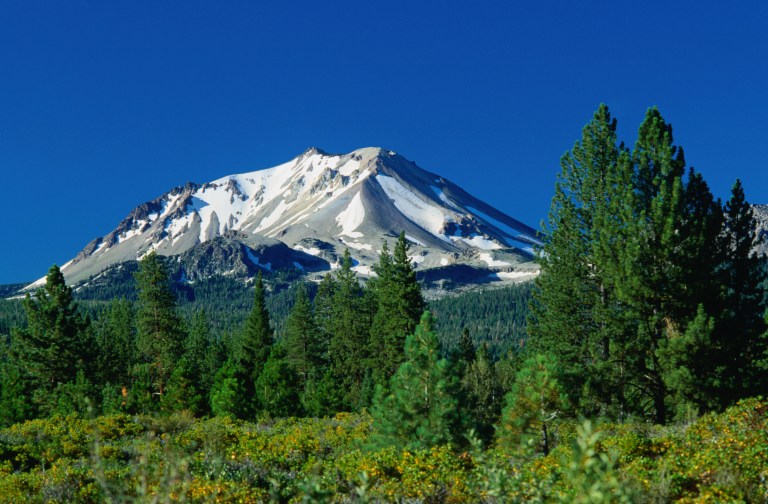
If you have ever visited the beautiful Lassen Volcanic National Park, you were likely awed by the striking Lassen Peak. You may even have surmised from the name of the park that this towering mountain was formed by a volcano. What you may not know is that it was the site of California's most recent volcanic eruption. As hard as it may be to believe, after over 25,000 years of dormancy - and believed to be extinct - this mountain erupted just a little over 100 years ago. Lassen Peak began erupting in May 1914 and continued intermittently until mid-1917. During this time, one particularly explosive eruption in 1915 resulted in a massive mushroom cloud that could be seen over 100 miles away in Sacramento, and volcanic ash reached as far as Elko, Nevada.

One of the most visually obvious, though little-known, volcanoes in the state is Amboy Crater, a long-dormant cinder cone volcano in the Mojave Desert. The nearly-symmetrical cone was formed from cinders and ash that spewed out of four craters in the center. The cone is visible from a section of Historic Route 66 and was once a popular roadside attraction for travelers. Visitors to Amboy Crater can hike into and around this ancient volcano while imagining the massive explosions that formed it. It is a fascinating place to see and explore.

Judging by its famous ski area, Mammoth Mountain is considered one of the best places to visit in California during the winter season. You may be one of over a million people who've spent winter weekends gliding down these epic slopes, perhaps unaware that this is actually one of California’s tallest volcanoes. This lava dome is not technically considered active because there has been no eruption in the last 10,000 years. That being said, as recently as 2006, hazardous tree-killing volcanic gasses have come from the mountain, making it potentially active.
Adjacent to Mammoth Mountain, Long Valley Caldera is one of the seven active volcanoes in the state that have partially molten rock deep within. Though no super-eruption is expected, it has been classified as a “very high threat” by the U.S. Geological Survey, along with the Lassen Volcanic Center and the state’s largest volcano, Mount Shasta. The Long Valley Caldera includes Mammoth Lakes and the otherworldly Obsidian Dome, a 300-foot-high “mountain” comprised entirely of volcanic glass that you can hike to the top of.

Lying just outside of Mammoth Mountain and Yosemite National Park are the Mono-Inyo Craters, a 25-mile-long chain of volcanic craters, lava flows, and domes. According to the United States Geological Survey (USGS), explosive eruptions here began some 50,000 years ago, with the most recent activity being eruptions on Paoha Island in Mono Lake about 300 years ago.
Interestingly, the famous Yosemite that has long inspired hikers, photographers, artists, rock climbers, and nature enthusiasts - while not a volcano itself - is evidence of nearby volcanic activity. The park’s famously massive granite rocks were formed by underground magma that crystallized rather than erupting, slowly being carved and exposed over time by rivers and glaciers flowing through the valley. There are even some volcanic rocks in the park from ancient eruptions of the Mono and Inyo volcanoes.

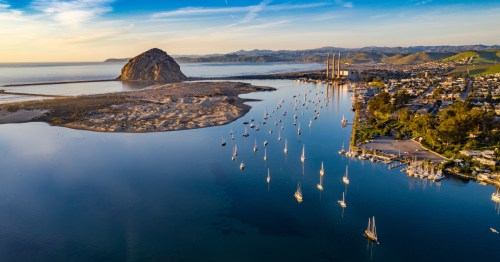
In addition to actual volcanoes, there are several volcanic plugs in the state. These stunning California natural wonders are what is left - hardened magma in the throat of the volcano - when the lava and ash of an extinct volcanoes has eroded away. One of the most well-known and oft-visited (although many people have no idea what they are actually looking at) is Morro Rock, the huge dome on the beach that characterizes the town of Morro Bay on the Central Coast. Even less recognized are the rest of the “Seven (or sometimes called Nine) Sisters.”

Morro Rock is one of a chain of plugs that stretch from the coast all the way back to the airport in San Luis Obispo. If you drive along Highway 1 between San Luis Obispo and Morro Bay, you will get incredible views of the "Sisters" stretching their way toward the coast. There were far more than nine, actually, but the moniker took hold long ago and stuck. While Morro Rock is a natural preserve and not open to hiking (you can walk right up to and around it though!), a few of these volcanic plugs can be explored, including Cerro Cabrillo and Bishop Peak (named for its shape resembling a bishop's hat).
California is full of more history and natural wonders than most of us realize. There are endless things to discover that absolutely inspire awe. Did you know that this state had so many volcanoes, and even some considered active or potentially active? Your next ski vacation, hiking adventure, or trip to the Central Coast may just hit a little differently now!
Subscribe to our newsletter
Get the latest updates and news
Thank you for subscribing!