This Alaska Beach Has 8,000-Year-Old Petroglyphs Hidden in the Boulders and Sea Glass Scattered in the Gravel
Hundreds of Indigenous tribes once forged a living in Alaska's harshest regions, and many still do. But their legacies are often found where you least expect them.
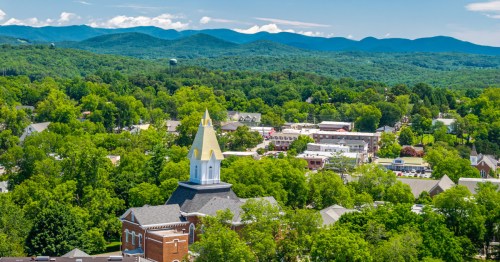
Tucked in between misty inland forests and the frigid waters of the Inside Passage, Wrangell, Alaska, sits on the northern tip of an island of the same name in the state's wild and vast southeastern panhandle. It’s one of the oldest settlements in the state, first as a Tlingit trading hub, later a Russian outpost, then a boomtown for gold miners and fur traders. Today, Wrangell is home to about 2,000 people, a deep-water port, and some of the wildest and most untouched scenery in the country. It's bordered by the icy flow of the Stikine River to the east and the steep ridges of the Coast Mountains, whose snow-fed waters flow all the way from Canada to feed into the region's maze of fjords, glacial valleys, and wildlife-rich inlets. But "gorgeously scenic" doesn't even scratch the surface of all this hidden gem has to offer!
Visitors most often come here for close encounters with bears and eagles, for kayaking past icebergs in LeConte Bay, and for boat trips upriver into the Stikine River Wilderness, a massive, roadless area teeming with moose, wolves, and migratory birds. The Tongass National Forest, the largest in the United States, envelops Wrangell with more than 16 million acres of old-growth spruce and hemlock. And yet, for all of its big, rugged backdrops, some of the town's most fascinating stories can instead be found along its hundreds of miles of jagged waterfront, carved into stone and scattered in the gravel, just waiting to be discovered after a heavy tide.

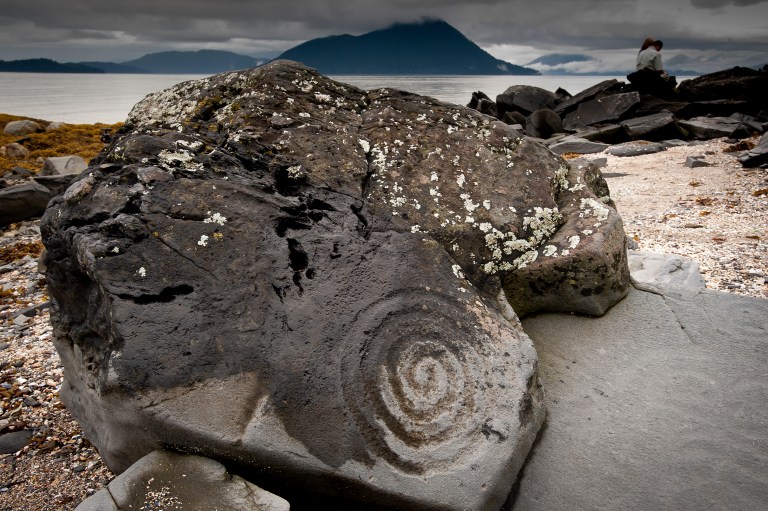
On a sloping stretch of granite shoreline just a mile north of downtown Wrangell, beachcombing goes beyond the casual stroll for seashells. Petroglyph Beach State Historic Site might be a hidden gem as far as coastal destinations go, but what few travelers realize is that this tiny slice of beach protects the largest known concentration of prehistoric rock carvings in southeast Alaska. Dozens of petroglyphs are etched into tide-smoothed boulders and bedrock, and they only become visible when the water recedes. Some depictions are unmistakable: a whale with a sweeping dorsal fin, spirals that look like sunbursts, round faces with almond-shaped eyes. Others hide in plain sight, disguised as natural cracks or sea-worn patterns, until a splash of water brings them out.
The carvings are believed to be the work of the ancestors of the Tlingit people, who have lived and thrived in this region for thousands of years. Many likely predate written history, but archaeologists estimate the petroglyphs here are around 8,000 years old. Even though many of the carvings are recognizable, their purpose isn’t fully known, and current theories range from territorial markers to ceremonial records to representations of clan identities. Whatever their original meaning or purpose, these mysterious carvings sit where ocean and forest meet, half-exposed to the tide, as if meant to be seen in passing, or only by those who know where to look.

Visitors can reach this unique historic site via a short boardwalk that winds through the trees and ends at a viewing deck overlooking the beach. There are replica stones mounted near the trail for hands-on close study, along with interpretive signs explaining the cultural and ecological context of the originals. Once you've absorbed some history of the area, wooden stairs descend from the deck to the rocky shoreline, where beachcombing becomes an ancient scavenger hunt.
Down by the water, there are no markers showing where these historic carvings are, so you'll have to look closely to find them. Some of the petroglyphs sit flat on horizontal slabs, others slant toward the surf. Pouring a little water on the rock brings the designs into sharper relief, darkening the grooves and making the lines pop. Depending on the tide, the same petroglyph might be hidden under a few inches of water or completely dry and exposed.

It's important to note that these cultural carvings shouldn't be touched, no matter how tempting it may be, as friction and skin oils can damage them. Admire only from a distance, but feel free to interact with the replicas on the top deck as much as you want.

While searching for these historic remnants, you’ll likely find plenty of sea glass as well. This corner is known for causing a few shipwrecks, so Wrangell’s shoreline regularly collects sea glass and hides fossils in small drifts along the high-tide line. Most pieces are green or amber and worn smooth by decades of surf. Occasionally, cobalt blue or lavender turns up, the result of weathered medicine bottles or rare bits of pottery from a previous century. Particularly after a storm, it’s easy to spend a few hours scanning the gravel for new glimmers of color tucked within the barnacles and limpets clinging to the rocks.

Petroglyph Beach State Historic Site is open year-round, but visits are best timed with a good low tide. Summer offers long daylight and calmer weather, while fall and winter tides can reveal petroglyphs hidden under sand during other seasons. It's not a huge beach, but with so much to discover, it's a great place to spend an afternoon. You're welcome to collect a few pieces of sea glass for souvenirs, but make sure to leave natural items—like rocks, seashells, tribal artifacts, and fossils—where they are and to follow all Leave No Trace principles. The Wrangell Cooperative Association and the Alaska Division of Parks and Outdoor Recreation jointly care for the site, and it's free to visit, making it the perfect add-on to a larger adventure. For more Tlingit history, check out Potlatch Totem Park in Ketchikan.
It might seem counterintuitive, but this historic beach and the town of Wrangell are actually hundreds of miles from the massive, 13 million-acre Wrangell-St. Elias National Park. But there's still plenty to do in and around Wrangell, and you couldn't ask for a better setting for hiking if you feel like hitting the trails. For some serious adventure, head five miles from town to the Shoemaker Bay Recreation Area where you’ll find the trailhead for the Rainbow Falls trail system. Or, you can opt for a one-of-a-kind glacier excursion—not only to the massive LeConte Glacier, but to Shakes Glacier as well.
In a place as isolated and full of extremes as the Last Frontier, it continues to amaze just how much history can be found in this corner of the country. Hundreds of Indigenous tribes once forged a living here, as many still do, and their legacies can be found where you least expect them. It's not often that beachcombing, anthropology, and archaeology go hand-in-hand, so Petroglyph Beach State Historic Site is pretty unique! This spot also offers epic views of the Stikine River and Zimovia Strait, so what better place to hit the beach, discover hidden petroglyphs, and try to unravel their ancient mysteries? Step lightly and enjoy this uniquely preserved peek into the past.
Subscribe to our newsletter
Get the latest updates and news
Thank you for subscribing!