Alaska’s LeConte Bay Is a Frozen Masterpiece of Nature
The biggest glacier in the Northern Hemisphere is also one of the coolest places to see Alaska's geological history frozen in time.
There's something indescribably breathtaking about frozen landscapes, isn't there? Shaped by millennia of ice, stone, and snow, Alaska is a place where nature’s clock ticks differently. Its 2,400-mile expanse is like an open history book, with pages carved by glaciers that have marched across the expanse for thousands of years, leaving behind fjords, valleys, and icy monoliths. Here, unlike in the Continental U.S., the frozen world isn’t just a brief seasonal phenomenon — it’s a defining characteristic, boasting numerous natural wonders and historic sites permanently encased in year-round ice.
The stunning sights in the Last Frontier are endless (seriously, here's a whole bucket list!), but there's no denying the magic of a state where entire bays glitter with floating icebergs, volcanoes wear icy crowns, and frozen formations serve as natural relics of a time long past. From ancient ice shelves that refuse to melt to glaciers that groan and crack as they slowly and imperceptibly glide across the continent, Alaska offers a glimpse into an ancient world where time seems to stand still — or more accurately, is frozen in place.
Countless travelers visit Alaska to see its gorgeous glaciers and icy landscapes in person, but some of Alaska’s most intriguing spots are more than just beautiful; they're time capsules. These places, steeped in natural history, reveal the power and mystery of ice and snow. One of my favorite Alaskan wonders is one that is, quite literally, frozen in time — but it's also one that many wouldn't think to pinpoint on its own: LeConte Bay.
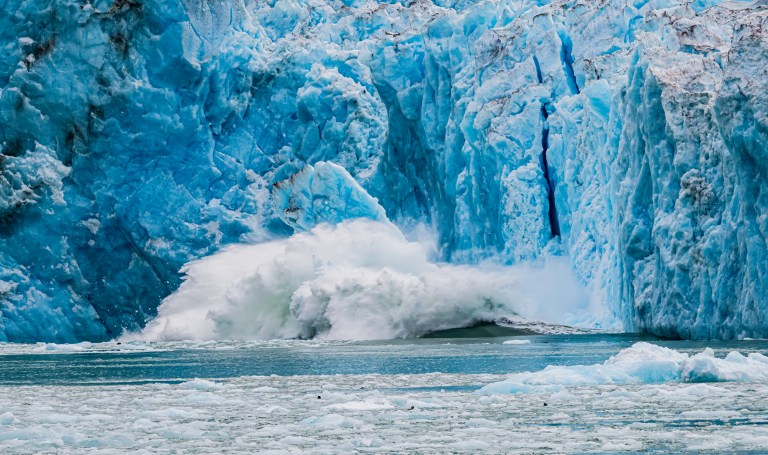
Located in the Tongass National Forest, near the southeastern tip of the state, LeConte Glacier is one of the most active tidewater glaciers in the United States, making it a dramatic and ever-changing example of time preserved in ice. Both the glacier and bay can be found approximately 20 miles north of Petersburg within a remote and rugged area that epitomizes Alaska's wilderness, and it's precisely this unique setting that makes LeConte so different from Alaska's other glacial areas.
LeConte Glacier is unique because it's a tidewater glacier, meaning it extends into the sea and calves icebergs directly into the frigid waters of LeConte Bay. Unlike other permanent ice formations that simply recede or advance on land, tidewater glaciers like LeConte interact directly with the ocean, creating a dynamic, constantly evolving environment that is also endlessly multiplying and churning. Even cooler? LeConte is also the southernmost tidewater glacier in Alaska (actually, the entire Northern Hemisphere) — a symbol of Alaska's icy reach.

Fed by snow and ice from the surrounding mountains, LeConte Glacier has been hemming and hawing for thousands of years, carving out spectacular nooks and crannies in the bay and leaving behind dazzling blue ice formations. In the colder months, LeConte Bay and the glacier's terminal face freeze over, creating a perfectly still and incredibly silent atmosphere that is hard to find anywhere else.
The sea ice in the bay creates a surreal natural sculpture garden of ice that feels timeless and fantastical all in one. Even more miraculous, the ice remains constant, despite the glacier’s movements. The immense scale of the glacier, combined with its interaction with the frigid ocean water, allows it to maintain its frozen, ethereal presence. And it. Is. MAGICAL.
It's hard to grasp how huge this glacier is until you see it in person, so here are some quick stats: LeConte Glacier is approximately 21 miles long with ice cliffs towering over 200 feet above the water and extending up to 800 feet below the surface. It's massive. But the resulting glacial sculptures aren't just found in the water. They're on the shore too!

The ice in LeConte Glacier, like other glaciers in Alaska, is thousands of years old. It originates from snowfall high in the Stikine Icefield, which compresses into ice layers over time. Most Alaskan glacier ice forms over 10,000 to 30,000 years, with older layers closer to the base. Here, each layer holds a record of past climates, a literal timeline of the Earth frozen into a modern-day wonder.
Since the glacier and bay feel almost untouched by modern development, thanks to its protective wilderness surroundings (Tongass is one of the last remaining temperate rainforests in the world), every part of this dreamy slice of Alaska is like a land before time. Its isolation, coupled with the glacier's remote beauty, adds to the feeling that this is a place suspended in the past, where the natural world persists as it has for centuries. Just think: at one point, dinosaurs walked on this very same ice! (Well, at least the land next to the ice.)

LeConte Bay is located in the Alaska Panhandle and is accessible by boat, sea kayak, or small aircraft. Beyond its icy allure, the bay and its surroundings are a hub for adventure, wildlife encounters, and local culture. The bay teems with wildlife, offering phenomenal opportunities to see harbor seals resting on icebergs, as well as bald eagles, bears, and mountain goats along the rugged shores. In the water, humpback whales, sea lions, and porpoises make frequent appearances — which means sea kayaking is pretty popular!
If sea kayaking doesn't float your boat, nearby Petersburg offers access to trails like the Petersburg Mountain Trail, which climbs into the Tongass National Forest and provides sweeping views of the region. The Three Lakes Trail is another option, with boardwalks winding through temperate rainforest and muskeg.
Overall, the fjord's remote nature and stunning beauty have made it a bucket list destination for those who want to witness the wild, unspoiled landscape of southeastern Alaska, and it's definitely worth adding to your AK adventure list. It's definitely on mine! And if you're still hunting for more things to do in the area during your visit, you can find personalized recommendations by checking out our itinerary planner! Enjoy!
Subscribe to our newsletter
Get the latest updates and news
Thank you for subscribing!