Kentucky Schools In The Early 1900s May Shock You. They’re So Different.
Rural Kentucky schools in the early 1900s faced significant challenges including lack of funding, resources, and modern conveniences.
Kentucky might be the state where education pays, but back in the 1900s, our rural Kentucky schools were a lot different. There were an abundance of one and two-room school houses across the state, but big learning institutes were scarce. The educational funding was done primarily via the communities using bake sales and such. Students didn’t have conveniences like a school bus or a computer. In most cases they had to walk to school, lunch pail in hand, to get an education.
The reality was the school houses were overcrowded, underfunded and quite often, underutilized. An education was not a mandatory part of growing up in a rural community during that era, unlike today. When we look back at the rural Kentucky schools of the early 1900s, they are so different it is shocking:
1. Brush Mountain School House
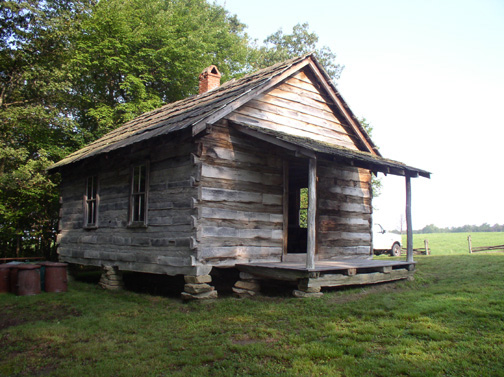
This tiny one-room school house is part of the Hensley Settlement, formed in the 1840s. The school itself was not a part of the initial community. The building was built in the early 1900s, but the school itself was not utilized until 1908, when the first teacher was brought in.
2. Manual Typewriters

Typing was taught in the early 1900s on these monstrosities known as manual typewriters. The letters were imperfect and often blurred. The process itself was tedious and time consuming as every key took effort to strike and you actually aligned everything up yourself. Later on, the electric typewriter was invented, which was a step above, but still a dinosaur if compared to the computers of modern times.
3. Books

Reading in rural Kentucky schools was done with a textbook, which was often in poor shape due to multiple years of reuse. The pages were worn and torn, but the books were used till funding came along for new books. In some rural counties, only the teacher had the textbook and would read aloud to the class. Students just took good notes or failed miserably.
4. Computers

The closest thing to a computer used for schools in Kentucky during the early 1900s was a pencil and paper. You couldn’t use a calculator, even if you somehow managed to get one. All work was technology-free and by hand, via writing… not typing.
5. Recess was about playing games together.

Recess and after school children often gathered to play games, unless they had to go home to work after class. These kids are shooting a game of marbles, but kick the can, tag and red rover were all popular as well. Video games and television were unavailable and kids had to depend on their own creativity for entertainment.
6. A two-room school house

These kids near Morehead had the luxury of a two-room school house. Children were often taken out for play during the warmer months, and even some lessons were taught outside. Unfortunately, due to the high poverty level of the area, many children didn’t have the money for warmer clothes, so school was not in session during the winter months.
7. Class ages varied.

The ages varied in a one room school house atmosphere. Younger children were often more common than teenagers. Older children were often pulled out to work on the farms in their early teen years.
8. Lunchrooms didn't exist.

Lunchrooms in rural Kentucky schools did not exist when you learned in a one or two room school house. Children would find a place to sit outside and relax with friends or alone. A lunch pail, which was literally a pail in many cases, and a spot to sit upon the earth was all that was required. Some siblings or friends shared tiny lunches barely enough for one in some cases.
9. Some lunched alone.

This child was dining on mush, cold potatoes, and cornbread, according to the photographer. Lunches like this were common in the more rural communities. Meals were simple, as you ate what you caught, traded or grew at home. Prepackaged snacks like "lunchables" were, of course, nonexistent.
10. No running water

Running water was just not part of the school budget in the early 1900s. These two boys are bringing water back to their school in Morehead. They had to walk to a well, fill their container and then carry it back to share with the class. This was a daily activity in most schools.
11. Small class in session

This is a one-room school house in Breathitt County where the children all sat around the same table to learn. The image was taken in 1940 and it appears this small class was likely only a few years apart.
12. Other classes were overcrowded one-room schools.

Overcrowding was a challenge back in the 1930s and 1940s, especially in the tiny one room school houses. Many times students had to share the same desk and do their studies in close proximity.
13. No school bus

There was no school bus to take the kids back and forth to school. If you wanted to learn, you walked in places like Breathitt County. If you were fortunate enough, your parents might have a mule for you to ride, but that didn’t happen often, as the animals were used for farm work. Some children walked for miles one way for an education.
14. This was considered a large class.

Back in the early 1900s, this was considered a large group of students, especially considering they all attended class together in the small one room school house beside them. The overcrowding is obvious, and teaching such a large group of students with different ages was a great challenge as well.
15. Class picture day

You can see the age diversity clearly in this one room school house class photo. The absence of shoes is also apparent, as many families couldn’t afford such luxuries during the early 1900s. Counties like Breathitt, Bath, Clay, Pike and more were home to people living in real poverty… Many families couldn’t afford basic needs, so shoes, coats and such were considered an extravagance to some.
In many of these photos of rural Kentucky schools, the lack of shoes and mended clothing is a real eye-opener. It shows just what poverty really looks like, especially compared to today’s fast paced society of digital devices, designer sneakers and clothes. One pair of today's Nikes paid one month’s rent and all the utilities during the early 1900s.
Seeing the challenges that previous generations overcame is pretty amazing, and makes me appreciate what we have more. What do these photos of rural Kentucky schools during the 1900s remind you of?
Subscribe to our newsletter
Get the latest updates and news
Thank you for subscribing!