14 Baseball Stadiums Worth Traveling For, From Food to Incredible Views
Not all baseball stadiums are created equal. These 14 ballparks offer views, food, and atmosphere worth building an entire trip around.
Will travel for baseball. A bumper sticker in the making, if you ask me. Whether it's a family tradition passed down through generations, a bucket-list goal years in the making, or a full-on quest to visit all 30 MLB parks, the draw is real. We've scoured the country to find the baseball stadiums worth traveling for, from the ones with jaw-dropping views to the ones where the food alone justifies the ticket. Did your favorite make the list?
1. Fenway Park, Boston, MA
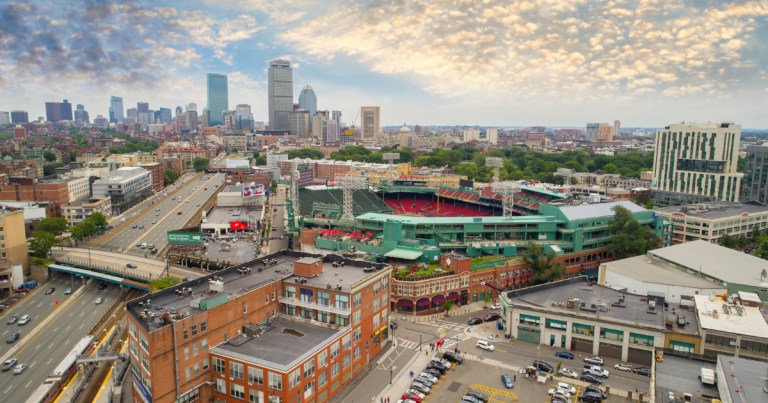
The oldest MLB ballpark still in use today, Fenway Park opened in 1912. Sitting in the Green Monster seats in left field means watching a game inside a living piece of American sports history. The manual scoreboard, installed in 1934, is operated by a staff of three and remains one of the last of its kind in baseball. For food, the classic Fenway Frank and clam chowder are non-negotiable, but the Cowboy Up! burger loaded with brisket, bacon, and onion rings is worth the trip upstairs to Truly Terrace.
2. PNC Park, Pittsburgh, PA

Few ballparks frame the game quite like PNC Park in Pittsburgh. Crossing the Roberto Clemente Bridge to reach the stadium is part of the experience. The bridge is closed to vehicles on game days, turning it into a pedestrian walkway lined with street performers and buzzing fans. The bridge itself was built in 1928 and is one of the few self-anchored eyebar suspension bridges in the country, and was added to the National Register of Historic Places in 1986. Once inside, the view of the Pittsburgh skyline framing the Allegheny River is one of the most photographed backdrops in all of baseball.
3. Oracle Park, San Francisco, CA

Oracle Park sits directly adjacent to San Francisco Bay, making for views that rank among the best in baseball. The famous McCovey Cove sits just beyond the right field wall, where fans in kayaks and small boats gather on game days hoping to catch a splash hit. Giant plates of garlic fries are a signature concession at the park and reflect the Bay Area's reputation for taking food seriously, even at the ballpark.
4. Citi Field, Flushing, NY

Citi Field has been voted Best Baseball Stadium Food by USA Today Readers' Choice three consecutive years. The food lineup includes Pat LaFrieda's Original Filet Mignon Steak Sandwich, Wok n' Roll's Cinnamon Bun Eggroll, and Pig Beach BBQ, along with rotating menus from celebrity chefs each season. The concourse is wide and walkable, making it easy to eat your way around the park before ever settling into a seat.
5. Truist Park, Cumberland, GA

Truist Park opened in 2017 with a unique cantilevered design that ensures none of its 41,000-plus seats have an obstructed view, and it has the highest percentage of seats close to the field of any MLB ballpark. The stadium anchors The Battery Atlanta, a fully walkable mixed-use district surrounding the park with restaurants, bars, and a hotel. A Monument Garden on the grounds features a Hank Aaron statue and plaques honoring Braves Hall of Fame inductees.
6. T-Mobile Park, Seattle, WA

T-Mobile Park opened in 1999, featuring a retractable roof, a brick facade, and natural grass, following the neo-traditional design trend of the era. The roof spans nearly nine acres, weighs 22 million pounds, and contains enough steel to build a 55-story skyscraper. It opens and closes in 10 to 20 minutes at the push of a button. On clear summer evenings with the roof open, the view of downtown Seattle and Mount Rainier in the distance is hard to beat.
7. Kauffman Stadium, Kansas City, MO

Kauffman Stadium opened on April 10, 1973, purpose-built exclusively for baseball during an era when most cities were constructing multi-purpose cookie-cutter stadiums. Its signature feature is the Water Spectacular beyond right field: a 322-foot-wide fountain and waterfall display, the largest privately funded fountain in the world, with waterfalls flowing constantly throughout every game. The fountains ultimately cost over $1.5 million to build, with much of the funding coming from owner Ewing Kauffman when the project exceeded its original budget.
8. Wrigley Field, Chicago, IL

Wrigley Field opened in 1914 as Weeghman Park and was renamed in 1927 after Cubs owner William Wrigley Jr. The ivy lining the outfield wall is found at no other major league ballpark, and baseballs have been known to disappear into it entirely. Under the rules, a ball stuck in the ivy is a ground rule double. Wrigley was also the last MLB stadium to have lights installed, with the first night game taking place in August 1988. The Wrigleyville neighborhood surrounding the park, including the famous rooftop seats along Sheffield and Waveland, is a destination in its own right.
9. Petco Park, San Diego, CA

Petco Park has been ranked No. 1 on USA Today's list of best MLB ballparks four times since opening in 2004, including in 2022 and 2023. The park incorporates the Western Metal Supply Co. building, a historic warehouse built in 1909, directly into its left field corner. From the top of the upper deck, visitors get a clear view of the San Diego-Coronado Bridge, and on a pristine, clear day, you can even see Mexico and two of its islands on the horizon. The park sits directly next to the Gaslamp Quarter and is accessible by the San Diego Trolley.
10. Busch Stadium, St. Louis, MO

Busch Stadium opened in 2006, placing the Gateway Arch front and center in the view from most seats. Behind home plate, the Arch sits directly in the sightline, though it is visible from nearly all parts of the stadium except the outfield seats. Signature food options include toasted ravioli and St. Louis-style BBQ. The surrounding Ballpark Village gives the experience a neighborhood feel, with bars, restaurants, and the Cardinals Hall of Fame and Museum all within walking distance.
11. LoanDepot Park, Miami, FL

Miami's ballpark features a retractable roof that handles the city's afternoon storms without sacrificing that distinctly Miami energy inside. The Parrillada Board, a shareable platter of grilled steak, chicken, and sausage served with mashed potatoes, is one of the standout dishes and reflects the park's broader Latin-influenced menu, which spans sushi, tacos, and full restaurant-quality plates. The art installations throughout the stadium, including a massive kinetic home run sculpture beyond the outfield, make LoanDepot one of the most visually distinctive parks in baseball.
12. Citizens Bank Park, Philadelphia, PA

Citizens Bank Park opened in April 2004, built to replace Veterans Stadium and featuring natural grass, a dirt playing field, and Philadelphia-style food stands throughout. Ashburn Alley, a 625-foot-long outfield concourse named after Hall of Famer Richie Ashburn, spans 50,000 square feet and includes a street-fair atmosphere, open views of the bullpens, picnic areas, and statues of Phillies legends. A 50-foot-high Liberty Bell swings and lights up after every Phillies home run.
13. Coors Field — Denver, CO

At Coors Field, home of the Colorado Rockies, the Rocky Mountain Oyster Po' Boy sits among the most talked-about stadium-specific foods in baseball. Rocky Mountain oysters, a Colorado regional delicacy, are battered, fried, and served sandwich-style. The stadium sits at roughly a mile above sea level, and the thin air genuinely affects the game: balls carry farther here than at virtually any other park in the league. The Rocky Mountain backdrop visible beyond the outfield on clear days is a legitimate reason to look up from the scoreboard.
14. Dodger Stadium — Los Angeles, CA

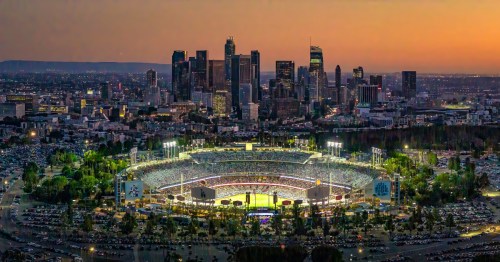
Dodger Stadium opened in 1962 and is now the third-oldest ballpark in Major League Baseball, behind only Fenway Park and Wrigley Field, and the oldest stadium west of the Mississippi River. It was the first privately financed baseball stadium since Yankee Stadium in 1923 and was designed with unobstructed views from all 56,000 seats, the largest capacity in the MLB. The Beatles played their last formal concert here, and in 1987 Pope John Paul II addressed a crowd of over 56,000. The Dodger Dog remains one of the most iconic stadium foods in American sports.
Want to explore more iconic sports venues in America? These aren't just baseball stadiums.
Subscribe to our newsletter
Get the latest updates and news
Thank you for subscribing!