3 Incredible Memphis Museums That Changed How I See U.S. History
These museums peel back the layers on some of the most important moments in U.S. history.
Memphis carries a heavy history on its back. Once an important railroad stop, the city flourished economically at the beginning of the 20th century and saw the birth of blues, rock, and soul music. It was also at the epicenter of some of the most important events of the Civil Rights Movement. Given all of this, it’s not surprising that it's home to excellent (and, I would say, underrated) museums. I visited the city last year and spent time enjoying BBQ, walking along the Mississippi River, and listening to live music on Beale Street. But what I remember most about the trip is visiting these three museums, which deepened my understanding of U.S. history.
1. National Civil Rights Museum
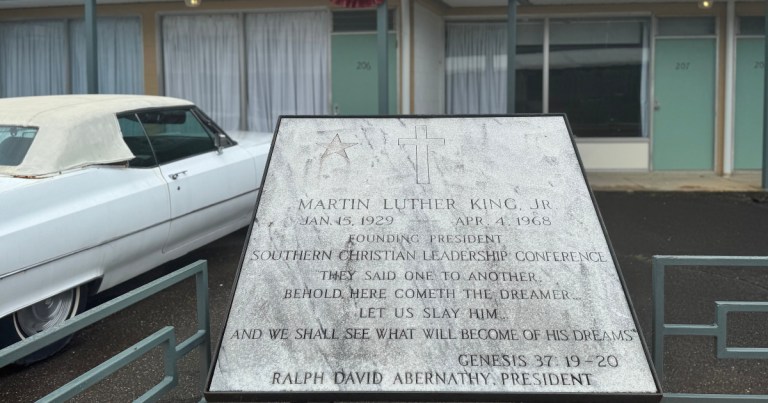
Set on the site of the hotel where Dr. Martin Luther King, Jr. was assassinated in 1968, the National Civil Rights Museum commemorates the fight to end segregation and gain equal rights. Although this dark chapter of history is well-known, this important museum brings you into the heart of the movement in a raw, immersive way. The exterior of the Lorraine Motel is perpetually locked in 1968, and a commemorative plaque marks the balcony where Dr. King stood when he was shot and killed. Inside, you follow a chronological path through the Transatlantic Slave Trade, the Civil War, Reconstruction, and Jim Crow.
At the large section dedicated to the fight for civil rights, the museum encourages you to stand in the shoes of activists. For example, you’ll board an original 1950s bus and sit next to a statue of Rosa Parks while you hear the bus driver harassing her for sitting in the front. Historical records on display force us to face uncomfortable truths, like the fact that President John F. Kennedy initially hesitated to support the movement. Eventually, you find yourself in front of large glass panels that display Dr. King's room. Although I knew about these events, there is something incredibly powerful about standing where one of the worst tragedies of modern American history took place. If you have time for only one museum while in Memphis, make it this one.
2. Memphis Museum of Rock 'n' Soul

You may think that you know music, but the incredibly well-curated Memphis Rock ‘n’ Soul Museum will still surprise you. Instead of starting in the 20th century, the museum takes you back to post-Civil War America, where sharecroppers created music genres that would eventually evolve into rock and soul. To suit the course of the region's history, the first exhibitions are segregated into parallel sections that display daily life for Black and White rural Southerners. Notes of the songs that accompanied work and leisure weave into displays that imitate houses and fields.
Eventually, the sections converge into a single exhibition that focuses on rock and soul. In between displays of Elvis costumes and recordings of B.B. King songs, there is a surprising amount of social commentary and history. I learned about how music partially shaped Beale Street’s affluence, the impact of rock in the cultural revolutions of the late 20th century, and soul's role in promoting Black pride as a form of resistance against a racist system. The institution drives home the importance of music in our lives beyond mere entertainment and taught me about the role these genres played in the social changes that shaped Memphis and all of modern America.
3. Stax Museum of American Soul Music

Yes, this is another music museum, but Memphis warrants it! (The city is, after all, one of the main stops along the Tennessee Music Highway.) The Stax Museum of American Soul Music specifically centers around the legendary Stax Records production company rather than soul music in general. Representing soul artists like Otis Redding, Isaac Hayes, and Carla Thomas, this company helped drive the nationalization of the genre. I came into the museum with very little knowledge about Stax Records, so my visit was a crash course in American music history.
Stax was one of the first record companies to have mixed bands. It brought artists together based on how well they complemented each other, rather than dividing them by race. This was seen as outrageous and radical at the time, especially in segregated Memphis. Exhibits include walls decorated from floor to ceiling with historic records, the equipment used to record Otis Redding’s original version of “Respect,” and Isaac Hayes’ gold-plated Cadillac. While there is nostalgia for the record company and what it represented before it closed, the museum is mostly a celebration of a period in which music finally began to break racial barriers and celebrate actual talent. This is a must-visit landmark for anyone interested in music, history, and/or soul.
Feeling inspired? Try planning your own trip using Only In Your State’s itinerary planner.
Subscribe to our newsletter
Get the latest updates and news
Thank you for subscribing!