Watch Your Step, More Rattlesnakes Are Emerging From Their Dens Around Virginia
Virginia's summer brings out rattlesnakes, including the venomous Timber Rattlesnake, which hikers should be cautious of.
There's no time like summer to experience the great outdoors in Virginia. Yet even this magical season comes with a bit of a warning: rattlesnakes are emerging from their sleepy dens. Like many creatures that hibernate during the winter, rattlesnakes are noticing the warm weather and are basking in it. These slithery residents certainly aren't out to get us, but they can be dangerous when provoked. Here's why you'll want to pay extra attention to where you're stepping the next time you embark on a trail.
Did you know that there are 32 kinds of snakes in Virginia? The good news is the majority of them are not venomous. The not-so-good news is that three species are: the Eastern Copperhead, Northern Cottonmouth, and, of course, the Timber Rattlesnake.
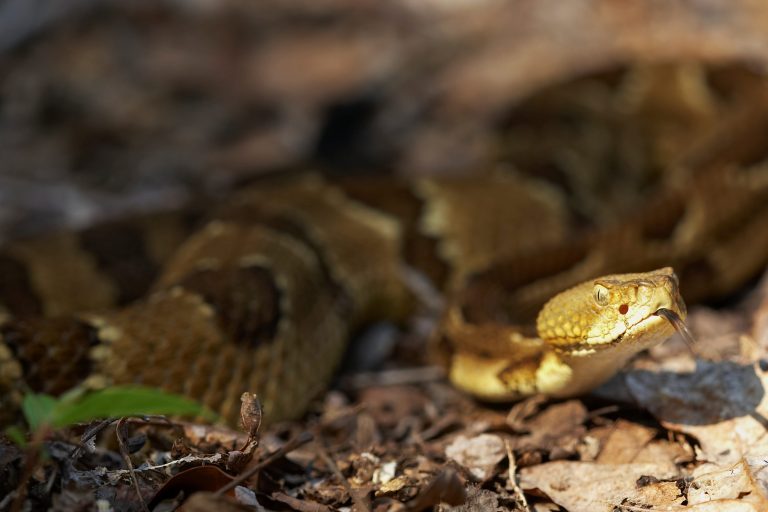
The Timber Rattlesnake — also referred to as the mountain rattlesnake or black rattlesnake — has been verified in 45 counties in Virginia.

The above map is courtesy of the Virginia Herpetological Society. Note that Canebrake Rattlesnakes are found in southeastern Virginia and have been listed as endangered since 1992. Find out more by clicking here.
Timber Rattlesnakes are quite sizable, reaching lengths of up to five and a half feet. Their unique and striped coloration ranges from yellow to black, with the tell-tale rattler at the tip of their tails.

If the snake feels threatened, it will shake its rattler as a warning sign that it's been provoked. This clear sign can be a helpful way to avoid stepping on one accidentally!

When a snake gives birth, there are approximately six to eight babies in a litter. Amazingly, even the tiny snakes are born with a rattler and venom.

The likelihood of being bitten by a rattlesnake is small. These snakes generally want to avoid any kind of human contact and will give off a warning rattle if they feel at all threatened.

If you should come across a timber rattlesnake, it's important to give it plenty of room and respect the distance. Most snake bites occur when humans go out of their way to provoke or harm the snake.
You'll want to watch for these snakes sunning themselves on rocky ledges, which usually aren't far from their dens. They prefer to hide away from people in places where they won't be disturbed.

While these snakes can be an intimidating sight, it's good to remember that they too play an important role in the ecosystem.

Did you know that an adult Timber Rattlesnake can consume up to 4,000 Lyme disease-carrying ticks? (Source: University of Maryland's College of Natural Sciences.) That's yet another reason to watch your step the next time you're out and about on a mountainous trail.
The Virginia Poison Control Center has noted that fewer than 15 people have died from rattlesnake bites in the past 30 years (and many of them did not seek medical help). Despite popular belief, it's important not to try to suck the venom out of a bite. Instead, seek medical attention immediately. For a helpful guide about how to best treat a snakebite, you can click here.
Subscribe to our newsletter
Get the latest updates and news
Thank you for subscribing!