These 25 UNESCO World Heritage Sites Across the U.S. Are True Natural and Cultural Wonders
There are the 25 natural and cultural wonders that have been designated as UNESCO World Heritage Sites in the U.S.
The United Nations Educational, Scientific and Cultural Organization (UNESCO) has designated more than 700 unique destinations across the globe as World Heritage Sites. These landmarks are legally protected and recognized for having cultural, historical, scientific, or natural significance. From ancient ruins and historic cities to deserts, forests, mountains, and more, UNESCO World Heritage Sites are truly remarkable.
In the United States, 25 awe-inspiring destinations have been designated as UNESCO World Heritage Sites. These incredible destinations protected by UNESCO are worth adding to your bucket list.
1. Yellowstone National Park, Wyoming
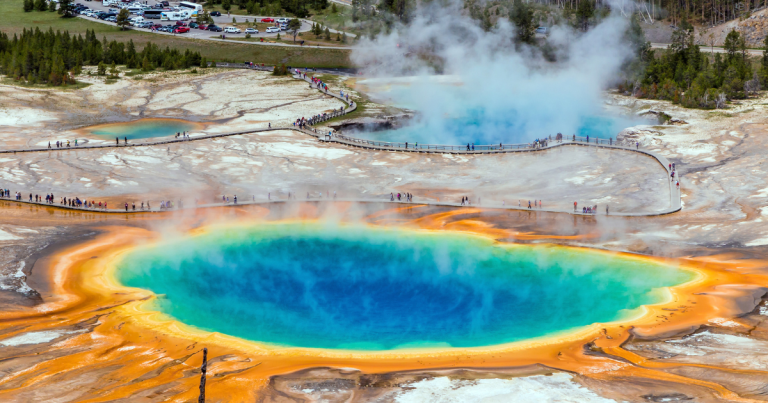
Containing half of all the world’s known geothermal features—with more than 10,000 examples—Wyoming’s Yellowstone National Park is also home to the world’s largest concentration of geysers. Yellowstone’s ecological communities offer unparalleled opportunities for conservation, enjoyment, and wildlife viewing of grizzlies, wolves, bison, and wapitis.
2. Everglades National Park, Florida

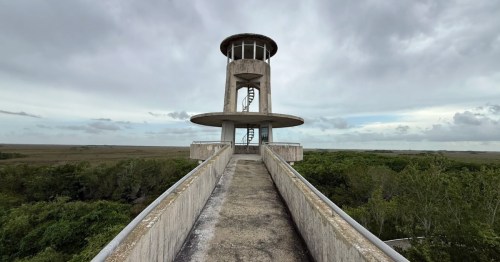
At the southern tip of Florida, Everglades National Park is home to a variety of water habitats, forming a sanctuary for a wide range of bird and reptile species, as well as threatened species such as the manatee. It is the largest designated subtropical wilderness reserve in North America. It contains the largest mangrove ecosystem in the Western Hemisphere, the most significant breeding ground of wading birds, and the largest continuous stand of sawgrass prairie in North America. It's truly one of the most remarkable United States natural wonders.
3. Grand Canyon National Park, Arizona

Carved by the Colorado River, the Grand Canyon is one of the world’s most spectacular gorges. The mile-deep gorge ranges in width from 0.3 to 18.6 miles, twisting and turning for 276 miles, and was formed during 6 million years of geological activity and erosion by the Colorado River. Within, you’ll discover buttes, spires, mesas, and temples, with horizontal strata that retrace geological history over the last 2 billion years, representing the four major geologic eras.
4. Kluane, Wrangell-St. Elias, Glacier Bay & Tatshenshini-Alsek, Alaska

Recognizing a complex of impressive glaciers on both sides of the border between Canada—Kluane and Tatshenshini-Alsek—and the United States in Alaska—Wrangell-St. Elias and Glacier Bay, this UNESCO World Heritage Site is home to the largest non-polar ice field in the world. Here, you will find examples of some of the world’s longest and most spectacular glaciers, as well as grizzly bears, caribou, and Dall’s sheep. With icefields, glaciers, and towering mountains, this region boasts high biodiversity, featuring flora and fauna communities that range from marine to coastal forest, montane, subalpine, and alpine tundra.
5. Redwood National and State Parks, California

Bordering the Pacific Ocean north of San Francisco, Redwood National Park is covered in a magnificent forest of coast redwood trees, the tallest and most impressive trees in the world. A surviving remnant of a forest that has existed for 160 million years, this National Park is home to rich intertidal, marine, and freshwater stream flora and fauna in two distinct physiographic environments: the coastline and coastal mountains. Notable species standouts are the sea lion, bald eagle, and the endangered California brown pelican.
6. Mammoth Cave National Park, Kentucky

The world’s largest network of natural caves and underground passageways, Mammoth Cave is home to limestone formations galore. With more than 285 miles of surveyed cave passageways within the property and another 80 miles outside the property, you will discover nearly every type of known cave formation within the site. The flora and fauna of Mammoth Cave is also home to the richest cave-dwelling wildlife, with more than 130 species found underground.
7. Olympic National Park, Washington

Renowned for its ecosystem diversity, Olympic National Park is home to glacier-clad peaks, expansive alpine meadows, and an extensive old-growth forest—the best example of a protected temperate rainforest in the Pacific Northwest, in fact. Within the park, you will also discover the longest undeveloped stretch of coastline in the contiguous United States, measuring 62 miles.
8. Great Smoky Mountains National Park, Tennessee and North Carolina

Home to more than 3,500 plant species—including nearly as many trees as in all of Europe—Great Smoky Mountains National Park stretches more than 500,000 acres across North Carolina and Tennessee. It is characterized by its scenic vistas of mist-shrouded or smoky mountains, verdant forests, and crystal-clear streams. It's no wonder that this is the most-visited U.S. national park, seeing over 12 million visitors each year.
9. Yosemite National Park, California

Nestled in the heart of California, Yosemite National Park is home to verdant valleys, soaring cliffs, cascading waterfalls, polished domes, cirque lakes, and towering mountains. This pristine example of glacial erosion of granite bedrock has created geologic features that are unique in the world. Views of Yosemite Valley, a half-mile-deep, glacially carved cleft with sheer granite walls, are particularly stunning.
10. Hawaii Volcanoes National Park, Hawaii

The site of two of the most active volcanoes on the planet—Mauna Kea and Kilauea—Hawaii Volcanoes National Park is ever-evolving, with lava flows revealing geological formations and stark, yet stunning landscapes. Located on Hawaii Island, the park is also home to rare birds and endemic species and forests full of giant ferns, steam vents, and more.
11. Carlsbad Caverns National Park, New Mexico

In southern New Mexico, Carlsbad Cavern National Park is home to more than 120 limestone caves that are world-renowned for their size, mode of origin, and diversity of decorative rock formations. Ongoing geological processes continue forming rare and unique speleothems. Within Lechuguilla Cave, scientists have discovered the world’s largest accumulation of gypsum chandeliers, some of which measure more than 18 feet in length.
12. Waterton-Glacier International Peace Park, Montana

Comprised of Glacier National Park in Montana and Waterton Lakes National Park in Alberta, this UNESCO World Heritage Site is the world’s first international peace park. Home to outstanding scenery and rich in plant and mammal species as well as prairie, forest, alpine, and glacial landscapes, this peace park was created in 1932 and showcases the best of both nations.
13. Papahānaumokuākea Marine National Monument, Hawaii

A vast and isolated cluster of small, low-lying islands and atolls roughly 150 miles northwest of the main Hawaiian Islands, Papahānaumokuākea is a place of natural and cultural significance. One of the largest marine protected areas in the world, this remote ecosystem is home to extensive coral reefs and lagoons, as well as archaeological remains related to pre-European settlement on the islands of Nihoa and Makumanamana.
As one of the top natural and cultural heritage sites in the U.S., it's certainly worth adding Papahānaumokuākea to your bucket list.
14. Mesa Verde National Park, Colorado

Built between the 6th and 12th centuries, more than 4,400 sites have been recorded in Southwest Colorado on the Mesa Verde plateau. Home to some 600 cliff dwellings made of sandstone and mud mortar—including the famous Cliff Palace, Balcony House, and Square Tower House—Mesa Verde National Park is a true cultural wonder in the U.S., a living link between the Puebloan Peoples’ past and present.
15. Independence Hall, Pennsylvania

In the heart of Philadelphia, Pennsylvania, Independence Hall is a shining symbol of freedom and democracy. It is where both the Declaration of Independence (July 4, 1776) and the Constitution of the United States (September 17, 1787) were signed. These documents are often considered to have signaled the modern era of government. The building is now a UNESCO World Heritage Site and National Park site, and is a piece of American history worth experiencing in person.
Be sure to reserve your free tickets in advance online (you'll only pay a $1 processing fee) to visit Independence Hall. Check the website to make sure its not closed for restoration.
16. Cahokia Mounds State Historic Site, Illinois

The largest pre-Columbian settlement north of Mexico, Cahokia Mounds State Historic Site was occupied primarily during the Mississippian period (800 to 1400) and is a striking example of a complex chiefdom society. At its peak, the population was between 10,000 and 20,000, and it is home to some 120 mounds, including the largest prehistoric earthwork in the Americas, Monks Mound.
Editor's Note: The The Interpretive Center (Museum) and Gift Shop remain closed for major renovations.
17. La Fortaleza and San Juan National Historic Site, Puerto Rico

Built between the 16th and 20th centuries to protect the city of San Juan, Puerto Rico, La Fortaleza has served as an arsenal, a prison, a fortress, and a residence of the Governor-General, serving today as the seat and residence of the Governor of Puerto Rico. Italian Renaissance, Baroque, and French Enlightenment architecture combine to represent a fine display of European military architecture adopted by the American continent.
18. Statue of Liberty, New York

Perhaps no landmark in the United States is more iconic than the Statue of Liberty. Made in Paris by the French sculptor Bartholdi in collaboration with Gustave Eiffel, this breathtaking sculpture was gifted by France on the centenary of American independence. Standing guard at the entrance to New York Harbour, the Statue of Liberty was inaugurated and has welcomed millions of immigrants to the United States ever since.
Visiting the Statue of Liberty and Ellis Island is indeed a once-in-a-lifetime opportunity and should truly be checked off everyone’s U.S. Bucket List in their lifetime—whether your family immigrated through Ellis Island or you simply enjoy history, architecture, or stunning views.
19. Chaco Culture, New Mexico

A network of archaeological sites preserving outstanding elements of a pre-Columbian cultural complex in New Mexico, this UNESCO World Heritage Site served as a focal point for ceremonial, political, and trade activity for the Four Corners area. Comprising Chaco Culture National Historical Park, Aztec Ruins National Monument, and five protected archaeological sites, Chaco is renowned for its monumental public and ceremonial buildings, including an ancient urban ceremonial center unlike anything else constructed before or since.
20. Monticello and the University of Virginia in Charlottesville, Virginia

Did you know that Thomas Jefferson, author of the Declaration of Independence and the third president of the United States, was also a talented architect? He designed Monticello, his plantation home, and his dream academic village, which is still the heart of the University of Virginia in Charlottesville. The Neoclassicism-inspired buildings have drawn international attention since they were built in the late 1700s and early 1800s.
21. Taos Pueblo, New Mexico

Located in the valley of a Rio Grande tributary, Taos Pueblo represents the culture of Pueblo Indians of Arizona and New Mexico. Home to ceremonial buildings and facilities, as well as multi-story adobe buildings built in terraced tiers, this is just one of several settlements established in the valleys of the Rio Grande that have survived to the present day. Taos Pueblo is the largest of these settlements and has been continuously inhabited, offering a fascinating glimpse into the history of the area and its people.
22. Monumental Earthworks of Poverty Point, Louisiana

Located in the Lower Mississippi Valley on a slightly elevated and narrow landform in Louisiana, the Monumental Earthworks of Poverty Point is home to five mounds, six concentric ridges separated by shallow depressions, and a central plaza. The site was used by hunter-fisher-gatherers between 3700 and 3100 BP for residential and ceremonial purposes. Its beauty and innovation were unsurpassed for at least 2,000 years after its construction.
23. San Jose Mission, Texas

Situated along the San Antonio River Basin in southern Texas, the San Jose Mission is home to architectural and archaeological structures, farmlands, churches and granaries, residences, and water distribution systems. Built by Franciscan missionaries in the 18th century, this site is an excellent example of how Spanish and Coahuiltecan cultures intertwined.
24. The 20th-Century Architecture of Frank Lloyd Wright

From Fallingwater in Pennsylvania to the Guggenheim Museum in New York, eight buildings designed by the iconic architect Frank Lloyd Wright are listed collectively as a UNESCO World Heritage Site. These buildings exemplify the organic architecture developed by Wright as characterized by an open floor plan and the blurring of boundaries between indoor and outdoor spaces. Each building is innovative and has had a strong impact on the modern architecture of both Europe and America.
25. Hopewell Ceremonial Earthworks, Ohio

Built between 1,600 and 2,000 years ago along the Ohio River tributaries, the Hopewell Ceremonial Earthworks are the most representative surviving examples of the traditions of the Hopewell culture. Aligned with the cycles of the sun and the moon, the scale and complexity of these earthworks served as ceremonial centers, yielding finely crafted ritual objects from exotic raw materials.
If you're planning to take a road trip to visit any of these incredible destinations, use Only In Your State's itinerary planner.
Subscribe to our newsletter
Get the latest updates and news
Thank you for subscribing!